
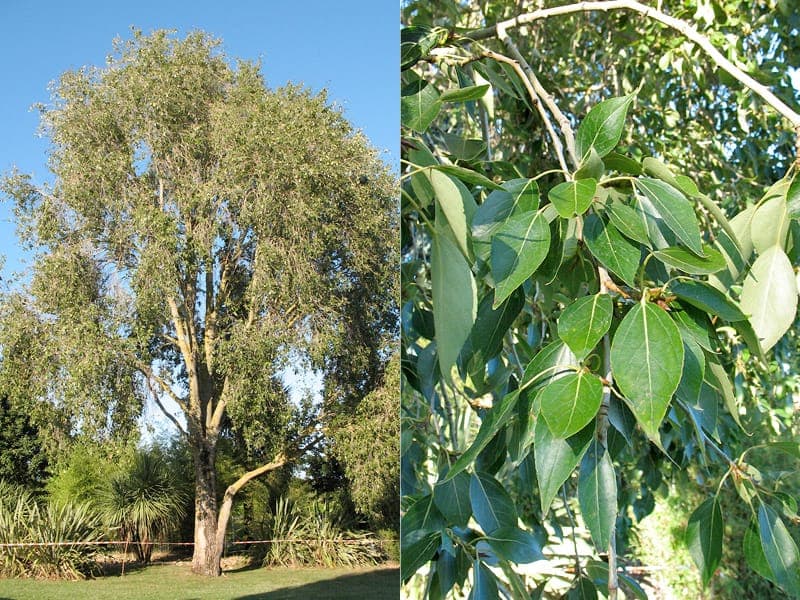
Alain Gérard / Public domain, via Wikimedia Commons
Simon poplar: complete guide
Populus simonii
Want to see Simon poplar: complete guide in your garden?
1 minute, no credit card
Overview
Populus simonii, commonly known as Simon poplar or Chinese balsam poplar, is a striking deciduous tree native to central and south-central China, with natural ranges extending into Inner Mongolia, Qinghai, and parts of Korea. In temperate climates like the UK and northern Europe, it's valued for its rapid growth and elegant, columnar form. Mature trees reach 15 to 20 meters in height, with a spread of 6 to 8 meters, making them excellent as specimen trees or in landscape plantings. As a member of the Salicaceae family, it shares close ties with willows and other poplars. On gardenworld.app, you can design a garden layout that accounts for its eventual size and cast shadow, ensuring it complements your space without overcrowding.
Appearance & bloom cycle
Simon poplar stands out with its narrow, pyramidal crown and glossy, triangular leaves that taper to a sharp point. The foliage emerges bright green in spring, deepens to dark green in summer, and turns soft yellow in autumn. The undersides are silvery-white, creating a shimmering effect when the wind moves through the canopy. Flowering occurs in March and April, before full leaf-out, with male trees producing dark purple catkins and female ones bearing lighter, fuzzy pistillate flowers. Note: female trees release cottony seed fluff, which can be a nuisance. For low-maintenance gardens, opt for a male cultivar to avoid this.
Ideal location
This poplar thrives in full sun to light shade, scoring an 8/10 for light requirements. Position it where it gets at least 6 hours of direct sunlight daily. Plant it at least 25 feet (8 meters) from buildings, pipes, or driveways to avoid root damage. While it's not ideal as a windbreak due to its open canopy, it works well as a vertical accent in spacious gardens. On gardenworld.app, you can simulate how this tree will grow over time and how it affects light patterns in your yard.
Soil requirements
Simon poplar adapts to a range of soils but prefers moist, well-drained loam with a pH between 7.0 and 7.5. It tolerates clay if drainage is adequate, and sandy soils with added organic matter. Avoid highly acidic or waterlogged conditions. At planting, mix in compost to boost establishment. If your soil is too acidic (below pH 6.5), apply garden lime to raise it gradually.
Watering
Young trees need consistent watering for the first two years-about 20 to 30 liters per week during dry spells. Once established, they're fairly drought-tolerant but perform better with even moisture. Use drip irrigation or soaker hoses, and apply a 5–8 cm mulch layer (wood chips or straw) around the base to reduce evaporation. Never let the roots sit in standing water, as this invites root rot.
Free design
Want to see Simon poplar: complete guide in your garden? Make a free design now.
Pruning
Pruning is minimal. Remove dead, damaged, or crossing branches in late autumn or early winter when the tree is dormant. Avoid summer pruning, which can trigger water sprouts. For a clean trunk, gradually lift the crown by removing lower limbs over several years. Always use sterilized, sharp tools to prevent disease transmission.
Maintenance calendar
- January: Inspect for pests, diseases, and storm damage. Light pruning if needed.
- February: Check root zone for compaction; aerate if necessary.
- March: Apply compost around the base; no fertilizer required.
- April: Monitor catkin development and fluff production on female trees.
- May: Water young trees during dry periods.
- June: Minimal care; watch for aphids or canker in wet seasons.
- July: Monitor for leaf spot or powdery mildew; rarely serious.
- August: Maintain mulch; avoid pruning.
- September: Top-dress with compost to support root health.
- October: Rake up seed fluff from female trees; compost if clean.
- November: Remove dead wood; prepare for frost.
- December: Dormant period-limit intervention.
Winter hardiness
Simon poplar is hardy to USDA zone 4 (-25°C). Young trees benefit from tree wrap in their first winters to prevent rabbit damage and frost cracks. The bark is smooth and grayish-brown when young, becoming slightly fissured with age. In harsh winters, tip dieback may occur, but recovery in spring is typically rapid.
Companion plants
The light, dappled shade under mature trees suits shade-tolerant perennials like Hosta, Dryopteris filix-mas, or Carex elata 'Aurea'. Avoid invasive root competitors like bamboo. Spring bulbs such as Chionodoxa or Scilla siberica work well, blooming before canopy closure. Pair with structural shrubs like Cornus alba for winter interest, or other upright trees like Sorbus aria for contrast.
Closing
Simon poplar is a bold, fast-growing tree that adds vertical drama to large gardens. With minimal care and good site selection, it becomes a long-term focal point. Watch for root spread and fluff from female trees. Choose male clones for cleaner gardens. You'll find young specimens at garden centres like B&Q or Wyevale, or specialist nurseries for larger sizes. With proper planting and early care, it rewards with decades of growth. And remember: on gardenworld.app, you can visualise how this tree integrates into your garden's future design, alongside other plants and hardscaping.
Want to see Simon poplar: complete guide in your garden? Make a free design now.
Upload a photo, pick a style, and get a photorealistic design with plant list in under a minute.
No credit card required


Similar plants
Grey poplar: complete guide
Populus x canescens
Everything about Populus x canescens - a fast-growing hybrid poplar with silver-grey foliage, ideal as a windbreak or specimen tree in large gardens.
Populus adenopoda: complete guide
Populus adenopoda
Chinese aspen: a fast-growing tree for large gardens. Cultivation tips, pruning, and use as windbreak or shade tree.
Populus fremontii: complete guide
Populus fremontii
Fremont's cottonwood is a majestic American tree with rapid growth and drought tolerance. Read our guide for cultivation tips and garden integration.