
User:Schzmo / Public domain, via Wikimedia Commons
Bigtooth aspen: complete guide
Populus grandidentata
Want to see Bigtooth aspen: complete guide in your garden?
1 minute, no credit card
Overview
The bigtooth aspen (Populus grandidentata) is a dynamic, fast-growing deciduous tree native to northeastern North America, including states like Maine, Kentucky, and Illinois, and Canadian provinces such as Manitoba. A member of the Salicaceae family, this tree thrives in USDA hardiness zones 3 to 7, making it suitable for cold to temperate climates. It typically reaches 60 to 80 feet (18–24 m) in height with a spread of 25 to 40 feet (8–12 m), forming a narrow, upright crown when young that broadens with age. If you're looking for a tree that establishes quickly, provides early shade, and bursts into golden-yellow brilliance in fall, this is a strong contender.
On gardenworld.app you can design a garden layout that accounts for the bigtooth aspen's expansive root system and mature canopy spread, helping avoid future conflicts with structures or utilities.
Appearance & bloom cycle
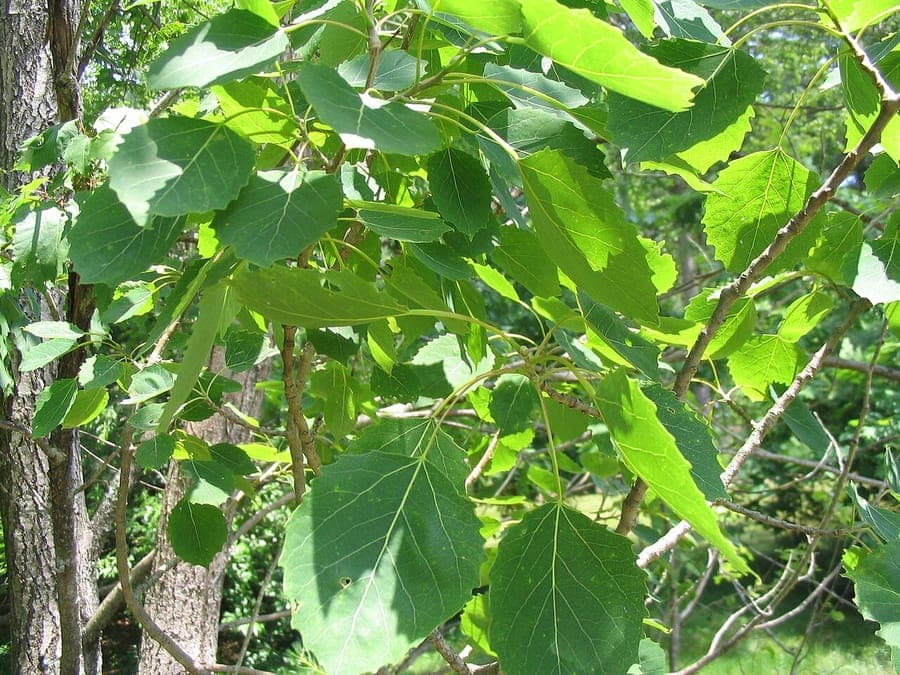
True to its name, the bigtooth aspen features large, coarsely toothed leaf margins - more pronounced than those of the quaking aspen. Leaves are nearly round to heart-shaped, 2 to 4 inches (5–10 cm) across, with a bright green upper surface and paler underside. In autumn, they turn a vibrant, uniform yellow, creating a striking visual impact. The flat petioles cause leaves to tremble in the slightest breeze, producing a soft rustling sound.
Flowering occurs in early spring (March to April), before leaf emergence. The flowers are catkins: male trees produce reddish-purple buds that release pollen, while female trees develop greenish catkins that mature into seed capsules. By late May or early June, these capsules split open, releasing tiny seeds attached to cottony fluff. Be aware: this seed dispersal can lead to volunteer seedlings in lawns or garden beds, which may need thinning.
Ideal location
Plant in full sun - at least 6 hours of direct sunlight daily - for optimal growth and fall color. Avoid shaded or sheltered areas, as this reduces vigor and increases disease risk. Due to its mature size, allow a minimum of 20 feet (6 m) between this tree and buildings, driveways, or other trees. Don't plant near foundations, septic systems, or underground utilities; the aggressive, shallow root system can cause damage over time.
This tree prefers open, well-ventilated sites but is somewhat wind-sensitive. Young trees may suffer branch breakage in strong storms. A site with partial wind protection - such as on the edge of a woodland or near a windbreak - works well, as long as full sun exposure is maintained.
Soil requirements
Bigtooth aspen adapts to a range of soil types but grows best in well-drained, loamy or sandy soils. It tolerates pH from 4.8 to 7.2, meaning it handles slightly acidic to slightly alkaline conditions. Avoid heavy, waterlogged clays, as standing water promotes root rot. If planting in compacted soil, amend with compost or well-rotted manure to improve structure and aeration.
For sandy soils, incorporate organic matter to boost moisture retention. Mulch annually with a 2–3 inch (5–8 cm) layer of wood chips or shredded bark to conserve moisture, suppress weeds, and protect shallow roots. Keep mulch pulled back 3–4 inches (7–10 cm) from the trunk to prevent rot and rodent damage.
Free design
Want to see Bigtooth aspen: complete guide in your garden? Make a free design now.
Watering
Young trees need consistent moisture during the first 1–2 growing seasons. Water deeply once a week, delivering 20–30 liters per session to encourage deep root development. After establishment, bigtooth aspen is moderately drought-tolerant but performs better with supplemental watering during prolonged dry spells (3+ weeks without rain).
Check soil moisture by inserting a finger or screwdriver 4–6 inches (10–15 cm) deep. Water only if the soil feels dry at that depth. Overwatering leads to root issues, so ensure good drainage. Avoid frequent shallow watering, which promotes weak, surface-rooting.
Pruning
Minimal pruning is required, but structural training in youth helps prevent issues later. Prune during late fall or winter dormancy. Remove dead, damaged, or crossing branches, and thin crowded areas to improve airflow. Maintain a single central leader; remove competing leaders early. Avoid pruning in spring or summer to prevent excessive sap flow, which can attract pests like bronze birch borers.
Use clean, sharp tools and sterilize between cuts if disease is suspected. Never top the tree - this leads to weak regrowth and decay. Limit pruning to no more than 25% of the canopy in a single season.
Maintenance calendar
- January: Inspect for winter storm damage; check for signs of canker or dieback.
- February: Sharpen and disinfect pruning tools.
- March: Final pruning before bud break; monitor for early insect activity.
- April: Apply mulch; protect young trees from deer with guards.
- May: Watch for seedling sprouts; remove unwanted volunteers.
- June: Monitor for aphids, leaf beetles, or fungal spots.
- July: No fertilizing; check for heat stress or scorched leaves.
- August: Avoid pruning; inspect for borer holes or sap oozing.
- September: Stop fertilizing; reduce watering as growth slows.
- October: Rake fallen leaves to reduce fungal spore carryover.
- November: Replenish mulch; protect trunk base from rodents.
- December: Review tree structure; plan spring maintenance.
Winter hardiness
Hardy to USDA zone 3 (-40°C), the bigtooth aspen tolerates harsh winters. Young trees benefit from trunk guards to prevent frost cracks and sunscald, especially on south-facing bark. Avoid late-season fertilizing or watering, which can delay dormancy and increase cold injury risk. Mature trees require little winter care beyond occasional snow load monitoring.
Companion plants
Underplant with shade-tolerant, non-invasive species that won't compete aggressively for water. Good choices include Carex vulpinoidea, Polystichum acrostichoides, and Mitchella repens (partridgeberry). Avoid planting lawn grass directly under the canopy, as root competition makes turf maintenance difficult.
Using gardenworld.app, you can simulate how bigtooth aspen and companion plants interact over time, adjusting for light patterns and root zones to create a balanced garden design.
Closing
The bigtooth aspen is a bold choice for spacious yards, windbreaks, or naturalized areas. Its rapid growth, golden fall color, and whispering foliage add movement and seasonal interest. However, it demands space, has a relatively short lifespan (50–70 years), and requires mindful siting. Watch for cankers, borers, and root suckers. Available at garden centres in 5–6 ft (150–180 cm) sizes, usually in spring or fall.
Want to see Bigtooth aspen: complete guide in your garden? Make a free design now.
Upload a photo, pick a style, and get a photorealistic design with plant list in under a minute.
No credit card required


Similar plants
Grey poplar: complete guide
Populus x canescens
Everything about Populus x canescens - a fast-growing hybrid poplar with silver-grey foliage, ideal as a windbreak or specimen tree in large gardens.
Populus adenopoda: complete guide
Populus adenopoda
Chinese aspen: a fast-growing tree for large gardens. Cultivation tips, pruning, and use as windbreak or shade tree.
Populus fremontii: complete guide
Populus fremontii
Fremont's cottonwood is a majestic American tree with rapid growth and drought tolerance. Read our guide for cultivation tips and garden integration.