
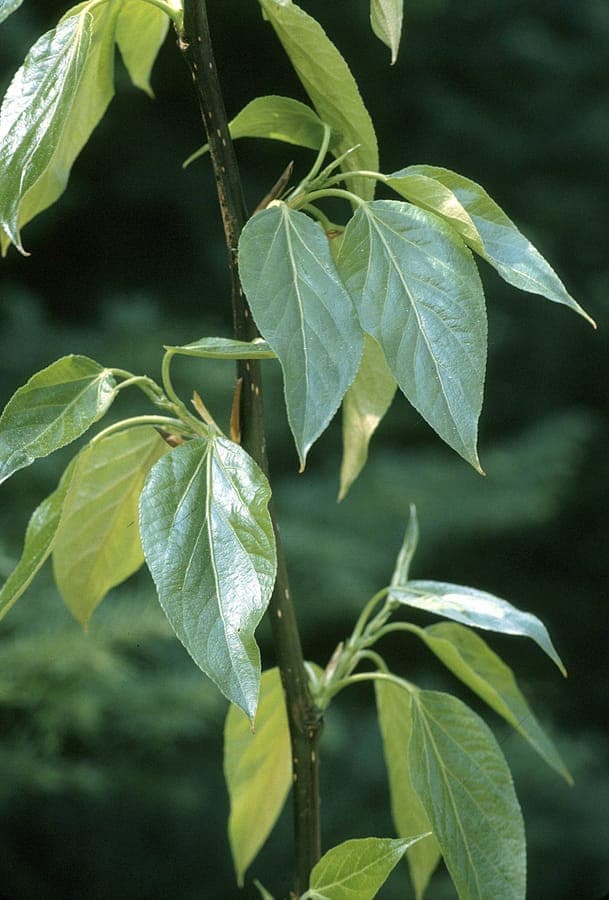
Lynden Gerdes @ USDA-NRCS PLANTS Database / USDA NRCS. 1995. Northeast wetland flora: Field office guide to plant species. Northeast National Technical Center, Chester. / Public domain, via Wikimedia Commons
Balsam poplar: complete guide
Populus balsamifera
Want to see Balsam poplar: complete guide in your garden?
1 minute, no credit card
Overview
The balsam poplar, or Populus balsamifera, is a fast-growing, hardy deciduous tree native to northern North America. It thrives from Alaska to the northeastern United States and is built for cold climates, surviving down to USDA zone 2 (-40°C). In the garden, it's best suited for large spaces-think estates, rural plots, or natural windbreaks. At maturity, it can reach 25–30 meters tall with a spread of 10–15 meters, so give it room to breathe. On gardenworld.app, you can design a landscape plan that accounts for its size and root spread, avoiding future conflicts with structures.
This tree isn't just big-it's fast. Expect growth of up to 1 meter per year when young. That's great if you want screening quickly, but it means you need to plan ahead. It's not a tree for small city gardens. Once established, it's low maintenance, but location is everything.
Appearance & bloom cycle
The balsam poplar blooms in March and April, just before or as leaves emerge. The flowers are greenish catkins-slender, drooping clusters that release pollen early in the season. Male and female flowers grow on separate trees (it's dioecious), so only female trees produce the cottony seeds that drift in late spring. While not showy, the blooms signal the start of a fragrant season: the sticky buds emit a strong balsam scent, like vanilla and pine, especially on warm spring days.
Leaves are broad, heart-shaped to triangular, 5–10 cm across, with a glossy green upper surface and paler underside. They tremble in the wind thanks to flat leaf stalks, creating a soft rustling sound. In fall, they turn a vivid yellow, lighting up the landscape for a few brilliant weeks.
Young bark is smooth and greenish-gray; mature bark turns gray to brown with deep furrows and ridges. The overall form is pyramidal when young, becoming more oval or rounded with age.
Ideal location
This tree wants full sun-rate your spot 8 out of 10 for light exposure. It needs at least 6–8 hours of direct sunlight daily. Plant it in an open area, well away from buildings, driveways, or underground utilities. Its roots are aggressive and can crack pipes or lift paving. Keep a minimum of 8 meters from any structure.
Avoid planting near septic systems or water lines. It's best used in large backyards, along property lines, or in reforestation projects. If you're designing a natural screen or habitat garden, the balsam poplar fits perfectly. Use gardenworld.app to map out spacing and root zones so your design grows with confidence.
Soil requirements
It tolerates a wide pH range-4.5 to 7-so both slightly acidic and neutral soils work. It prefers moist, well-drained loam but adapts to sand or clay if drainage is decent. Avoid waterlogged soils; they invite root rot. While it likes consistent moisture, established trees handle short dry spells.
Don't over-enrich the planting hole. This tree grows fast without extra fertilizer. Adding compost or manure can encourage weak, lanky growth. Let it find its balance in native soil.
Free design
Want to see Balsam poplar: complete guide in your garden? Make a free design now.
Watering
Water deeply once a week during the first growing season, especially in dry spells. Use a slow-running hose at the base to ensure moisture reaches the roots. After year one, it's mostly self-sufficient, but during extended droughts (3+ weeks without rain), give it a long soak.
Avoid frequent shallow watering-it encourages weak surface roots. Deep, infrequent drinks build resilience.
Pruning
Pruning isn't usually needed. Remove only dead, broken, or crossing branches. Do this in late winter or early spring before bud break. Avoid summer pruning-poplars bleed sap heavily when cut in warm months.
Use clean, sharp tools. Disinfect between cuts if you suspect disease. Cut just outside the branch collar to help the wound seal. Limit pruning to what's essential-every cut is a potential entry point for fungi.
Maintenance calendar
- Jan: Inspect for winter damage, remove dead wood
- Feb: Finalize pruning plans
- Mar: Catkins appear, buds become sticky and aromatic
- Apr: Monitor for aphids on new growth
- May: No special care needed
- Jun: Check for leaf spot in wet weather
- Jul: Watch for drought stress, water if needed
- Aug: Look for early leaf drop-if happens, check soil moisture
- Sep: Avoid fertilizing, let tree prepare for dormancy
- Oct: Rake fallen leaves or leave as mulch
- Nov: Protect young trunks from rodents with guards
- Dec: Review year's growth, plan next season
Winter hardiness
Hardy to zone 2, the balsam poplar laughs at cold. But young trees can suffer sunscald on the south-facing bark. Prevent cracking by wrapping trunks with tree guard or painting them white. Ensure the tree is well-watered before winter freeze-dry roots are more vulnerable.
Snow load rarely damages the flexible branches, but ice storms can cause breakage. Remove broken limbs promptly in late winter.
Companion plants
Underplant with shade-tolerant, shallow-rooted perennials like epimedium, heuchera, or carex. Avoid thirsty plants-poplars are water hogs. Use drought-tolerant groundcovers like sedum or ajuga at the drip line.
For wildlife value, plant native wildflowers like Echinacea, Monarda, or Asclepias a few meters away. They'll thrive in the partial shade once the canopy fills in. Avoid shrubs that compete for light and moisture.
Closing
The balsam poplar isn't for everyone, but if you've got space, it's a bold, fast, and resilient choice. It gives shade, movement, and scent, plus winter structure. Just respect its size and root system.
You can find balsam poplar saplings at larger garden centres, especially those stocking native species. Look for healthy, straight trunks and intact root balls. With the right start, it'll become a landmark in your garden for decades.
Want to see Balsam poplar: complete guide in your garden? Make a free design now.
Upload a photo, pick a style, and get a photorealistic design with plant list in under a minute.
No credit card required


Similar plants
Grey poplar: complete guide
Populus x canescens
Everything about Populus x canescens - a fast-growing hybrid poplar with silver-grey foliage, ideal as a windbreak or specimen tree in large gardens.
Populus adenopoda: complete guide
Populus adenopoda
Chinese aspen: a fast-growing tree for large gardens. Cultivation tips, pruning, and use as windbreak or shade tree.
Populus fremontii: complete guide
Populus fremontii
Fremont's cottonwood is a majestic American tree with rapid growth and drought tolerance. Read our guide for cultivation tips and garden integration.