
Kurt Stüber [1] / CC BY-SA 3.0, via Wikimedia Commons
Soft shield-fern: complete guide
Polystichum setiferum
Want to see Soft shield-fern: complete guide in your garden?
1 minute, no credit card
Overview
Polystichum setiferum, commonly known as the soft shield-fern, is a graceful, evergreen fern that brings elegance and texture to shaded garden spaces. Native to regions across western and southern Europe - including France, the UK, the Azores, and parts of the Mediterranean - this fern thrives in cool, moist environments and adapts well to temperate climates like those in the UK and the Pacific Northwest.
Growing in dense, upright clumps from underground rhizomes, the soft shield-fern reaches a mature height of 60–90 cm and spreads to about 50–70 cm wide. It's a slow but steady spreader, forming lush mounds over time. Hardy in USDA zones 7 to 9, it tolerates winter temperatures down to -15°C, making it suitable for most gardens in mild to moderate climates. In colder zones, a protective mulch layer helps it survive harsher freezes.
This fern doesn't flower - like all ferns, it reproduces via spores - but its ornamental value lies in its finely divided, arching fronds that remain green throughout the year. It's perfect for naturalistic plantings, woodland edges, or shaded borders where little else thrives. On gardenworld.app, you can visualise how this fern fits into a layered planting scheme with hellebores, hostas, and mossy groundcovers.
Appearance & bloom cycle
The soft shield-fern has bipinnate fronds - meaning the leaflets are arranged in two rows along a central stem - with a soft, feathery texture. The individual pinnae (leaf segments) are narrow, lance-shaped, and slightly toothed, giving the foliage a delicate, lacy appearance. The fronds emerge in spring with a bronzy-green tint, maturing to a deep, glossy green by summer. They arch outward in a fountain-like habit, creating a full, billowing effect.
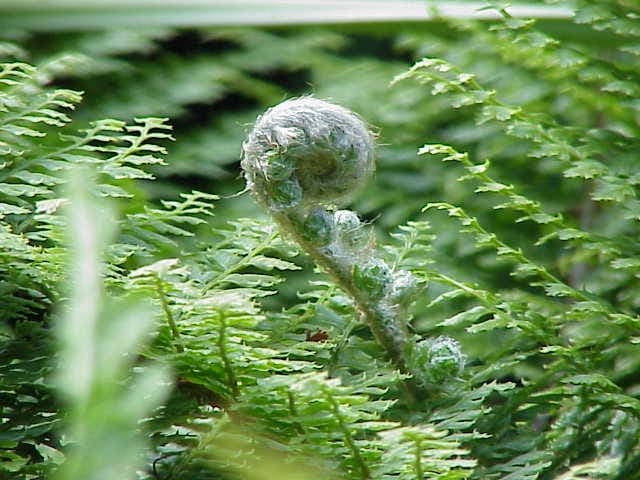
Each frond can reach 90 cm in length, and new growth unfurls in a fiddlehead spiral - a fascinating sight in early spring. Though it doesn't bloom, the reproductive spores appear on the underside of mature fronds from mid-summer onwards. These appear as small, bristly clusters (sori) arranged in neat rows along the veins, giving the species its name setiferum, meaning 'bristle-bearing'.
Because it's evergreen, the soft shield-fern provides structure and interest in winter gardens, especially when paired with evergreen shrubs or textured bark.
Ideal location
This fern thrives in dappled to full shade - a light level of 3 on a 1–10 scale. It does best under deciduous trees or on north-facing slopes where it receives only indirect or filtered sunlight. Morning sun is tolerable if it's brief and not intense, but afternoon sun will scorch the fronds, causing browning and crisping at the edges.
Avoid dry, exposed areas and hot, reflective surfaces like paved patios. Instead, plant it in sheltered, humid corners of the garden. On gardenworld.app, you can map your garden's light patterns to identify the perfect spot for moisture-loving ferns like Polystichum setiferum.
Free design
Want to see Soft shield-fern: complete guide in your garden? Make a free design now.
Soil requirements
The soft shield-fern prefers humus-rich, well-drained but consistently moist soil with a pH between 5.5 and 6.5. It enjoys slightly acidic conditions and struggles in chalky or alkaline soils. If your soil is heavy clay, amend it with leaf mould, composted bark, or peat-free ericaceous compost to improve drainage and acidity.
Sandy soils dry out too quickly, so incorporate organic matter deeply to retain moisture. A 5–8 cm mulch of leaf litter or wood chips in spring helps maintain humidity and suppresses weeds without smothering the crown.
Watering
Consistent moisture is key. Water weekly during dry spells, especially in the first year after planting. Use rainwater if possible, as tap water with high lime content can raise soil pH over time. The soil should never dry out completely, but avoid waterlogging - stagnant water leads to root rot.
Drip irrigation or soaker hoses work well in fern beds, delivering moisture directly to the roots without wetting the foliage too much.
Pruning
Pruning is minimal. Remove old, tattered, or brown fronds in late winter or early spring before new fiddleheads emerge. Cut them close to the base with clean, sharp secateurs. Don't cut healthy green fronds - they're actively photosynthesising and support the plant's energy reserves.
In milder climates, fronds may stay green all year. In colder zones, some dieback is normal, but the plant will regenerate from the rhizomes in spring.
Maintenance calendar
- Jan: Check for frost damage. Avoid watering if soil is frozen.
- Feb: Begin clearing old fronds if weather is dry.
- Mar: Remove dead foliage. Watch for emerging fiddleheads.
- Apr: Mulch lightly. Water during dry spells.
- May: Monitor soil moisture. No feeding needed.
- Jun: Keep soil evenly moist. Watch for slug damage.
- Jul: Water deeply during heatwaves. Avoid overhead watering.
- Aug: Continue watering. Inspect for fungal issues in wet weather.
- Sep: Reduce watering as growth slows.
- Oct: Leave old fronds for winter protection.
- Nov: No action needed unless wet and cold.
- Dec: Apply leaf mulch in exposed sites.
Winter hardiness
Hardy in USDA zones 7–9, Polystichum setiferum survives winter reliably in most temperate gardens. In zone 7, a thick mulch of leaves or compost insulates the crown. In exposed gardens, a light covering of horticultural fleece during prolonged freezes can prevent cold desiccation.
Even if fronds turn brown, don't cut them back - they shield the crown from wind and ice. New growth will emerge underneath in spring.
Companion plants
Combine with other shade lovers: hellebores, hostas, epimediums, and brunnera. Spring bulbs like bluebells or snowdrops add seasonal colour. For ground-level texture, pair with mosses, lungworts, or foamflower (Tiarella).
Avoid aggressive spreaders like mint or bishop's weed, which can overwhelm the fern's slow growth. Use rocks or logs to create naturalistic groupings.
Closing
Polystichum setiferum is a reliable, elegant fern that adds year-round structure and soft texture to shaded areas. Once established, it asks for little and rewards with decades of quiet beauty. Whether you're designing a woodland garden or revitalising a dark corner, this fern delivers. Find planting ideas on gardenworld.app, and look for it at garden centres like Wyevale, Dobbies, or local independents. It's often sold in 1–2 litre pots, ready for planting in spring or autumn.
Want to see Soft shield-fern: complete guide in your garden? Make a free design now.
Upload a photo, pick a style, and get a photorealistic design with plant list in under a minute.
No credit card required


Similar plants
Dryopteris sieboldii: complete guide
Dryopteris sieboldii
Discover Dryopteris sieboldii (Siebold's Buckler Fern), an elegant evergreen fern from Asia. Growing tips, care, and uses in shade gardens.
Dryopteris tyrrhena: complete guide
Dryopteris tyrrhena
Discover Dryopteris tyrrhena (Mediterranean Buckler-fern), a rare and exquisite fern species. Growing tips, care, and shade garden design.
Dryopteris villarii: complete guide
Dryopteris villarii
Dryopteris villarii, known as rigid buckler fern, is a shade-loving fern form from the Alps. Discover how to grow and maintain this elegant alpine fern in your garden.