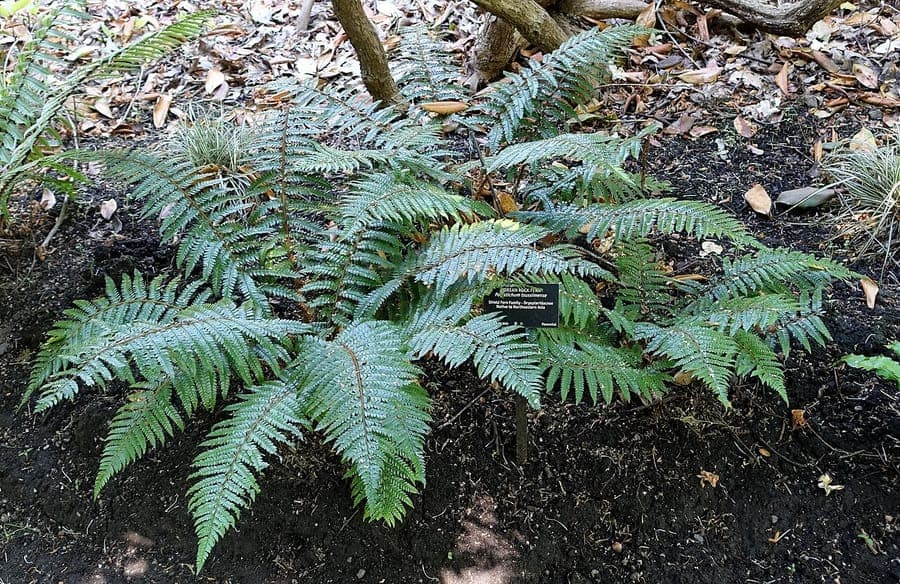
Daderot / CC0, via Wikimedia Commons
Korean rockfern: complete guide
Polystichum luctuosum
Want to see Korean rockfern: complete guide in your garden?
Full design in HD: €7.99
Look after your Korean rockfern with the GardenWorld app
Identify plants with your camera and get a care calendar with reminders for this plant.


Polystichum luctuosum, commonly known as Korean rockfern, is a fascinating fern species with an impressive distribution range extending from southern Africa to Japan and the Himalayas. This elegant fern grows across diverse mountain ranges and is ideally suited for moisture-loving shade gardens in temperate climates.
Appearance & Growth
The Korean rockfern distinguishes itself through its delicately detailed, thin fronds with very fine leaf divisions. The leaves are dark green and grow in a graceful, somewhat more open rosette. The plant typically reaches 30 to 60 centimeters in height, depending on growing conditions. What makes this fern interesting is its broad geographic distribution - the same species grows from Korea through Nepal and from Africa to the Himalayas.
The fern produces spores in typical fashion on the undersides of leaves, providing natural propagation under favorable conditions.
Ideal Location
Give this fern partial to full shade. Because this species grows in very diverse mountain regions, it is adaptable to various light levels. Always provide protection from the brightest afternoon sun. Wind protection is important, especially in young plants.
This fern grows well in combination with deciduous trees and against rock walls. A location against a wall with north or east aspect is ideal. In more temperate climates it can even tolerate some sun if the soil remains moisture-retentive.
Soil
The Korean rockfern grows best in moisture-retentive, humus-rich soil with good drainage. The plant loves moist but not waterlogged conditions. Sand, gravel, and humus must be well mixed. A pH of 5.5 to 7.5 is acceptable, acidic soils are preferred.
Because this fern comes from mountain regions, loose, draining soil is essential. Work compost deep in and add coarse sand. In gardens with heavy clay, addition of sand and gravel is critical.
Watering
During the growing season (April through October) water regularly. The soil must remain consistently lightly moist but never stagnate. In dry warm periods you may need to water daily. Morning watering is preferred.
Winter time you can reduce the watering schedule but never completely dry out. In very dry areas extra mulch can help increase moisture retention. Ensure water drains well after rain.
Free preview
Want to see Korean rockfern: complete guide in your garden? Make a free preview of your design.
Pruning & Maintenance
This fern requires minimal pruning work. In spring remove damaged or yellowed fronds with a clean knife. Old fronds look attractive and can remain. Don't prune aggressively.
Mulching with compost and leaves in autumn (3 to 5 centimeters) helps moisture retention and provides nutrition. This is especially important in temperate climates.
Maintenance Calendar
March: Winter is over. Check soil moisture and remove dead leaves. April-May: Begin regular watering schedule. June-August: Maintain watering frequency, monitor for drought stress. September-October: Reduce watering frequency. November-February: Winter; water less but don't completely dry out.
Winter Hardiness
The Korean rockfern is suitable for USDA zones 6 to 10 (hardiness to approximately -20 degrees Celsius). This means suitability for temperate mountain regions. In more southern locations (zones 8-10) the plant grows very well. In somewhat harsher climates (zone 5) extra winter protection with evergreen branches and mulch may be needed.
The plant tolerates cold well as long as its feet don't remain wet. Ensure good drainage in winter.
Companion Plants
This fern looks stunning with other Asian ferns. Combine with hostas, hedera vines, and other moisture-loving plants. Pairing with epimediums also creates beautiful effects. In rock gardens with moisture-loving locations this fern fits perfectly.
In shade borders this fern acts as elegant green filling between flowering plants. The delicate fronds contrast well with coarse-leaved plants.
Final Thoughts
The Korean rockfern brings Asian mountain beauty to your garden. With its delicate fronds and broad distribution range it is adaptable to diverse growing conditions. Regular watering and good drainage are keys to success. This fern deserves a place in every moisture-loving shade corner!
GardenWorld tip: Combine this fern with other Polystichums for an international fern grove effect that remains beautiful all seasons. Perfect for Asia enthusiasts!
Frequently asked questions about Korean rockfern
Is Korean rockfern winter hardy?
The Korean rockfern is suitable for USDA zones 6 to 10 (hardiness to approximately -20 degrees Celsius). This means suitability for temperate mountain regions.
When and how do you prune Korean rockfern?
This fern requires minimal pruning work. In spring remove damaged or yellowed fronds with a clean knife.
How much water does Korean rockfern need?
During the growing season (April through October) water regularly. The soil must remain consistently lightly moist but never stagnate.
Where does Korean rockfern grow best?
Give this fern partial to full shade. Because this species grows in very diverse mountain regions, it is adaptable to various light levels.
What soil does Korean rockfern need?
The Korean rockfern grows best in moisture-retentive, humus-rich soil with good drainage. The plant loves moist but not waterlogged conditions.

See it in your garden
See Korean rockfern in your garden
One photo of your garden and a few questions. You see the result in about a minute.
Try it with a photoIdentify this plant in your own garden. Identify a plant
Similar plants
Lemmon's hollyfern: complete guide
Polystichum lemmonii
An elegant and alpine fern from the northern Pacific coast of North America. Perfect for shaded alpine gardens with rocky soil and reliable hardiness to zone 5.
Mountain hollyfern: complete guide
Polystichum scopulinum
An alpine fern from North America with an impressive range from Quebec to Utah. Perfect for mountainous gardens with excellent drainage and shade tolerance.
