
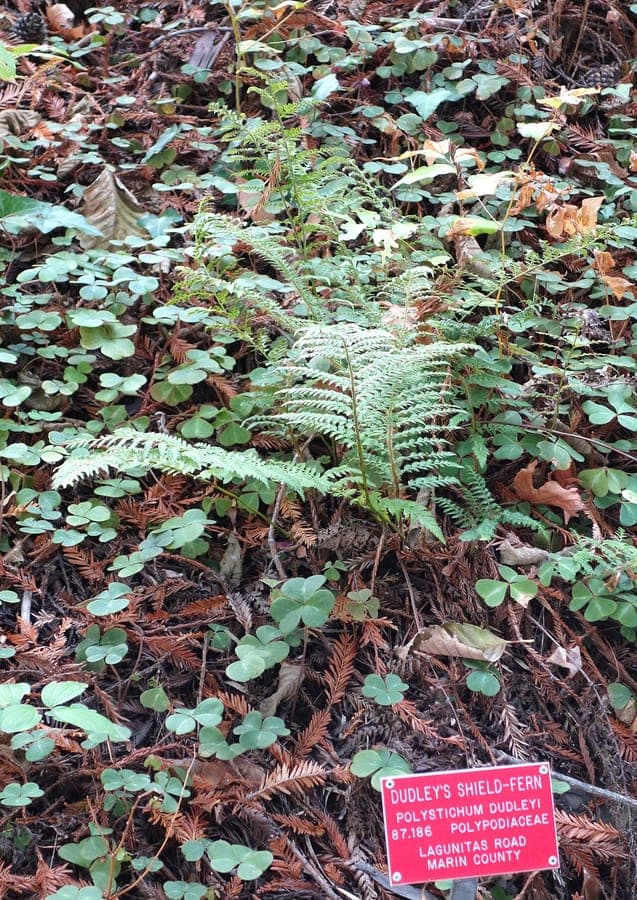
Daderot / CC0, via Wikimedia Commons
Polystichum dudleyi: complete guide
Polystichum dudleyi
Want to see Polystichum dudleyi: complete guide in your garden?
1 minute, no credit card
Overview
Polystichum dudleyi, commonly known as Dudley's swordfern, is an elegant native fern from Western California. This evergreen fern from the Polypodiaceae family grows in California's forest regions in moist, shady locations. With its fine, delicate fronds and upright growth habit, this fern offers a refined element for shade gardens.
Dudley's swordfern reaches heights of 30 to 60 centimeters and slowly forms a full, compact plant. The plant is highly moisture tolerant and thrives optimally in acidic soils beneath trees or in partial shade.
Appearance & Structure
Polystichum dudleyi grows as a compact, upright fern with fine, bipinnate fronds. The fronds are green to dark green, linear-lanceolate, approximately 30 to 60 centimeters long and about 5 to 10 centimeters wide. The bipinnate frond pattern provides a delicate, refined appearance.
The plant forms a dense crown of fronds that gradually expand. Each frond grows from the central rhizome, which remains underground and stabilizes the plant. The undersides of mature fronds contain sori (spore-producing structures), typical of ferns.
Ideal Location
Polystichum dudleyi is a shade-loving plant that thrives in complete shade to partial shade. In full sun, the foliage can scorch and wilt. Place this fern in the shade of trees, against north-facing walls, or beneath other large plants.
The plant tolerates certain amounts of indirect light and grows slowly but healthily even in very deep shade. In temperate gardens, this is advantageous since many shade spots are available. For indoor cultivation, position near a window without direct sunlight.
Soil
Polystichum dudleyi prefers moist, well-draining soils with high organic content. An acidic soil pH (5.5 to 6.5) is ideal. Ferns demand moisture retention and organic matter.
Add generous amounts of compost or leaf mold to potting soil before planting. For container cultivation, use a mix of 50% peat-free potting soil, 30% compost, and 20% perlite for optimal drainage. Keep soil consistently moist but not waterlogged.
Watering
Water Polystichum dudleyi regularly to maintain consistent moisture levels. Especially during the growing season (spring and summer), water regularly - 2 to 3 times weekly depending on conditions. The fern prefers moist conditions and tolerates drought poorly.
In winter, slightly reduce watering frequency, but never allow soil to dry completely. For potted plants in dry households, regular misting helps maintain humidity levels. Preferably water at soil level to keep fronds dry.
Free design
Want to see Polystichum dudleyi: complete guide in your garden? Make a free design now.
Pruning
Polystichum dudleyi requires minimal pruning. Remove only dead, brown, or damaged fronds. This helps exclude harmful diseases and maintains the plant's appearance.
Remove fronds where fungal infections occur. If the plant becomes too large, the older outer fronds can be carefully removed, though on specialized plants this might never be necessary.
Maintenance Calendar
January-March: Minimal winter growth. Keep drier if very wet, but maintain moisture levels.
April-May: Growth begins as weather warms. Water regularly. Possibly divide.
June-September: Peak growth period. Regular watering crucial. Monitor for pests.
October-November: Growth slows. Slightly reduce moisture levels.
December: Dormant period. Minimal care required.
Winter Hardiness
Polystichum dudleyi is moderately winter hardy and can remain outdoors in many climates, though it deserves protection in very cold areas. The plant tolerates frost periods to about -10 degrees Celsius, though young plant material requires more caution.
In temperate regions, the plant can grow outdoors in sheltered shade locations with extra organic mulch around the base. If growing in containers, protect from severe frost by bringing into a cold frame or shed.
Companion Plants
Polystichum dudleyi works well with other shade-loving plants. Combine with other ferns like Dryopteris and Asplenium for a layered effect. Position low-growing perennials like Helleborus and Epimedium underneath.
In very moist gardens, combine with bog plants like Astilbe and other moisture-tolerant shrubs. The fern adds texture to otherwise dull shade corners.
Closing Remarks
Polystichum dudleyi is a valuable addition to shady gardens. With its elegant fronds, moisture-tolerant nature, and native status, it makes an ideal choice for natural garden design. Plant this fern in shade, ensure adequate moisture, and enjoy years of green foliage. Visit gardenworld.app for more information on shade garden planning. Check gardenworld.app for perfect natural garden design with native fern contributions.
Want to see Polystichum dudleyi: complete guide in your garden? Make a free design now.
Upload a photo, pick a style, and get a photorealistic design with plant list in under a minute.
No credit card required


Similar plants
Dryopteris sieboldii: complete guide
Dryopteris sieboldii
Discover Dryopteris sieboldii (Siebold's Buckler Fern), an elegant evergreen fern from Asia. Growing tips, care, and uses in shade gardens.
Dryopteris tyrrhena: complete guide
Dryopteris tyrrhena
Discover Dryopteris tyrrhena (Mediterranean Buckler-fern), a rare and exquisite fern species. Growing tips, care, and shade garden design.
Dryopteris villarii: complete guide
Dryopteris villarii
Dryopteris villarii, known as rigid buckler fern, is a shade-loving fern form from the Alps. Discover how to grow and maintain this elegant alpine fern in your garden.