
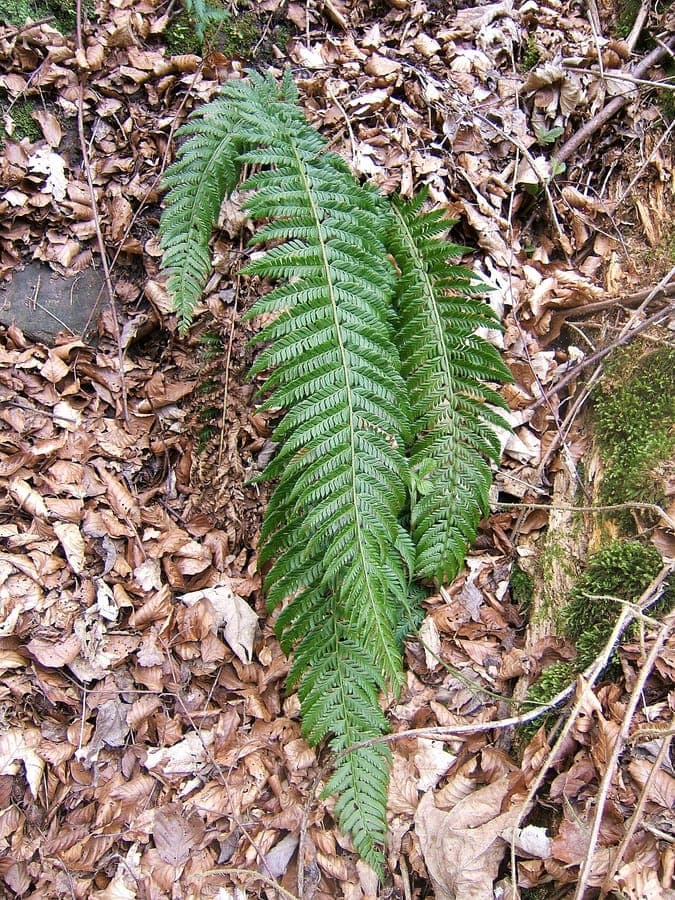
MPF / CC BY 2.5, via Wikimedia Commons
Hard shield-fern: complete guide
Polystichum aculeatum
Want to see Hard shield-fern: complete guide in your garden?
1 minute, no credit card
Overview
Polystichum aculeatum, commonly known as hard shield-fern, is a tough, evergreen fern native to woodlands across central and southern Europe. It thrives in cool, shaded areas where many flowering plants struggle. Hardy to USDA zone 5 (-20°C to -29°C), it's a reliable performer in UK and North American gardens, particularly in shaded borders, rock gardens, or under tree canopies. Its stiff, arching fronds add structure and year-round interest, making it a favourite among gardeners seeking low-maintenance foliage.
On gardenworld.app, you can design a shade garden layout that highlights the architectural form of the hard shield-fern, pairing it with complementary textures and heights. It's especially effective in naturalistic plantings or woodland-style schemes.
Appearance & bloom cycle
Though ferns don't bloom in the traditional sense, Polystichum aculeatum produces spore-bearing structures (sori) from May through October. These appear as neat, double rows of dark brown to black dots on the undersides of the leaf segments, adding subtle seasonal detail. The fronds themselves are 30–80 cm long, dark green, glossy, and leathery, with tightly packed, lance-shaped pinnae that curve slightly forward.
The plant grows in a dense, upright fountain shape, forming clumps up to 40 cm wide. The stipe (stem) is dark brown and covered in papery, lanceolate scales, giving it a refined, textured look. Unlike softer ferns, this species holds its shape well, even in winter.
Ideal location
Choose a spot with dappled to full shade-light level 3 on a 1–10 scale. That means no more than 1–2 hours of indirect sunlight daily, ideally under deciduous trees like beech or hornbeam. Avoid hot, south-facing spots, which can scorch the fronds. A north-facing wall, woodland edge, or shaded rock crevice also works well.
Hard shield-fern dislikes drying winds and intense afternoon sun. If you're unsure about light conditions in your garden, use gardenworld.app to simulate shade patterns and find the perfect microclimate for your fern.
Soil requirements
This fern prefers moist, humus-rich, well-drained soil with a pH between 6.5 and 7.0. Improve heavy clay by adding leaf mould or composted bark; for sandy soils, mix in organic matter to boost water retention. A 5 cm mulch layer of leaf litter or compost in spring helps maintain moisture and suppress weeds.
It tolerates slightly alkaline conditions but dislikes waterlogged or compacted soils. Avoid high-salt fertilisers. Test your soil pH with a simple kit from local garden centres-many carry affordable testers.
Free design
Want to see Hard shield-fern: complete guide in your garden? Make a free design now.
Watering
Keep the soil consistently moist but not soggy. Water once or twice a week during dry spells, especially from April to September. Use rainwater when possible, as tap water with high chlorine or lime content can damage sensitive fronds.
During prolonged droughts, mist the foliage in the morning to prevent browning at the tips. Drip irrigation works well for maintaining steady moisture. Never let the crown sit in standing water-root rot is a real risk.
Pruning
Minimal pruning is needed. In March, remove any old, tattered, or winter-damaged fronds at the base using sharp, clean shears. Wear gloves-the pinnae edges can be prickly. Avoid cutting into the central crown, where new growth emerges.
Leave healthy fronds intact-they protect the rhizome and provide winter structure. Don't compost fronds with visible sori if you want to limit natural spread in formal gardens.
Maintenance calendar
- January: Check for frost damage. Protect young plants with bracken or dry leaves if temperatures drop below -15°C.
- February: Monitor soil moisture on mild days.
- March: Cut back dead foliage. Apply compost and mulch.
- April: Start regular watering. Divide large clumps if needed.
- May: Spores develop. Maintain soil moisture.
- June–August: Watch for drought stress. Water deeply during dry weeks.
- September: Reduce watering frequency. Stop feeding.
- October: Leave fronds for winter cover unless they're clearly dead.
- November–December: Minimal care. Ensure soil doesn't fully freeze.
Winter hardiness
Hardy to USDA zone 5, Polystichum aculeatum stays green all winter, though fronds may bronze in severe cold. Mature plants need no protection, but young ones benefit from a light mulch of bracken or pine needles.
Avoid plastic covers-they trap moisture and encourage fungal diseases. In exposed gardens, use hessian wraps or jute around the base for extra insulation during icy snaps.
Companion plants
Pair with other shade lovers: Helleborus, Tiarella, Alchemilla mollis, or Brunnera macrophylla. For contrast, plant near silver-foliaged Geranium argenteum or pale ferns like Athyrium filix-femina.
Group in threes or fives for impact. Avoid invasive groundcovers like ivy. On gardenworld.app, you can preview plant combinations to ensure visual harmony and spacing.
Closing
Polystichum aculeatum is a resilient, elegant fern that brings structure and texture to shady corners. With minimal upkeep and lasting presence, it's ideal for naturalistic plantings, shaded rock gardens, or woodland borders. Just keep the soil rich and moist, and it will reward you for years.
Buy hard shield-ferns from reputable garden centres in spring or early autumn. Look for pots with dense, upright fronds and no signs of browning or wilting. Avoid plants with dry compost or visible pests. With proper planting and care, this fern will slowly expand into a handsome, self-sustaining clump.
Want to see Hard shield-fern: complete guide in your garden? Make a free design now.
Upload a photo, pick a style, and get a photorealistic design with plant list in under a minute.
No credit card required


Similar plants
Dryopteris sieboldii: complete guide
Dryopteris sieboldii
Discover Dryopteris sieboldii (Siebold's Buckler Fern), an elegant evergreen fern from Asia. Growing tips, care, and uses in shade gardens.
Dryopteris tyrrhena: complete guide
Dryopteris tyrrhena
Discover Dryopteris tyrrhena (Mediterranean Buckler-fern), a rare and exquisite fern species. Growing tips, care, and shade garden design.
Dryopteris villarii: complete guide
Dryopteris villarii
Dryopteris villarii, known as rigid buckler fern, is a shade-loving fern form from the Alps. Discover how to grow and maintain this elegant alpine fern in your garden.