
Jaknouse / CC BY-SA 3.0, via Wikimedia Commons
Rock polypody: complete guide
Polypodium virginianum
Want to see Rock polypody: complete guide in your garden?
1 minute, no credit card
Overview
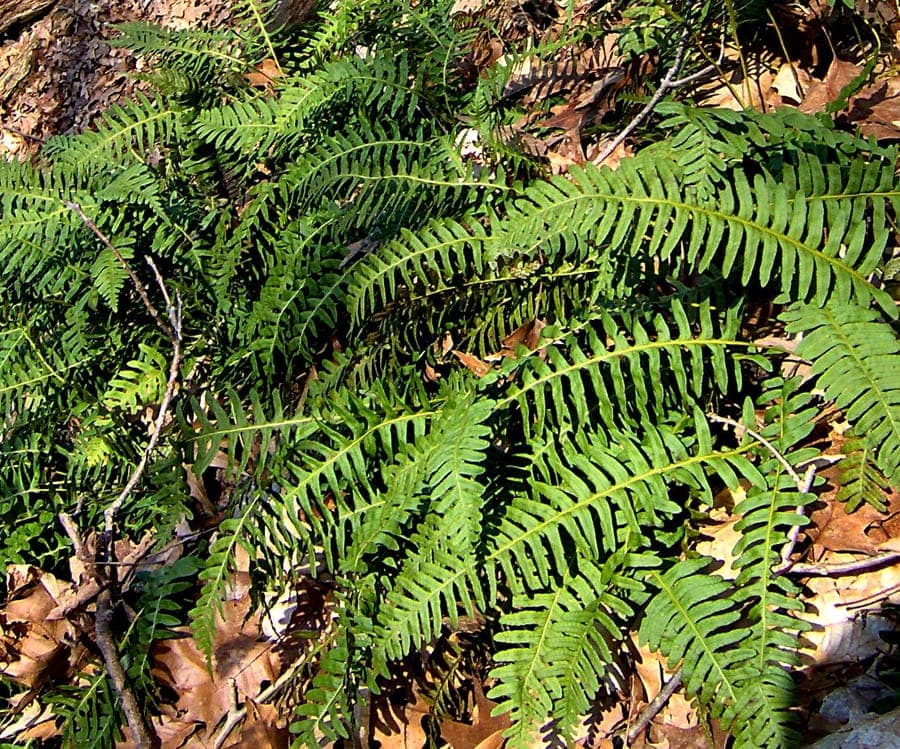
Polypodium virginianum, commonly known as Rock polypody, American wall fern, or many-footed fern, is a small, delicate fern that naturally occurs on rocky slopes and trees in eastern North America from Canada to Georgia. This diminutive fern reaches only 10 to 30 cm in height and grows from short, densely packed roots that cling to rock or bark. The fronds are finely lobed and remain green throughout the growing season, though they die back in winter. This fern is valuable in shade borders and on rocky outcrops where other plants cannot survive.
Appearance and growth
The Rock polypody is a very small fern distinguished by its delicate, finely-lobed fronds arising from short rhizomes. Fronds are low-divided-compound, approximately 10 to 25 cm long, with irregularly toothed lanceolate segments. Foliage is bright green and remains vital throughout the growing season until the first hard frost. Plants grow slowly in dense, compact masses that spread over rocks and trees where they grow epiphytically. Spore production occurs in small brown sori on the undersides of fronds in summer.
Ideal location
This fern thrives best in full shade to half-shade in locations where other plants succumb to dryness. A position against rocks or trees is ideal as the plant naturally grows this way. In the garden, it performs well in rocky crevices, moist shade corners, and against northerly walls. Avoid hot, dry spots and direct sunlight that causes frond wilting. Good air circulation without strong drying winds is favorable.
Soil
Actually, this fern does not grow in "soil" in the traditional sense, as it is epiphytic. It grows on rock surfaces and tree bark with minimal nutrition. In cultivation, one can use a mixture of 50 percent coarse sand or gravel, 30 percent finely shredded pumpkin or bark mulch, and 20 percent peat moss, which provides low nutrition and excellent drainage. Add some limestone chips for calcium supply.
Free design
Want to see Rock polypody: complete guide in your garden? Make a free design now.
Watering
This fern requires consistent, not overly dry moisture but tolerates no waterlogging. Mist regularly with fine water (rather than heavy watering) to provide the foliar moisture that epiphytic ferns require. In very warm or dry periods, misting twice daily is beneficial. Ensure the growing medium stays evenly moist but not waterlogged.
Pruning
This small fern requires no actual pruning. Simply remove dead fronds or those afflicted by mold. Let the plant determine its own form and grow naturally against rocks or trees.
Maintenance calendar
March-May: Check for new growth, mist regularly as temperature increases. June-August: Warmest period; mist more frequently. Monitor for drought stress and fungal infections. September-October: Growth slows, less misting needed. First frosts may refresh foliage. November-February: Plant is largely dormant; minimal moisture maintains health, but avoid waterlogging.
Winter hardiness
Polypodium virginianum is hardy in zones 4 through 9 (-30 to -20 degrees Celsius). This species also grows in very cold Canadian regions, so it is extremely cold-tolerant. In more extreme cold climates, sheltered spots may be necessary and good drainage prevents winter moisture problems.
Companion plants
This small fern combines beautifully with other shade-loving ferns such as Adiantum pedatum and Asplenium species. Small hellebores, tiarellas, and heucheras create fine combinations. In rock crevices, group this fern with other small rock garden plants that tolerate dryness.
Closing thoughts
Polypodium virginianum offers garden owners an exotic small fern that grows in a unique way - on rock or tree bark. With proper placement and moisture management, this plant provides years of delicate beauty. This plant is difficult to find in regular garden centers; seek out native plant suppliers or fern societies.
Want to see Rock polypody: complete guide in your garden? Make a free design now.
Upload a photo, pick a style, and get a photorealistic design with plant list in under a minute.
No credit card required


Similar plants
Dryopteris sieboldii: complete guide
Dryopteris sieboldii
Discover Dryopteris sieboldii (Siebold's Buckler Fern), an elegant evergreen fern from Asia. Growing tips, care, and uses in shade gardens.
Dryopteris tyrrhena: complete guide
Dryopteris tyrrhena
Discover Dryopteris tyrrhena (Mediterranean Buckler-fern), a rare and exquisite fern species. Growing tips, care, and shade garden design.
Dryopteris villarii: complete guide
Dryopteris villarii
Dryopteris villarii, known as rigid buckler fern, is a shade-loving fern form from the Alps. Discover how to grow and maintain this elegant alpine fern in your garden.