
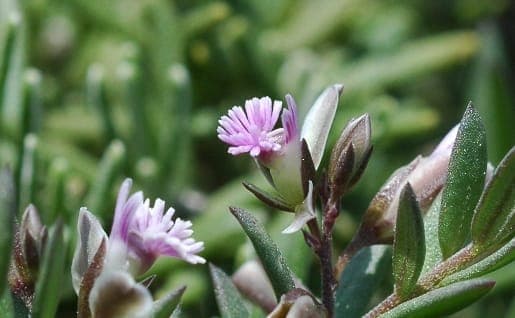
Sdrasvuitie / CC BY-SA 3.0, via Wikimedia Commons
Mediterranean milkwort: complete guide
Polygala monspeliaca
Want to see Mediterranean milkwort: complete guide in your garden?
1 minute, no credit card
Overview
Polygala monspeliaca, known as Mediterranean milkwort or Montpellier milkwort, is an elegant, compact shrub from the Mediterranean region and adjacent West Asia. This plant in the Polygalaceae family is native to southern Europe, North Africa, Turkey, and Iran, and grows naturally on dry slopes, stony grasslands, and rocky outcrops. The plant is valuable for Mediterranean garden design because of its compact growth habit, subtle beauty, and exceptional drought tolerance.
Polygala monspeliaca grows as a compact, densely branched shrub of 12 to 24 inches tall and wide. The plant produces many small white flowers in May and June in compact clusters. The plant is very long-lived and can persist for decades without much maintenance.
Appearance and bloom
Mediterranean milkwort grows as a compact, bushy shrub with very densely branched stems. The stems are angular, greenish or reddish, and hairy. Leaves are small, linear-lanceolate, 0.4 to 0.8 inches long and approximately 0.08 to 0.16 inches wide, dark green, alternately arranged, and quite densely packed.
Flowers are the most distinctive feature. They grow in dense, pyramidal clusters at the tops of stems. Each flower is small, approximately 0.12 to 0.2 inches long, white to very pale pink, with two larger wing-shaped sepals that frame the flower. The structure of Polygala flowers is very characteristic: two large sepals (wings) surround two smaller petals and a crested median carpel. The flowers are very fragrant and very attractive to bees and other pollinators.
Blooming occurs in May and June with sometimes extended bloom through July in cooler years. After flowering, plants produce small, rounded seed capsules dispersed by gravity and insects.
Ideal location
Polygala monspeliaca thrives in fully sunny locations with at least 6 hours of direct sunlight daily. The plant tolerates partial shade but blooms and grows better in full sun.
This plant prefers sheltered locations protected from very strong, persistent wind, though it tolerates considerable wind. In very open, exposed mountain locations, it grows compact and very windswept.
Polygala monspeliaca grows well in USDA zones 8-10. In zone 7, it may survive with protection but frost damage can occur. In zone 6 and colder, outdoor cultivation is impractical; container cultivation is needed.
Soil
This plant thrives in very well-draining, sandy to sandy loam soil. A pH between 6.0 and 8.0 is ideal, though the plant is very tolerant. The plant accepts even very poor, lean soils.
Waterlogging and stagnant water are very harmful; this plant dies in wet conditions. Heavy clay must be amended with sand and gravel for adequate drainage.
Free design
Want to see Mediterranean milkwort: complete guide in your garden? Make a free design now.
Watering
Newly planted Polygala monspeliaca need some moisture provision during the first growing season until established. After establishment, very minimal water is needed.
Once established (after approximately 1 year), this plant can live without supplemental water in temperate climates with regular rainfall. In very dry regions, occasional summer irrigation can help.
Pruning
Polygala monspeliaca requires very minimal pruning. A light pinching in early spring can encourage bushier growth. The plant naturally forms a very compact, bushy shape without much intervention.
Remove dead wood in spring and remove spent flower clusters after blooming if desired, though many growers leave them.
Maintenance calendar
FEBRUARY-MARCH: Light pruning and pinching. Light fertilizer application. APRIL-MAY: Preparation for blooming. Optimal light and moisture conditions. JUNE: Blooming period. Very minimal care needed. JULY-SEPTEMBER: Summer period. Very minimal care needed. OCTOBER-JANUARY: Winter period. Protection in cold zones.
Winter hardiness
Polygala monspeliaca is winter hardy in USDA zones 8-10. In zone 8, very cold years can cause leaf drop but plants usually recover. In zone 7, protection can be beneficial (burlap wrapping, sheltered wall placement).
In zone 6 and colder, outdoor cultivation is not practical; container cultivation with winter protection is needed.
Companion plants
Polygala monspeliaca combines beautifully with other Mediterranean shrubs. Lavandula, Rosmarinus, Helichrysum, Cistus, and Teucrium are excellent partners sharing similar drought preferences.
In rock gardens, it pairs well with alpine sedums, sempervivums, and low conifers. Gray-foliaged plants such as Artemisia and Santolina form nice contrasts against the green leaves.
Closing
Polygala monspeliaca is an elegant, subtly beautiful plant for Mediterranean garden design. The compact growth habit, fragrant flowers, and very low maintenance requirements make it highly attractive for sustainable garden design. Though not always common, Mediterranean plant nurseries and specialized suppliers can provide this species. In Southern Europe, it can be collected wild or purchased. GardenWorld.app also advises on Mediterranean plant selections. With the right location and drainage, you will enjoy decades of subtle beauty from this charming plant.
Want to see Mediterranean milkwort: complete guide in your garden? Make a free design now.
Upload a photo, pick a style, and get a photorealistic design with plant list in under a minute.
No credit card required


Similar plants
Rock milkwort: complete guide
Polygala rupestris
Everything about Polygala rupestris, the Mediterranean rock milkwort, for dry rock gardens and warm sunny spots with well-drained alkaline soil.
Polygala senega: complete guide
Polygala senega
Seneca snakeroot: a North American native herb with elegant flower spikes. Cultivation, care tips, and garden design ideas for mixed borders.
Alpen-Kreuzblume: complete guide
Polygala alpestris
Discover the elegant Alpen-Kreuzblume (Polygala alpestris), an alpine mountain plant with blue flowers perfect for rock gardens and alpine borders.