
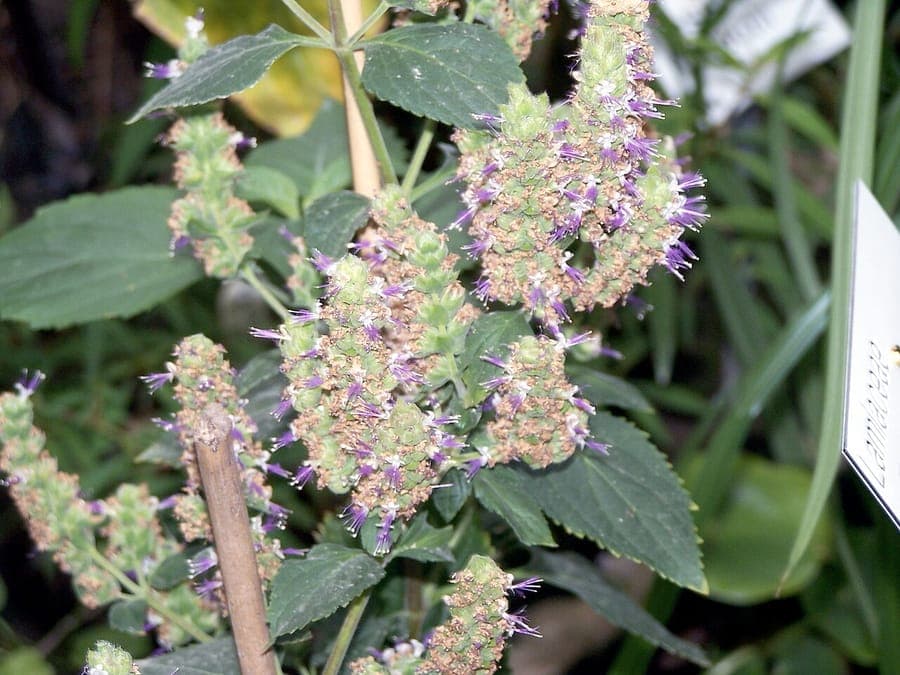
No machine-readable author provided. Valérie75 assumed (based on copyright claims). / CC BY-SA 3.0, via Wikimedia Commons
Pogostemon cablin: complete guide
Pogostemon cablin
Want to see Pogostemon cablin: complete guide in your garden?
1 minute, no credit card
Overview
Pogostemon cablin, known as patchouli, is an aromatic semi-shrubby plant originating from Indonesia, Sri Lanka, and Malaysia. This plant is famous for its distinctive, strong scent in both leaf and flower, used for over two centuries in perfumery, medicine, and rituals. Patchouli from Java and Sumatra produces the most potent essential oil commercially.
Appearance and Bloom
Pogostemon cablin grows 60-90 centimeters tall with densely hairy, dark green foliage. Leaves are oval, rough-textured, and strongly aromatic when crushed. From August through October, long delicate flower spikes appear bearing tiny purple or lilac blooms. These flowers attract butterflies and bees. Each floret contains abundant pollen. After bloom, small seeds form within enclosed calyxes.
Ideal Location
Patchouli thrives in very sunny locations (6+ hours direct sunlight). In warm climates it tolerates afternoon shade to prevent scorching. Humid growing environment prevents wilting risk. Plant in containers (minimum 30cm diameter) or open ground in USDA zones 10-12. In cold regions, grows well in greenhouse or overwinter indoors. Airflow prevents fungal problems.
Soil
Patchouli requires airy, well-draining soil with acidic to neutral pH (6.0-7.0). Heavy clay causes root rot. Mixes based on coir, peat, and perlite (1:1:0.5) work excellently. Add organic fertilizer for slow nutrient release. Tropical plant potting soil is suitable. Use pots with excellent drainage holes.
Watering
Pogostemon cablin loves moist soil but not waterlogged conditions. Water thoroughly when the top 2-3 centimeters feel dry. During growth season (May-October) water regularly - approximately two to three times weekly. Keep winter moisture higher, but not submerged. Rainwater or soft water tolerates better than hard water. Misting promotes flowering and aroma intensity.
Free design
Want to see Pogostemon cablin: complete guide in your garden? Make a free design now.
Pruning
Regular pruning stimulates bushiness and leaf production. Pinch growing tips mid-May to promote branching. After bloom (October-November) cut back to 15 centimeters above soil. This promotes compactness. Remove withered flower spikes and yellow leaves regularly. Pruned material contains aromatic oils suitable for tea.
Maintenance Calendar
January-February: Winter rest, lower moisture. March: Growth begins, slowly increase moisture. April-May: Pinch tips, start regular feeding. June-September: Peak growth period, abundant water and nutrients. October-November: Bloom peak, cut back after flowering. December: Prepare dormancy.
Winter Hardiness
Pogostemon cablin cannot tolerate frost and dies when temperatures drop below 10C. In regions with winters colder than 10C, overwinter indoors in bright location (18-20C). In USDA zones 10-12 it grows outdoors year-round. Light night frost causes leaf drop, but roots may regenerate. For frost protection: cover in November-March in marginal zones.
Companion Plants
In tropical gardens patchouli pairs well with other warm-loving aromatic plants: Hibiscus, Bougainvillea, Plumbago, Duranta. In container gardens combine with Zinnia, Salvia, Ocimum. Underplant with low groundcovers like Sedum. Its dense foliage provides privacy screening. Avoid moisture-loving or overcrowded underplanting directly beneath.
Closing Remarks
Pogostemon cablin is a fascinating plant combining aromatic value, medicinal applications, and ornamental worth. Leaves harvested in September-October yield powerful aromatic oil. Available in the UK through specialized herb nurseries and garden centers. Visit gardenworld.app for garden design inspiration.
What makes patchouli truly unique: leaves remain fragrant even when dried and used in potpourri for years. A single plant produces sufficient leaf for household aromatherapy use.
Want to see Pogostemon cablin: complete guide in your garden? Make a free design now.
Upload a photo, pick a style, and get a photorealistic design with plant list in under a minute.
No credit card required


Similar plants
Apple mint (Mentha x villosa): complete guide
Mentha x villosa
Meet apple mint (Mentha x villosa): a fruity-scented kitchen herb with woolly leaves, perfect for tea and mojitos.
Salvia peyronii: complete guide
Salvia peyronii
Discover Salvia peyronii, a rare Lebanese mountain sage. Growing tips, hardiness, and companion planting for a Mediterranean gravel garden.
Bigleaf mint (Mentha x rotundifolia): complete guide
Mentha x rotundifolia
Discover bigleaf mint: cultivation, care tips, and garden uses. Learn how to grow this aromatic herb with soft, hairy leaves.