
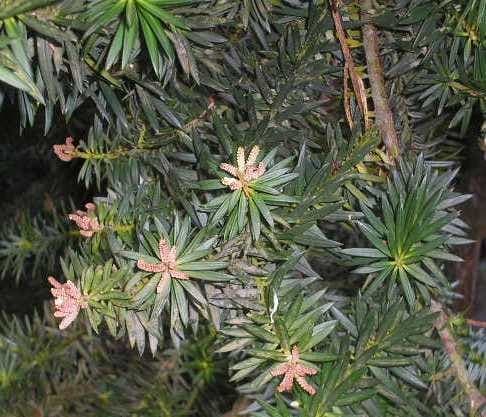
Lin linao / CC BY-SA 3.0, via Wikimedia Commons
Podocarpus nubigenus: complete guide
Podocarpus nubigenus
Want to see Podocarpus nubigenus: complete guide in your garden?
1 minute, no credit card
Overview
Podocarpus nubigenus, commonly known as Cloud Podocarp or Chilean Totara, is a conifer native to the mountain regions of southern Chile and Argentina. This elegant tree reaches 15 meters in its natural habitat and dominates the misty cloud forests of Patagonia. With its slender, bluish-green needles and columnar growth habit, it offers a distinctive silhouette that stands apart from many other garden conifers. For gardeners in temperate climates, this is a refined choice with frost resistance superior to tropical Podocarpus species.
Appearance and Bloom
The Chilean Totara is characterized by fine, small bluish-green needles 1-2 cm long, densely arranged along branches. Growth habit is columnar to narrowly pyramidal, creating an elegant, vertical silhouette without excessive width. The reddish-brown, smooth bark adds textural interest. This tree can easily reach 10-12 meters in gardens but responds well to pruning for specific forms. Flowers are inconspicuous; the tree's beautiful form is the primary aesthetic asset.
Ideal Location
Podocarpus nubigenus thrives in sheltered positions with at least 3-4 hours of sunlight daily. Partial shade is also well-tolerated. Protection from harsh winter winds is important, especially for young specimens. This is a tree for temperate climates with reasonable frost resistance (briefly to about -12 degrees Celsius). Ideal for gardens throughout Northern Europe, including the UK, Netherlands, Belgium, and northern France. The tree appreciates more humid air conditions, so positioning in a partially shaded location near other plantings yields optimal results.
Soil
Good drainage is important, as with other Podocarpus species. A mix of garden soil (60%) and sandy material with peat or composted bark (40%) provides ideal growing conditions. Soil pH should range from 5.5-7.0; this tree grows well in slightly acidic soils. For container cultivation, use standard conifer potting soil. Add organic material (leaf mold, garden compost) in early spring for slow nutrient release.
Watering
Maintain evenly moist soil without waterlogging. During growth period (May-August), water when the top 2-3 cm feels dry. Chilean trees prefer more moisture than many other Podocarpus species. In drier periods, especially for container specimens, water more frequently. In winter, less water is needed; allow soil to dry somewhat between waterings. Soft water with minimal chlorine is preferred.
Free design
Want to see Podocarpus nubigenus: complete guide in your garden? Make a free design now.
Pruning
Podocarpus nubigenus grows slowly enough that pruning is not strictly necessary. Light pruning in spring (April-May) helps maintain the columnar form and encourages dense needle growth. Remove dead branches and any straggling growth. This tree naturally forms an attractive silhouette, so cautious pruning is better than aggressive shaping. For more compact growth, prune side branches back 20-30 cm.
Maintenance Calendar
April: light pruning, inspect for winter damage, soil preparation. May-June: growth period begins, regular watering, monthly feeding. July-August: peak growth, water during dry spells. September-October: growth slowing, reduce watering, no more feeding. November-December: winter dormancy, minimal water, prepare frost protection. January-March: during hard frost, provide fleece or wind protection, check drainage.
Winter Hardiness
Podocarpus nubigenus is remarkably frost-hardy compared to tropical Podocarpus relatives, tolerating brief cold to -12 to -15 degrees Celsius. For Southern Netherlands, Belgium, and France, this is a viable choice. In northern Germany and further north, additional protection may be needed. Heavy snow load can break young branches; gently brush snow off. In exceptionally severe winters, frost cloth protection is beneficial, especially for young specimens.
Companion Plants
Podocarpus nubigenus combines well with other mountain trees and moisture-loving plants:
- Taxus baccata (Yew) - matching frost hardiness, classic pairing
- Ilex aquifolium (Holly) - evergreen foliage, decorative berries
- Heuchera spp. (Coral Bells) - fine foliage in understory
- Polystichum setiferum (Soft Shield Fern) - moisture-loving, fine texture
- Mahonia aquifolium (Oregon Grape) - glossy foliage, yellow flowers
Conclusion
Podocarpus nubigenus is a refined choice for gardeners seeking elegance and structure in temperate climates. With its slender, bluish-green needles and columnar growth, it provides year-round visual interest. Better winter hardiness compared to other Podocarpus species makes it more practical for Northern European gardens. Ensure consistent moisture and protection from harsh winter and summer winds, and you'll have a tree that thrives for decades. Available through specialty garden centers and nurseries.
Passersby will always ask, "What is that beautiful tree?" And you can proudly answer, "From the misty forests of Patagonia!"
Want to see Podocarpus nubigenus: complete guide in your garden? Make a free design now.
Upload a photo, pick a style, and get a photorealistic design with plant list in under a minute.
No credit card required

