
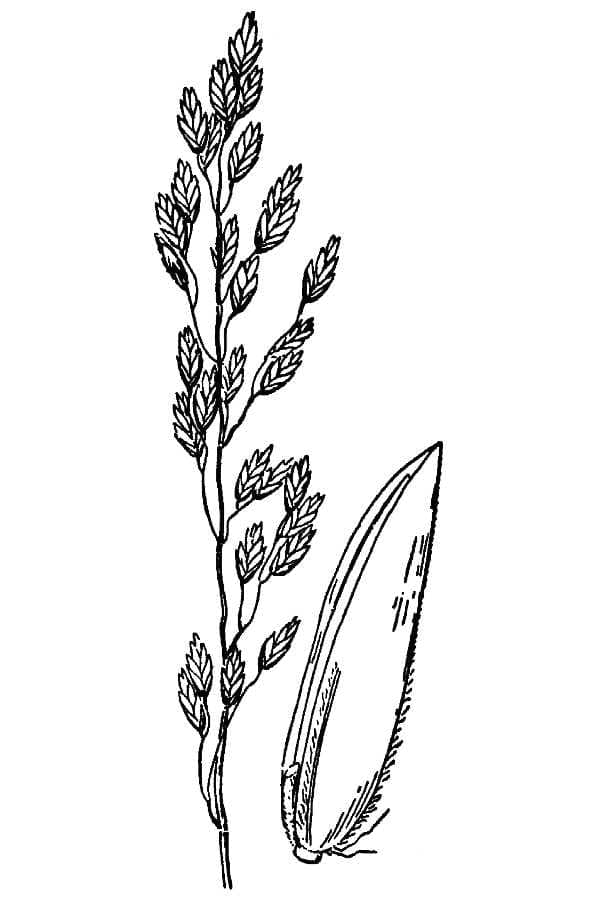
Hitchcock, A.S. (rev. A. Chase). / Public domain, via Wikimedia Commons
Poa glauca: complete guide for gardeners
Poa glauca
Want to see Poa glauca: complete guide for gardeners in your garden?
1 minute, no credit card
Overview
Poa glauca, commonly known as glaucous bluegrass or arctic bluegrass, is a remarkable ornamental grass from arctic and subarctic regions of the northern hemisphere. This perennial grass belongs to the Poaceae family and is particularly valued for its characteristic blue-green to silvery-white leaves. The plant is extremely cold-hardy and thrives in cold, dry environments.
Glaucous bluegrass grows in the most inhospitable regions of the world, from Greenland to Siberia, indicating its exceptional resilience. It is considered one of the finest small ornamental grasses with its striking color appearance.
Appearance and Bloom
Poa glauca forms extremely compact, stiff tufts of only 10 to 15 centimeters height with ultra-narrow, blue-green to silvery-gray leaves. The characteristic blue-green color results from a waxy surface that prevents water evaporation - a vital adaptation technique in arctic environments.
The plant flowers from May to June with small, green panicles that grow closely together. Most striking, however, is the persistent blue-green coloration, which remains remarkable even in winter and gives the plant value in all seasons.
Ideal Location
Poa glauca thrives best in very sunny locations. This grass loves being in full sunlight for maximum blue-green color development. Plant it on south-facing slopes or sunny alpine borders. Avoid shaded spots where the plant becomes dull and unclear.
The plant feels at home in open, windy locations where other plants struggle. This is an ideal grass for rock gardens, alpine borders, and very cold, sunny exposures.
Soil
Poa glauca is not fussy but grows best on very well-draining, poor soils. The plant prefers sandy to stony substrates and tolerates even very nutrient-poor soils. A pH between 5 and 7 is ideal, but it also grows on more acidic soils.
Heavy, waterlogging clay soils are absolutely unsuitable. This is a plant for minimal nutrition - excess compost or fertilizer can actually be harmful and promote unwanted growth.
Watering
Once established, Poa glauca requires virtually no water. This is one of the most drought-tolerant grass species and grows in areas with very minimal precipitation. Water only moderately during the planting season and afterward almost never.
Absolutely ensure water never stagnates. Drainage is much more important than moisture input. In wet climates, this grass can actually experience problems and enhanced drainage may be needed.
Free design
Want to see Poa glauca: complete guide for gardeners in your garden? Make a free design now.
Pruning
Pruning is not necessary and often even undesirable. The compact growth habit of Poa glauca requires no pruning. You can gently remove dead leaves, but avoid much handling of the plant.
You may wish to remove faded flower panicles after they lose their ornamental value, but this is optional.
Maintenance Calendar
Spring (March-May): Plant new specimens in very sunny, dry locations. No fertilization. Minimal water.
Summer (June-August): No care needed. Water only in extreme droughts.
Fall (September-October): Gently remove dead leaves. No other maintenance.
Winter (November-February): Plant rests. No watering needed. Enjoy persistent blue-green color.
Winter Hardiness
Poa glauca is extremely hardy to zone 3 (down to -40 degrees Celsius). This grass actually grows better in very cold climates and wilts in warm climates. The blue-green color becomes more pronounced in cold seasons.
No winter protection needed - this grass is completely resistant to snow, ice, and extreme frost periods. It is actually in winter that this grass is most striking.
Companion Plants
Poa glauca combines beautifully with:
- Other arctic/alpine grasses (Festuca glauca, carex)
- Alpine stone-loving plants (sedum, sempervivum)
- Mountain ferns
- Other blue-green plants for color harmony
It forms an exquisite accent in rock gardens and alpine planting schemes.
Closing Remarks
Poa glauca is a hidden gem for gardeners in cold climates. Its exceptional cold-hardiness, blue-green color, and minimal maintenance needs make it incomparable for alpine borders and rock gardens. This grass adds subtle elegance to the most challenging environments.
Seeds and plants can be found from specialized alpine plant nurseries. Visit gardenworld.app for inspiration and discover how this exquisite arctic grass can transform your alpine garden. With almost no care, your glaucous bluegrass will shine for years.
Poa glauca proves that arctic environments have their own special beauty. This humble grass offers elegance, color, and extreme cold-hardiness - everything needed for beautiful, hardy alpine gardens.
Want to see Poa glauca: complete guide for gardeners in your garden? Make a free design now.
Upload a photo, pick a style, and get a photorealistic design with plant list in under a minute.
No credit card required


Similar plants
Poa annua: complete guide for gardeners
Poa annua
Discover everything about Poa annua, annual bluegrass. From cultivation to maintenance: tips for healthy plants in your garden.
Poa bulbosa: complete guide for gardeners
Poa bulbosa
Discover all about Poa bulbosa, bulbous bluegrass. Cultivation and care of this unique grass for structure in your garden.
Poa chaixii: complete guide for gardeners
Poa chaixii
Discover all about Poa chaixii, broadleaf meadow grass. Cultivation and care of this elegant alpine grass.