
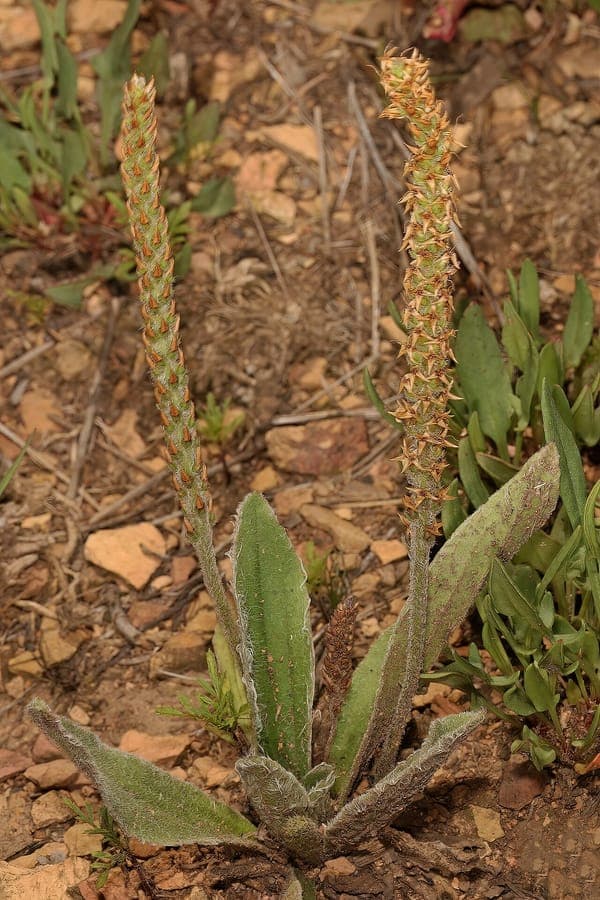
SAplants / CC BY-SA 4.0, via Wikimedia Commons
Hoary plantain: complete guide
Plantago virginica
Want to see Hoary plantain: complete guide in your garden?
1 minute, no credit card
Overview
Plantago virginica, known as Hoary plantain, Virginia plantain or Virginischer Wegerich in German, is an annual herb from the Plantaginaceae family. This North American species grows naturally from southeastern Canada through Mexico in open, dry to moderately moist habitats including meadows, disturbed ground, and field edges. The plant is recognized for its compact growth habit, fine foliage, and discrete flower spikes. For native gardens, wildflower meadows, and bird-feeding programs, Plantago virginica provides a valuable, low-maintenance option.
Appearance and Bloom
Plantago virginica grows as a low, compact rosette of fine, linear leaves 2 to 4 cm long. Leaves are grey-green and appear hairy (from which 'hoary' in the name derives). March through July, very compact, narrow flower spikes emerge above the leaf canopy, each bearing dozens of tiny, discrete white or pale pink flowers. The entire plant remains low, typically not exceeding 20 to 25 cm height, with spread around 15 cm. Resulting seed heads possess high nutritional value for birds and wildlife.
Ideal Location
Plantago virginica thrives in full sun through dappled shade, though full sun is preferred for flowering performance. The plant grows well in open, windy positions. Ideal for meadows, grass paths edges, and margins of vegetable and herb gardens. The plant feels at home in dry to moderately moist positions and tolerates some moisture pooling better than related species.
Soil
Plantago virginica is highly adaptable to soils and grows in virtually any well-drained earth mix, including sand, loam, and clay. The plant is undemanding regarding nutrient levels and thrives in relatively poor soils. pH between 6.0 and 8.0 is acceptable. For best results, plant seeds directly into soils without adding nutrients; artificial feeding may stimulate excessive foliage growth at expense of bloom.
Free design
Want to see Hoary plantain: complete guide in your garden? Make a free design now.
Watering
Once emerged (after 1 to 2 weeks), Plantago virginica is very drought-tolerant and requires minimal supplementary watering after rain in most seasons. At seeding stage, keep soil consistently moist so germination occurs. After emergence, water only during extremely hot, dry periods exceeding two weeks without rain. Excessive watering causes root damage and fungal problems.
Pruning
Plantago virginica requires no pruning because it grows very compactly. Spent flower spikes can be clipped close for neater appearance, though birds enjoy seed from ripened fruiting spikes; many gardeners allow the plant to mature for bird feeding. The plant dies naturally after seed-set.
Maintenance Calendar
Spring (March-May): Sow seed directly or transplant seedlings outdoors; keep consistently moist until emergence. Summer (June-July): Bloom; minimal watering; no feeding needed. Autumn (August-September): Seed-setting; birds visiting for seed; plant beginning dormancy. Winter (October-February): Plant dead; seed may overwinter in soil for next spring emergence.
Winter Hardiness
Plantago virginica is an annual in all USDA zones and performs best in zones 3 through 9. In colder zones (1 through 2), seed can be pre-germinated indoors for later transplanting. The plant easily recovers from frost damage despite being non-perennial.
Companion Plants
Plantago virginica combines beautifully with other North American wildflowers such as Coreopsis, Rudbeckia, and Echinacea. In wild meadows, plant it among native grasses like Panicum and Bouteloua. For bird feeding, it pairs well with other seed-producers like Teasel and Black-eyed Susan.
Closing Thoughts
Plantago virginica is an undervalued wildflower for native gardens and ecological plantings bringing bird food and botanical diversity. Compact growth, drought-tolerance, and minimal maintenance requirements make it ideal for busy gardeners. For seed or young plants, consult regional native plant suppliers; check gardenworld.app for related North American wildflowers. Plant this robust beauty to create ecologically rich, bird-friendly gardens.
Want to see Hoary plantain: complete guide in your garden? Make a free design now.
Upload a photo, pick a style, and get a photorealistic design with plant list in under a minute.
10,000+ gardens designed already
No credit card required


Similar plants
White Beardtongue: complete guide
Penstemon albidus
Discover white beardtongue (Penstemon albidus) - elegant perennial with white to cream flowers. Drought-resistant, perfect for prairie and dry gardens.
Longsepal Beardtongue: complete guide
Penstemon calycosus
Discover longsepal beardtongue (Penstemon calycosus) - beautiful perennial with lilac-blue flowers. For partial shade and moist soil. Ideal for naturalized.
Penstemon cusickii: complete guide
Penstemon cusickii
Discover Cusick's beardtongue, a compact alpine flowering plant with violet-pink blooms. Perfect choice for rock gardens and water-wise landscaping.