
Wikimedia Commons / Public domain, via Wikimedia Commons
Bhutan pine: complete guide
Pinus wallichiana
Want to see Bhutan pine: complete guide in your garden?
1 minute, no credit card
Overview
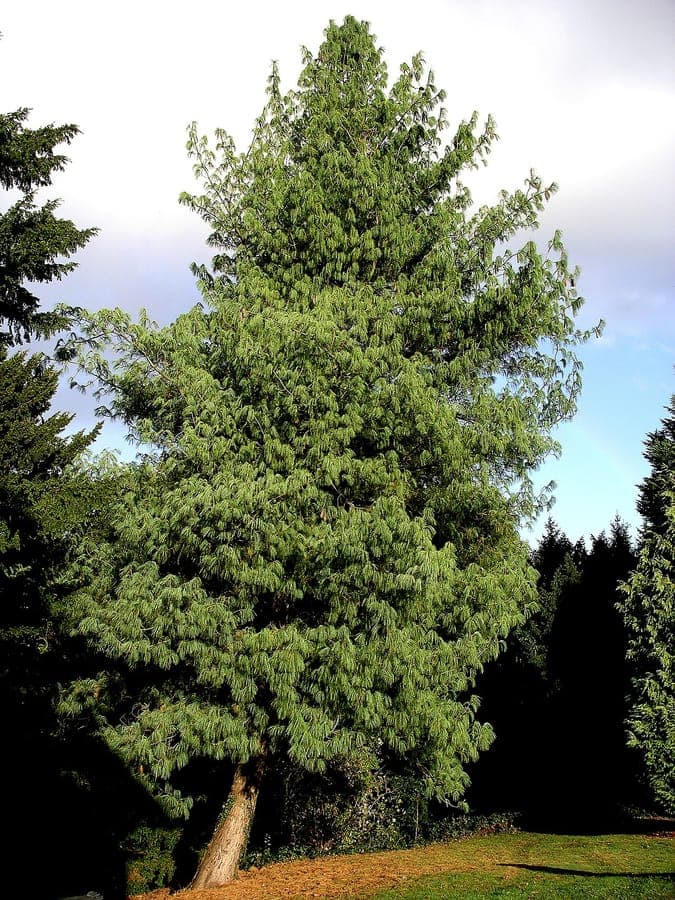
Pinus wallichiana, commonly known as Bhutan pine, is a standout evergreen that brings elegance and movement to the garden. Native to the high mountains of Afghanistan, Nepal, Bhutan, and the western Himalayas, this pine thrives in cool, well-drained conditions but adapts surprisingly well to temperate climates across Europe and North America. In cultivation, it typically reaches 15–25 m in height with a spread of 6–8 m, growing at a steady 20–30 cm per year. Its open, pendulous habit makes it ideal as a specimen tree in larger gardens, parks, or woodland settings.
What sets this pine apart is its graceful form. Unlike the rigid, upright pines common in suburban landscapes, Pinus wallichiana has long, drooping branches that catch the wind with a soft, flowing motion. The tree develops slowly, so it rewards patient gardeners who plan ahead. On gardenworld.app, you can design a landscape layout that accommodates its mature size, ensuring it won't overcrowd structures or block light in years to come.
Appearance & bloom cycle
The needles of Pinus wallichiana grow in bundles of five, are 12–20 cm long, and have a soft, bluish-green to light green hue. They remain on the tree for four to five years, providing consistent evergreen coverage. New growth in spring emerges as bright lime-green candles, softening to a silvery green as they mature. This seasonal shift adds subtle interest to the garden.
True flowers aren't showy, but reproductive structures appear in spring. Male cones are small, reddish, and clustered near shoot bases, releasing pollen in April to early May. Female cones take years to mature-starting green and turning into curved, 15–20 cm long woody cones that hang gracefully from the tips of branches. These persistent cones add winter texture and can remain on the tree for up to five years before releasing seeds.
Ideal location
Full sun is best for optimal growth and form, though light afternoon shade is tolerated, especially in hotter regions. Choose a spot with good air circulation and plenty of space-keep at least 4–5 m from buildings or other large trees to allow for root spread and crown development. This pine does well in exposed sites once established, thanks to its mountain origins, but young trees benefit from wind protection during their first two winters.
Avoid planting in tight corners or narrow side yards. This is not a tree for small urban plots unless used as a carefully pruned container specimen. Its natural beauty lies in its open, sweeping form.
Soil requirements
Well-drained soil is non-negotiable. Pinus wallichiana dislikes wet feet and will quickly succumb to root rot in compacted clay or waterlogged ground. Sandy loam or gravelly soils are ideal, with a pH range of 5.5 to 7.0. If your soil is heavy, consider raised planting or amending with grit and compost to improve drainage.
This pine is adaptable to poor soils and doesn't require rich organic matter. In fact, overly fertile soil can encourage weak, leggy growth. Let the tree grow at its natural pace.
Free design
Want to see Bhutan pine: complete guide in your garden? Make a free design now.
Watering
During the first growing season, water deeply once a week-about 20–30 litres per tree. Use a soaker hose to encourage deep root development. After the first year, the tree becomes drought-tolerant and rarely needs supplemental watering, except during prolonged dry spells in summer.
Avoid overhead watering, especially in humid climates, as wet foliage can promote fungal issues. Once established, rainfall is usually sufficient.
Pruning
Pruning is rarely needed. The tree's natural shape is elegant and should be preserved. If necessary, remove only dead, damaged, or crossing branches in late winter or early spring (February to March). Never cut back the main leader or heavily trim the pendulous tips-this ruins the tree's signature weeping form.
For container-grown specimens, root prune every 3–4 years and refresh the potting mix with a gritty, well-drained conifer blend.
Maintenance calendar
- January: Inspect for storm damage. Remove broken branches.
- February: Check for rodent activity around the trunk. Use tree guards if needed.
- March: Final pruning window. Clear debris from the base to prevent rot.
- April: New candles emerge. No feeding required.
- May: Watch for aphids or fungal spots after wet weather. Improve airflow if needed.
- June–August: Minimal care. Water only in extreme drought.
- September: Stop feeding. Late fertilisation encourages tender growth vulnerable to frost.
- October: Rake away fallen leaves that might smother lower branches.
- November–December: Fully dormant. No action required for in-ground trees.
A custom maintenance calendar for your garden can be generated on gardenworld.app, tailored to your climate and planting zone.
Winter hardiness
Pinus wallichiana is hardy to USDA zones 6b–8 (down to -20°C). In the UK (zone 8), it performs excellently, even in coastal areas. Young trees may show some needle browning in harsh winters but usually recover in spring. Container-grown specimens need extra winter protection-move to a sheltered spot or insulate the pot.
Companion plants
Pair with other conifers like Juniperus virginiana or Larix decidua for seasonal contrast. Underplant with shade-tolerant, non-invasive groundcovers such as Pachysandra, Carex, or Heuchera. Lavender and thyme work well at the edges, offering fragrance and pollinator support without competing for space.
Avoid aggressive spreaders like ivy or periwinkle, which can smother the trunk base.
Closing
Pinus wallichiana is a long-term investment in beauty and structure. It asks little-no feeding, minimal pruning-and gives back decades of graceful presence. Its weeping form adds movement and softness to formal or naturalistic gardens alike. Start with a healthy 60–80 cm sapling from garden centres like those in the UK or US, plant it right, and step back. Over the years, it will become a focal point that ages with dignity. For layout inspiration, check gardenworld.app, where you can visualise how this pine integrates into your garden's future design.
Want to see Bhutan pine: complete guide in your garden? Make a free design now.
Upload a photo, pick a style, and get a photorealistic design with plant list in under a minute.
No credit card required


Similar plants
Abies delavayi: complete guide
Abies delavayi
Delavayi fir is an elegant, medium-sized coniferous tree from the Pinaceae family with dark green needles. This Asian evergreen is perfect for alpine gardens and large landscapes.
Taiwan fir: complete guide
Abies kawakamii
Discover the magnificent Taiwan fir, a rare evergreen conifer from Taiwan's mountain regions. Learn growth requirements, care tips, and why this beautiful tree is perfect for collectors of unique garden specimens.
Farges fir: complete guide
Abies fargesii
Discover the majestic Farges fir, an impressive conifer from China's mountains with elegant foliage and columnar form. Ideal for large gardens.