
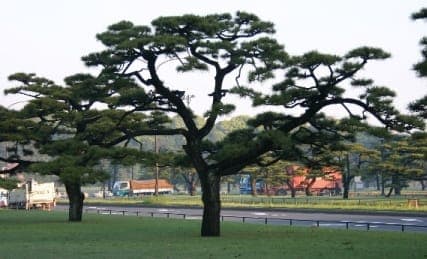
User:Jetoney / Public domain, via Wikimedia Commons
Black pine: complete guide
Pinus thunbergii
Want to see Black pine: complete guide in your garden?
1 minute, no credit card
Overview
Pinus thunbergii, commonly known as Black pine, is a striking and resilient evergreen tree native to Japan and Korea. In temperate climates, it has gained popularity for coastal gardens, windbreaks, and even as a bonsai specimen. Mature trees typically reach 10 to 15 meters in height with a spread of 5 to 8 meters, growing at a slow to moderate rate of 20 to 30 cm per year. This makes it manageable for most medium to large gardens.
One of its standout qualities is its tolerance to sea spray and salty winds, making it an excellent choice for seaside locations where other conifers struggle. It's also drought-tolerant once established, a valuable trait in increasingly unpredictable weather patterns. On gardenworld.app, you can create a custom garden design that integrates Black pine with proper spacing, wind protection, and visual balance.
Appearance & bloom cycle
Black pine has a bold, architectural presence. The trunk thickens with age and develops deeply fissured, dark grey to black bark that peels in irregular plates. Branches grow horizontally or slightly upward, creating a broad, open crown. The needles are stiff, glossy, and dark green, measuring 10 to 12 cm long and bundled in pairs.
Flowering occurs in spring, typically from April to early May. Male cones appear as small, yellow pollen-producing structures at the base of new shoots, while female cones are reddish and located higher in the canopy. After pollination, they develop into ovoid seed cones, 5 to 7 cm long, that take two years to mature. These cones often remain on the tree for several years, adding visual interest.
Ideal location
Black pine thrives in full sun-aim for at least 6 hours of direct sunlight daily. It will struggle in heavy shade, leading to sparse lower branching and increased susceptibility to fungal infections. Choose a site with ample space: plant at least 4 meters from buildings or other trees to prevent root competition and structural damage.
Its salt tolerance makes it ideal for coastal gardens in USDA zones 6 to 9. It also handles urban pollution well, so it's suitable for city parks or suburban front yards. Avoid low-lying areas where water pools, as standing moisture harms the root system.
Soil requirements
This pine is adaptable to a range of soil types but demands good drainage. It grows best in sandy or loamy soils but can tolerate light clay if amended with organic matter or coarse sand. The ideal pH ranges from slightly acidic to neutral (5.5 to 7.0). Avoid waterlogged or compacted soils-root rot is a real risk in poorly drained sites.
When planting, dig a hole twice as wide as the root ball but no deeper. Position the root flare at or slightly above ground level. Backfill with native soil, avoiding rich compost, which can encourage shallow rooting. On gardenworld.app, upload a soil test report to get tailored recommendations for improving drainage and pH.
Free design
Want to see Black pine: complete guide in your garden? Make a free design now.
Watering
Water deeply and regularly during the first growing season, especially in dry spells. Once a week is usually sufficient, but increase frequency during heatwaves. Use a slow-running hose or tree watering bag to encourage deep root development. After the first year, established trees rarely need supplemental watering except during prolonged droughts.
Avoid frequent shallow watering-it promotes weak surface roots. Instead, soak the root zone thoroughly but infrequently.
Pruning
Black pine rarely needs pruning, but you may want to shape it or enhance density. The best time is late winter to early spring before new candles emerge. Never prune in autumn, as cuts may not heal before cold sets in.
To encourage bushier growth, pinch back the new spring candles by half in May. This stimulates lateral buds and results in a fuller canopy. Use clean, sharp shears and disinfect between cuts to prevent disease spread.
Maintenance calendar
- January: Inspect for pests and diseases. Remove dead or broken branches.
- February: Final pruning window for structural cuts.
- March: Check soil moisture. Water if dry.
- April: Candles begin to emerge. Stop pruning.
- May: Pinch back new candles to promote branching.
- June: Monitor for spider mites during hot, dry periods.
- July: Watch for needle cast or rust in humid conditions.
- August: No fertilizing. Water only in extended drought.
- September: Avoid pruning. Prepare for fall leaf drop.
- October: Leave fallen needles as natural mulch-they acidify soil slightly.
- November: Protect young trunks from rodents with tree guards.
- December: Check for storm damage and secure loose branches.
Winter hardiness
Black pine is hardy in USDA zones 6 to 9 (-23°C to -1°C). In zone 6, young trees may suffer tip dieback during harsh winters, so consider wrapping the trunk with burlap for the first few years. Mature trees handle snow load well, but heavy, wet snow can occasionally break weak limbs.
Avoid planting in frost pockets-cold air settling in low areas increases winter injury risk.
Companion plants
Plant Black pine with low-maintenance, drought-tolerant species. Good companions include Sedum spectabile, Yucca filamentosa, and Carex vulpinoidea. Low-growing shrubs like Cotoneaster dammeri or Juniperus conferta work well as ground cover.
For a Japanese garden aesthetic, pair with Hakonechloa macra, Nandina domestica, or dwarf bamboo. Avoid aggressive spreaders like mint or English ivy that can compete for resources.
Closing
Black pine is a tough, elegant tree that brings structure and year-round interest to the garden. With minimal care and high resilience, it's ideal for coastal sites, urban settings, and formal landscapes. Its slow growth and classic form make it a long-term investment. Buy healthy specimens from trusted garden centres, where you can inspect root quality and trunk structure. And remember, on gardenworld.app you can design a planting scheme that maximizes the impact of your Black pine-whether as a solo specimen or part of a larger composition.
Want to see Black pine: complete guide in your garden? Make a free design now.
Upload a photo, pick a style, and get a photorealistic design with plant list in under a minute.
No credit card required


Similar plants
Abies delavayi: complete guide
Abies delavayi
Delavayi fir is an elegant, medium-sized coniferous tree from the Pinaceae family with dark green needles. This Asian evergreen is perfect for alpine gardens and large landscapes.
Taiwan fir: complete guide
Abies kawakamii
Discover the magnificent Taiwan fir, a rare evergreen conifer from Taiwan's mountain regions. Learn growth requirements, care tips, and why this beautiful tree is perfect for collectors of unique garden specimens.
Farges fir: complete guide
Abies fargesii
Discover the majestic Farges fir, an impressive conifer from China's mountains with elegant foliage and columnar form. Ideal for large gardens.