
No machine-readable author provided. Inti-sol~commonswiki assumed (based on copyright claims). / CC BY-SA 3.0, via Wikimedia Commons
Japanese stone pine: complete guide
Pinus pumila
Want to see Japanese stone pine: complete guide in your garden?
1 minute, no credit card
Overview
Pinus pumila, commonly known as Japanese stone pine, is a creeping, low-growing pine native to the cold mountainous regions of Siberia, Japan, Korea, and the Russian Far East. Unlike upright pines, this species spreads horizontally, rarely exceeding 60 cm in height but reaching 1.5 to 2 meters in spread over time. It's a tough, evergreen conifer prized in temperate gardens for its resilience, winter interest, and adaptability to rocky or sloping terrain. Hardy to USDA zone 3 (-40°C), it thrives in exposed, windy sites where few other plants survive. In cultivation, it's ideal for rock gardens, alpine beds, or as ground cover on sunny banks.
On gardenworld.app, you can design a garden layout that highlights the creeping form of the Japanese stone pine-think terraced slopes, stone pathways, or low borders where its soft texture contrasts with harder hardscaping.
Appearance & bloom cycle
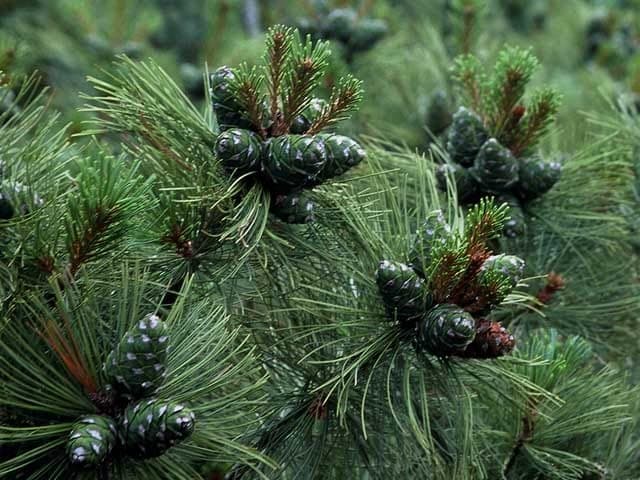
The Japanese stone pine features fine, soft needles that grow in bundles of five, typical of white pines. Needles are 3 to 6 cm long, bluish-green to bright green, and densely packed along the stems, creating a plush, cushion-like appearance. The plant spreads by trailing branches that root at the nodes when they touch the soil, forming a dense mat over time. Flowers are inconspicuous: male cones release pollen in late spring, while female cones develop into small, ovoid cones (2–4 cm long) that mature slowly, often taking two to three years to open and release seeds. These cones add subtle visual interest but don't dominate the plant's look.
Ideal location
Full sun is best, though light afternoon shade is tolerated in hot climates. The plant needs excellent air circulation and benefits from being planted on a slope or raised bed to prevent moisture buildup. Avoid low-lying, stagnant areas. In gardens with strong northern winds, young plants may need temporary windbreaks for the first two winters. Mature plants handle exposure well. Use the sun mapping tool on gardenworld.app to confirm your garden's light levels and choose the optimal planting spot.
Soil requirements
Well-drained soil is essential. Pinus pumila dislikes wet feet and will rot in compacted or clay-heavy soils. A sandy or gravelly mix with added organic matter (like pine bark or composted wood chips) works best. Ideal pH ranges from 5.5 to 7.0-slightly acidic to neutral. If planting in heavy soil, amend with coarse sand or lava grit to improve drainage. Avoid liming, as this can raise pH and harm root development.
Free design
Want to see Japanese stone pine: complete guide in your garden? Make a free design now.
Watering
Water regularly during the first growing season-about once a week with 5–10 liters per plant, depending on rainfall. After establishment (typically by year two), the plant is highly drought-tolerant. Water only during prolonged dry spells. Always water at the base to keep foliage dry and prevent fungal issues. Rainwater is preferred over tap water, especially in hard water areas, to prevent mineral deposits on needles.
Pruning
Pruning is rarely needed. The plant's natural growth habit is tidy and spreading. If shaping is desired, do so in late winter or early spring before new growth begins. Remove dead or damaged branches, and lightly trim straggly tips to encourage denser growth. Never cut into old wood without visible buds-recovery is poor. Use clean, sharp bypass pruners to avoid disease transmission.
Maintenance calendar
- Jan: Check for winter damage, especially in young plants
- Feb: Inspect for snow load or branch breakage
- Mar: Light shaping if needed; monitor for bud swell
- Apr: Apply a thin layer of pine bark mulch; check for aphids
- May: Begin regular watering if dry; growth accelerates
- Jun: Monitor for needle browning in hot, dry periods
- Jul: No routine care; only water in extended drought
- Aug: Observe for signs of stress after heatwaves
- Sep: Final pest inspection
- Oct: Avoid pruning; let cones mature naturally
- Nov: Prepare for winter; top up mulch if needed
- Dec: Protect young plants from drying winds with burlap
Winter hardiness
Pinus pumila is exceptionally cold-tolerant, surviving USDA zones 3 to 7. It handles heavy snow and ice well-snow can even insulate the plant. The low growth habit reduces wind scorch. No winter protection is needed for mature plants, though first-year specimens benefit from a wind screen. Avoid de-icing salts near planted areas.
Companion plants
Pair with other alpine or rock garden species such as Sedum spectabile, Thymus vulgaris, Dianthus deltoides, or Juniperus communis 'Compressa'. Dwarf heathers (Calluna vulgaris cultivars) and low-growing ornamental grasses like Festuca glauca also complement its texture. Avoid vigorous ground covers like ivy or periwinkle that might overtake it. On rocky outcrops, it combines beautifully with Saxifraga species or creeping phlox.
Closing
The Japanese stone pine is a reliable, low-maintenance evergreen that brings year-round structure to the garden. Its creeping habit and soft foliage make it ideal for challenging sites. Available at most garden centres in the UK and North America. For design inspiration, visit gardenworld.app to visualise how Pinus pumila can anchor a rock garden or soften a retaining wall in your outdoor space.
Want to see Japanese stone pine: complete guide in your garden? Make a free design now.
Upload a photo, pick a style, and get a photorealistic design with plant list in under a minute.
No credit card required


Similar plants
Abies delavayi: complete guide
Abies delavayi
Delavayi fir is an elegant, medium-sized coniferous tree from the Pinaceae family with dark green needles. This Asian evergreen is perfect for alpine gardens and large landscapes.
Taiwan fir: complete guide
Abies kawakamii
Discover the magnificent Taiwan fir, a rare evergreen conifer from Taiwan's mountain regions. Learn growth requirements, care tips, and why this beautiful tree is perfect for collectors of unique garden specimens.
Farges fir: complete guide
Abies fargesii
Discover the majestic Farges fir, an impressive conifer from China's mountains with elegant foliage and columnar form. Ideal for large gardens.