
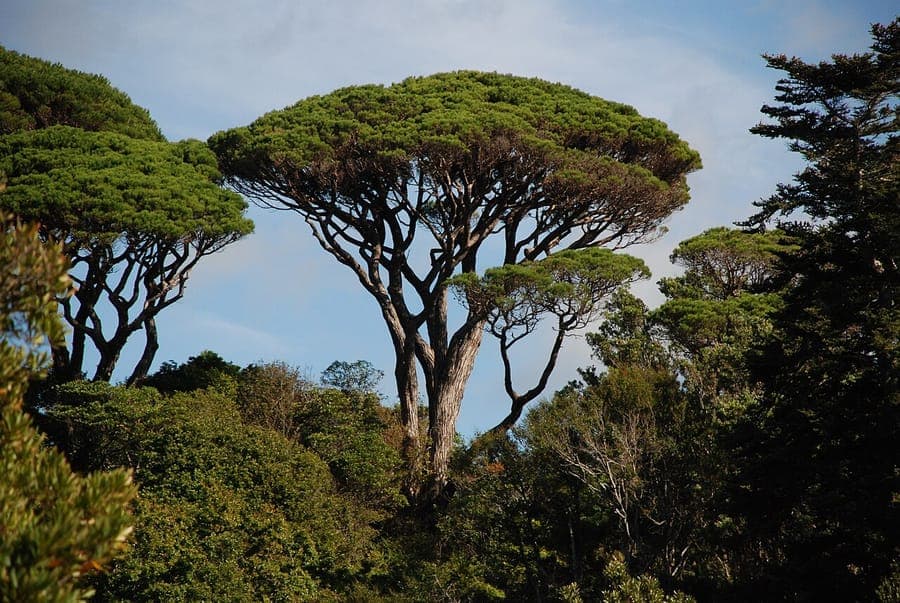
Karora / Public domain, via Wikimedia Commons
Umbrella pine: complete guide
Pinus pinea
Want to see Umbrella pine: complete guide in your garden?
1 minute, no credit card
Overview
The Umbrella pine, or Pinus pinea, is a striking evergreen tree native to the Mediterranean basin. With its origins in countries like Italy, Greece, and southern France, this tree has graced coastal and hilly landscapes for thousands of years. What sets it apart is its unique growth habit: young trees are conical, but as they mature-usually after 10 to 15 years-the upper branches begin to spread horizontally, forming a broad, flat-topped crown that resembles an open umbrella.
In temperate climates such as the UK and parts of northern Europe, the Umbrella pine is often grown as a specimen tree in gardens aiming for a Mediterranean feel. While it won't reach its full potential height of up to 20 meters in cooler zones, it still makes a dramatic statement. Mature trees in ideal conditions can live over 100 years, developing thick trunks and deeply textured bark.
On gardenworld.app, you can design a garden layout that highlights the Umbrella pine as a focal point, ensuring it has space to develop its signature shape.
Appearance & bloom cycle
Pinus pinea features long, soft needles in pairs, measuring 10–15 cm, with a pale green hue. These remain on the tree year-round, offering consistent evergreen structure. In April and May, small yellow flowers appear at the branch tips-male flowers are more noticeable, releasing pollen, while female cones take time to mature.
The most famous feature of this pine is its edible seeds, commonly known as pine nuts. The cones take about three years to ripen and are heavy, ovoid, and up to 12 cm long. Once mature, they open to release the prized kernels inside, often used in pesto and Mediterranean cooking.
The tree's transformation from a narrow young sapling to a wide-crowned adult is one of its most captivating traits. Patience is key-don't expect the umbrella form until the tree is at least a decade old.
Ideal location
Pinus pinea thrives in full sun-aim for 8 or more hours of direct light daily. A south- or southwest-facing spot is best. Ensure ample space: allow at least 5 meters of clearance around the tree when fully grown.
While the tree is wind-tolerant, young specimens benefit from protection against cold easterly winds, especially in USDA zones 7b and 8a. In exposed gardens, consider planting it near a wall or alongside windbreak shrubs. Avoid shaded or crowded areas-this pine dislikes competition and poor air circulation.
Soil requirements
Well-drained soil is essential. Sandy or loamy soils with a pH between 7.0 and 7.5 are ideal. Avoid heavy clay or waterlogged sites, which can lead to root rot. If your soil is dense, consider raised planting or adding grit to improve drainage.
This pine is adapted to nutrient-poor soils, so avoid over-fertilizing. Excess nitrogen can promote weak, leggy growth. When planting, skip compost or manure-use native soil only.
Free design
Want to see Umbrella pine: complete guide in your garden? Make a free design now.
Watering
Water deeply but infrequently after planting, especially during the first growing season. Once established (after 1–2 years), the Umbrella pine is highly drought-tolerant and rarely needs supplemental watering, except during prolonged dry spells.
Use deep watering to encourage roots to grow downward. Apply a layer of organic mulch-such as pine bark or wood chips-around the base, keeping it 10 cm from the trunk to prevent rot.
Pruning
Minimal pruning is required. The natural form is elegant and should be preserved. Remove only dead, damaged, or crossing branches, and do so in late winter or early spring before new growth starts.
Avoid cutting into old wood without needles-pines don't regenerate well from bare stems. Container-grown specimens may need light shaping, but this is rarely necessary.
Maintenance calendar
- January: Check for storm damage. Gently remove heavy snow from branches.
- February: Inspect for pests or fungal issues. Prepare for light pruning.
- March: Final pruning before spring. Check root zone for compaction.
- April: New candles appear. No feeding needed.
- May: Flowering period. Monitor during dry weather.
- June: Established trees require no care.
- July-August: Observe in extreme heat. Mulch if needed.
- September: No specific tasks.
- October: Collect fallen cones if desired.
- November: Check young trees for pests.
- December: Protect young trees from frost with horticultural fleece.
Winter hardiness
Hardy to around -12°C (USDA zone 8), the Umbrella pine can survive in zone 7b with protection. Young trees are more vulnerable-wrap the trunk and lower crown in winter fleece during cold snaps. Mature trees handle winter well in milder regions.
Companion plants
Pair with drought-tolerant Mediterranean plants like lavender, rosemary, santolina, or cistus. Low-growing succulents such as sedum or sempervivum work well beneath the canopy. Avoid vigorous ground covers or invasive species that compete for moisture.
On gardenworld.app, you can explore plant combinations that complement the Umbrella pine's structure and create a cohesive, low-maintenance garden.
Closing
The Umbrella pine brings timeless elegance to any garden. With full sun, good drainage, and patience, it will develop its iconic shape over time. While it grows slowly, its longevity and visual impact make it worth the wait. Purchase young, healthy specimens from reputable garden centres. Avoid bargain plants with root-bound containers-opt for those with a strong central leader and even branching. With proper care, your Pinus pinea will be a centrepiece for decades.
Want to see Umbrella pine: complete guide in your garden? Make a free design now.
Upload a photo, pick a style, and get a photorealistic design with plant list in under a minute.
No credit card required


Similar plants
Abies delavayi: complete guide
Abies delavayi
Delavayi fir is an elegant, medium-sized coniferous tree from the Pinaceae family with dark green needles. This Asian evergreen is perfect for alpine gardens and large landscapes.
Taiwan fir: complete guide
Abies kawakamii
Discover the magnificent Taiwan fir, a rare evergreen conifer from Taiwan's mountain regions. Learn growth requirements, care tips, and why this beautiful tree is perfect for collectors of unique garden specimens.
Farges fir: complete guide
Abies fargesii
Discover the majestic Farges fir, an impressive conifer from China's mountains with elegant foliage and columnar form. Ideal for large gardens.