
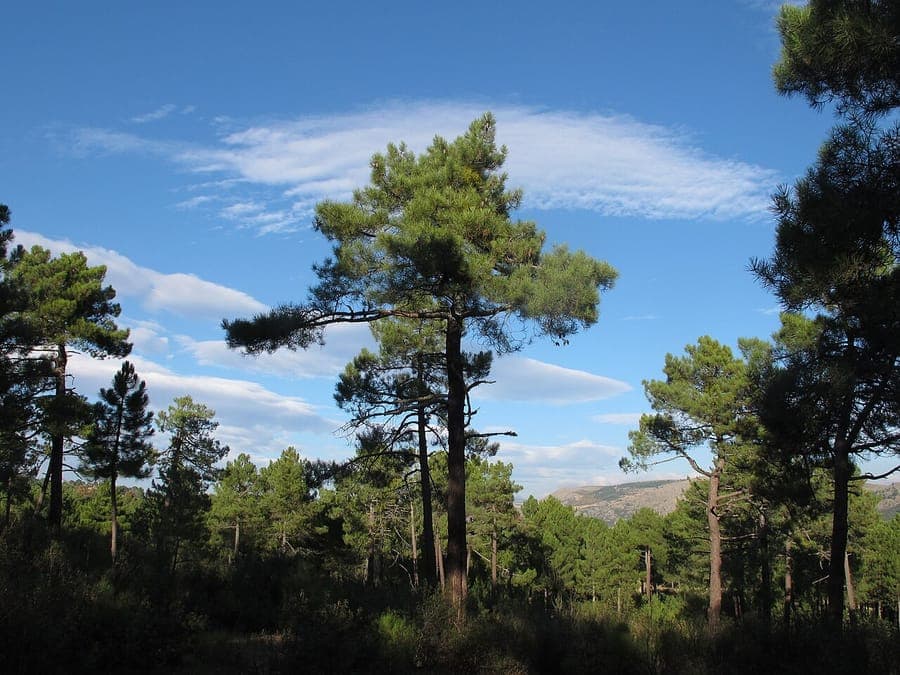
jacilluch / CC BY-SA 2.0, via Wikimedia Commons
Cluster pine: complete guide
Pinus pinaster
Want to see Cluster pine: complete guide in your garden?
1 minute, no credit card
Overview
Pinus pinaster, commonly known as Cluster pine, is a bold and resilient evergreen tree native to coastal regions of southern Europe and northwest Africa. It thrives in tough conditions - salty air, dry soils, strong winds - making it a solid choice for coastal gardens or large-scale landscape projects. In its natural habitat, from Portugal to Morocco, it often forms dense stands on sandy dunes or poor soils. In the UK or northern Europe, it's best suited to milder coastal zones where winter temperatures don't drop below -10°C. Given enough space, this pine can reach 25 to 30 meters in height with a spread of up to 12 meters, so it's not a tree for small back gardens.
If you're considering a Cluster pine, use gardenworld.app to visualise how it will fit into your garden over time, including canopy spread and shade patterns.
Appearance & bloom cycle
Young Cluster pines have a neat conical shape that gradually opens into a broad, flat-topped crown with age. The bark is thick, deeply fissured, and ranges from reddish-brown to grey, giving mature trees a rugged, picturesque look. Needles grow in pairs, are 10 to 20 cm long, stiff, and display a bright green to blue-green hue. They remain on the tree for 2 to 3 years before shedding.
In late spring, male flowers appear as yellow catkins near the base of new shoots, while female cones start green and develop into large, ovoid cones up to 15 cm long. These woody cones persist on the tree for years and only open to release seeds after exposure to high heat - a fire-adaptation trait common in Mediterranean pines. Seed maturity takes 24 to 30 months.
Ideal location
Cluster pine needs full sun - aim for at least 8 hours of direct light daily (light level 8). It performs best in open, unshaded spots with plenty of airflow. Its salt tolerance makes it an excellent windbreak or focal point in coastal gardens. Avoid planting it too close to buildings, driveways, or underground utilities, as its root system can spread widely and deeply. In inland gardens, it works well as a standalone specimen or in mixed woodland edges.
Before planting, check your garden layout on gardenworld.app to ensure long-term clearance and avoid future conflicts with structures or other plants.
Soil requirements
This pine isn't fussy about soil type as long as drainage is excellent. It prefers sandy, acidic soils with a pH between 5.0 and 5.5. It tolerates poor, infertile soils and doesn't require fertiliser. Avoid heavy clay or waterlogged sites - prolonged wetness leads to root rot. If you're unsure about your soil, test it or consult a local garden centre for advice.
Free design
Want to see Cluster pine: complete guide in your garden? Make a free design now.
Watering
Young trees need regular watering during their first two to three years, especially in dry spells. Provide 10–15 litres per week during extended droughts. Once established, Cluster pine is highly drought-tolerant and rarely needs supplemental watering. Overwatering is more harmful than underwatering - these pines evolved in dry summers and don't cope well with soggy roots.
Pruning
Pruning is rarely needed. The tree naturally develops a strong structure. Only remove dead, damaged, or diseased branches, and do so in late spring or early summer. Avoid cutting back into old wood, as pines don't regenerate well from bare stems. Use clean, sharp tools to reduce the risk of fungal infection.
Maintenance calendar
- Jan: inspect for storm damage and broken branches
- Feb: prepare planting site if installing a new tree
- Mar: plant young trees after frost risk has passed
- Apr: check for pests or fungal signs
- May: monitor young trees for drought stress
- Jun: no maintenance required
- Jul: watch for extreme heat stress in hot summers
- Aug: minimal care needed
- Sep: observe cone development and seed dispersal
- Oct: clean up fallen needles and debris
- Nov: secure young trees if strong winds are forecast
- Dec: final check for structural stability
Winter hardiness
Cluster pine is hardy in USDA zones 8–11. In cooler zones (7 and below), young trees may suffer frost damage, especially in exposed locations. Mature trees handle cold better but still benefit from a sheltered, sunny spot. In harsh winters, protect young specimens with hessian wraps or windbreaks.
Companion plants
Pair Cluster pine with other drought- and salt-tolerant species. Good companions include Cistus, Lavandula, Rosmarinus, and Juniperus. Low-growing groundcovers like Thymus or Sedum work well beneath the canopy without competing for moisture. Avoid moisture-loving plants like ferns or hostas - they won't thrive in the dry, acidic, shaded conditions under this pine.
Closing
Pinus pinaster isn't for every garden, but if you've got space and a sunny, well-drained spot - especially near the coast - it's a striking, low-maintenance tree with real presence. It provides shelter, structure, and year-round interest. Just plan ahead: this is a long-term commitment. With gardenworld.app, you can design a garden layout that balances scale, growth rate, and visual impact - ensuring your Cluster pine enhances your space for decades to come.
Want to see Cluster pine: complete guide in your garden? Make a free design now.
Upload a photo, pick a style, and get a photorealistic design with plant list in under a minute.
No credit card required


Similar plants
Abies delavayi: complete guide
Abies delavayi
Delavayi fir is an elegant, medium-sized coniferous tree from the Pinaceae family with dark green needles. This Asian evergreen is perfect for alpine gardens and large landscapes.
Taiwan fir: complete guide
Abies kawakamii
Discover the magnificent Taiwan fir, a rare evergreen conifer from Taiwan's mountain regions. Learn growth requirements, care tips, and why this beautiful tree is perfect for collectors of unique garden specimens.
Farges fir: complete guide
Abies fargesii
Discover the majestic Farges fir, an impressive conifer from China's mountains with elegant foliage and columnar form. Ideal for large gardens.