
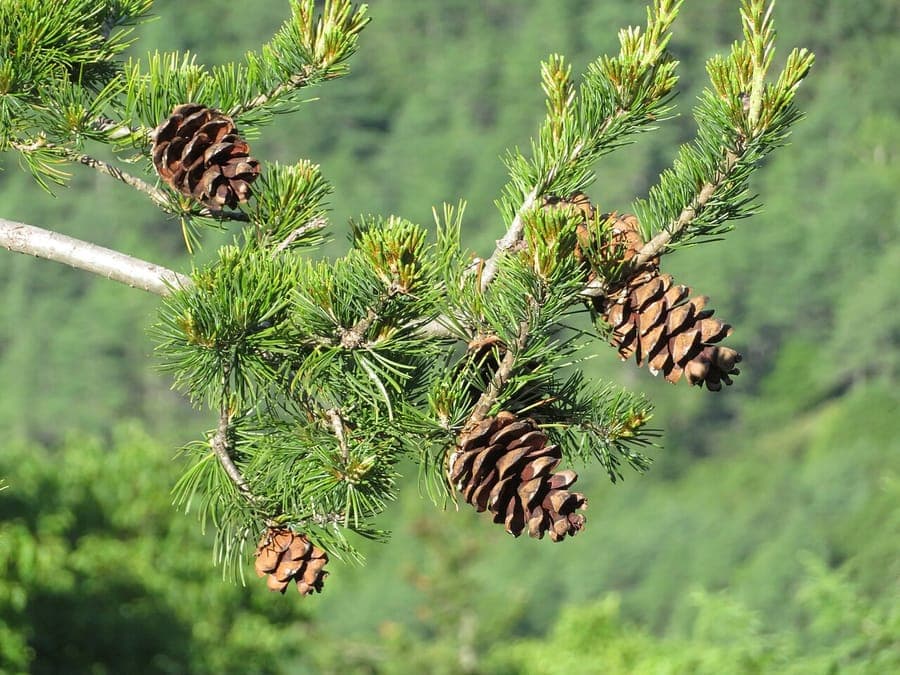
belvedere04 / CC BY 4.0, via Wikimedia Commons
Five-needle pine: complete guide
Pinus parviflora
Want to see Five-needle pine: complete guide in your garden?
1 minute, no credit card
Overview
Pinus parviflora, commonly known as the five-needle pine, is a graceful evergreen native to Japan, Korea, and the Kuril Islands. It's prized in gardens for its slow growth, elegant form, and soft, bluish-silver needles. This pine typically reaches 6 to 10 meters in height and spreads 3 to 5 meters wide over 20 to 30 years, making it suitable for small to medium-sized gardens. It grows about 10–20 cm annually, so it won't outgrow its space too fast. Hardy in USDA zones 5 to 8 (-20°C to -10°C), it withstands cold winters and thrives in temperate climates. On gardenworld.app, you can design a garden layout that matches your space and climate, ensuring your five-needle pine has room to grow without crowding.
Appearance & bloom cycle
The five-needle pine has a loose, horizontal branching habit with long, flexible limbs. Its needles grow in clusters of five, 4 to 7 cm long, and display a silvery-blue hue, especially on new growth. In spring, small purple-brown male cones and pinkish female cones appear, maturing into 4 to 6 cm ovoid seed cones that persist for several years. These add winter interest and attract birds. The bark turns pale gray and develops shallow fissures with age, enhancing its ornamental appeal. Unlike many pines, Pinus parviflora has a refined, almost sculptural look, ideal for focal points.
Ideal location
This pine thrives in full sun but tolerates light afternoon shade, especially in hotter zones. It needs at least 6 hours of direct sunlight daily for dense foliage. Provide 2.5 to 3 meters of clearance on all sides to allow its horizontal branches to develop naturally. It works well as a specimen tree, in rock gardens, or as part of a Japanese-inspired planting scheme. Avoid planting near walls or structures that block airflow, as this increases fungal risk. Use gardenworld.app to visualise how this pine fits in your garden and whether it complements existing trees or shrubs.
Soil requirements
Pinus parviflora prefers well-drained, slightly acidic to neutral soil (pH 5.5–6.8). Sandy loam or gravelly soils are ideal. Avoid heavy clay or waterlogged areas - if necessary, amend with coarse sand and compost. For container growing, mix potting soil with perlite and pine bark for better drainage. Never let the roots sit in soggy soil; root rot is a common issue with poor drainage. Raised beds or slopes help in wetter regions.
Free design
Want to see Five-needle pine: complete guide in your garden? Make a free design now.
Watering
Young trees need consistent watering - about once or twice a week during the first two growing seasons, especially in dry spells. Water deeply to encourage deep root development. Mature trees are drought-tolerant but benefit from occasional deep watering during prolonged dry periods. Use a soaker hose or water at the base to prevent wetting foliage, which can lead to fungal diseases. Rainwater is preferable to tap water, especially in hard-water areas.
Pruning
Minimal pruning is needed. Remove dead, damaged, or crossing branches in late winter or early spring. For denser growth, use the candle pruning method in May or June: pinch back new soft shoots (candles) by half. Do not cut into old wood, as pines don't regenerate well from bare stems. For bonsai-style shaping, pinch candles gradually and wire branches carefully in late summer. Use clean, sharp tools and disinfect between cuts.
Maintenance calendar
- January: Check for snow damage, gently shake off heavy snow
- February: Plant or transplant if soil isn't frozen
- March: Inspect for winter injury, light pruning
- April: Monitor for aphids or scale insects
- May: Perform candle pruning, apply slow-release fertiliser
- June: Repeat candle pruning on late growers
- July: Avoid pruning, check for drought stress
- August: Water deeply during dry spells
- September: Stop fertilising, check for cones
- October: Rake fallen needles, keep area tidy
- November: Protect young trees with burlap in exposed sites
- December: Final inspection, ensure good air circulation
Winter hardiness
Hardy to USDA zone 5, this pine handles cold well but young trees may suffer from winter burn in windy, sunny spots. Use burlap wraps or windbreaks for protection. Avoid late-season fertilising, which can encourage tender growth vulnerable to frost. Ensure the tree is well-hydrated before winter dormancy, as desiccation is a bigger threat than cold.
Companion plants
Pair with shade-tolerant, non-invasive plants like Hakone grass, hostas, ferns, or creeping junipers. Avoid aggressive spreaders like bamboo. A Japanese maple (Acer palmatum) makes a stunning contrast. Use stone pathways or gravel mulch to complement its aesthetic. For a natural look, group it with boulders or in a rock garden. Garden centres in the UK and US often stock young specimens in 2 to 3 gallon pots, especially in spring.
Closing
The five-needle pine is a long-lived, low-maintenance evergreen that adds structure and year-round interest. With proper placement and basic care, it thrives for decades. Whether you're designing a tranquil retreat or a modern courtyard, this pine brings elegance and calm. Plan your planting smartly - on gardenworld.app, you can simulate growth patterns and spacing to ensure a balanced, thriving garden.
Want to see Five-needle pine: complete guide in your garden? Make a free design now.
Upload a photo, pick a style, and get a photorealistic design with plant list in under a minute.
No credit card required


Similar plants
Abies delavayi: complete guide
Abies delavayi
Delavayi fir is an elegant, medium-sized coniferous tree from the Pinaceae family with dark green needles. This Asian evergreen is perfect for alpine gardens and large landscapes.
Taiwan fir: complete guide
Abies kawakamii
Discover the magnificent Taiwan fir, a rare evergreen conifer from Taiwan's mountain regions. Learn growth requirements, care tips, and why this beautiful tree is perfect for collectors of unique garden specimens.
Farges fir: complete guide
Abies fargesii
Discover the majestic Farges fir, an impressive conifer from China's mountains with elegant foliage and columnar form. Ideal for large gardens.