
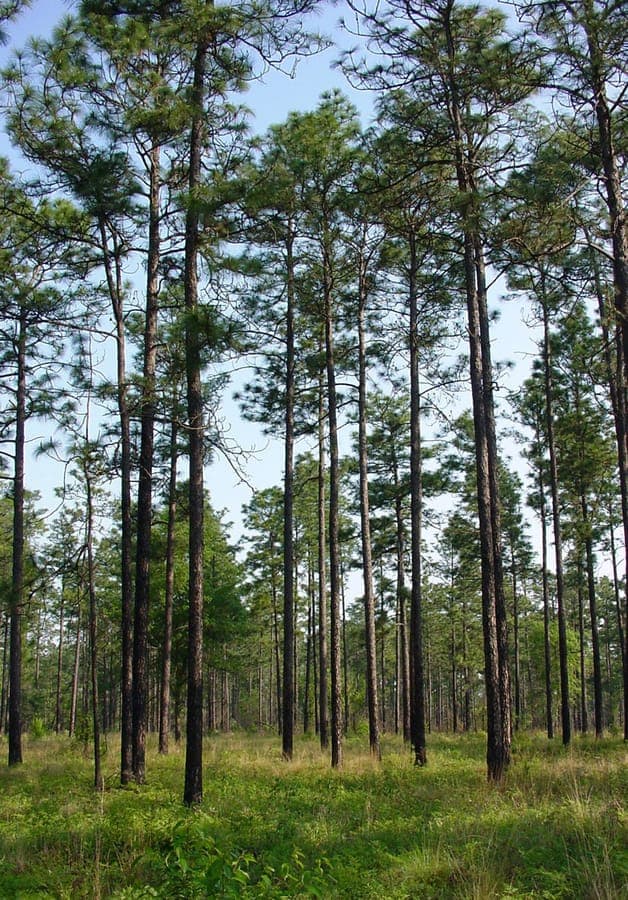
Chuck Bargeron, University of Georgia / CC BY 3.0 us, via Wikimedia Commons
Longleaf pine: complete guide
Pinus palustris
Want to see Longleaf pine: complete guide in your garden?
1 minute, no credit card
Overview
The longleaf pine (Pinus palustris) is a stately evergreen conifer native to the southeastern United States, thriving in states from Virginia to Texas. Known for its towering height and long, graceful needles, this pine can reach 30 to 45 meters at maturity, making it unsuitable for small gardens. It grows slowly at first, especially in the grass stage, but accelerates after establishing a deep taproot. While not commonly grown in temperate European climates, it can succeed in mild, well-drained sites with full sun.
On gardenworld.app, you can create a custom garden layout to plan where a longleaf pine will fit best over time, avoiding future shading issues with structures or other plants.
Appearance & bloom cycle
One of the most distinctive features of the longleaf pine is its exceptionally long needles-up to 45 cm-arranged in bundles of three. These soft, flexible needles give young trees a feathery, almost tropical look. Juvenile trees go through a 'grass stage' lasting 5 to 12 years, during which they grow very slowly in height but develop a strong root system.
In late spring, typically May to June, male and female cones appear. Male cones are slender, yellow, and clustered near the base of new shoots, releasing vast amounts of pollen. Female cones are reddish-brown and form at the tips of upper branches. Once pollinated, they mature into large, cylindrical cones 15 to 25 cm long, taking two full growing seasons to open and release seeds. The bark becomes thick, scaly, and dark gray with age, providing excellent fire resistance.
Ideal location
Longleaf pine demands full sun-at least 6 to 8 hours of direct sunlight daily. It will not tolerate shade, which leads to weak, spindly growth and poor form. Choose an open, unshaded site with plenty of space: allow a minimum of 6 to 8 meters from buildings, driveways, or other trees.
This species is best suited to USDA hardiness zones 7 to 9, where winter lows range from -15°C to -1°C. In cooler zones, young trees may need winter protection. Avoid planting in exposed, windy areas unless you provide temporary windbreaks. Use gardenworld.app to simulate how the tree's mature canopy will interact with your landscape over time.
Soil requirements
Despite the species name palustris (meaning 'of marshes'), this pine prefers well-drained, sandy, acidic soils with a pH of 6.0 to 7.0. It does not tolerate heavy clay or waterlogged conditions. If your soil is compacted or poorly drained, amend it deeply with coarse sand and compost before planting.
The taproot can grow several meters deep, so ensure the planting site allows unrestricted vertical root development. Avoid disturbing the root ball during transplanting-longleaf pines are sensitive to root damage.
Free design
Want to see Longleaf pine: complete guide in your garden? Make a free design now.
Watering
Young longleaf pines need consistent moisture during the first year. Water deeply once or twice a week, especially during dry spells. Once established, the tree is highly drought-tolerant and rarely needs supplemental irrigation. Mature trees access deep soil moisture through their extensive root system.
Avoid overhead watering, which can promote fungal diseases like brown spot needle blight. Instead, use drip irrigation or soaker hoses to deliver water directly to the root zone.
Pruning
Pruning is rarely necessary for longleaf pine. Its natural form is strong and symmetrical. If you must prune, do so in late winter or early spring before new growth emerges. Remove only dead, broken, or crossing branches. Never top the tree-this disrupts its natural pyramidal shape and invites disease.
Do not trim the candles (new spring shoots), as this can distort growth. Unlike some pines, longleaf does not respond well to heavy pruning.
Maintenance calendar
- January: Inspect for storm damage. Remove broken branches.
- February: Check trunk for rodent damage. Install tree guards if needed.
- March: Apply a light layer of compost around the base, keeping it away from the trunk.
- April: Begin regular watering if spring is dry. Watch for emerging cones.
- May: Monitor for pests like pine tip moths. Water young trees weekly.
- June: Avoid pruning. Check for drought stress during heatwaves.
- July: Minimal care needed. Ensure young trees are well-watered.
- August: Watch for signs of needle blight or bark beetles.
- September: Stop fertilizing. Let fallen needles act as natural mulch.
- October: Clear debris around the base to reduce pest habitat.
- November: Water deeply before winter if rainfall is low.
- December: Mulch the root zone to protect young trees from freeze-thaw cycles.
Winter hardiness
Longleaf pine is hardy in USDA zones 7–9. It tolerates winter lows down to -15°C, but young trees are vulnerable to sudden cold snaps. In marginal zones, protect saplings with burlap wraps or anti-desiccant sprays. Mature trees are resilient once established.
Companion plants
Due to its open canopy, longleaf pine allows plenty of sunlight to reach the ground, making it ideal for understory plantings. Pair it with native grasses like little bluestem (Schizachyrium scoparium), wildflowers such as black-eyed Susan (Rudbeckia hirta), or drought-tolerant shrubs like yaupon holly (Ilex vomitoria). Avoid aggressive groundcovers that compete for water and nutrients.
Closing
The longleaf pine is not a typical garden tree, but for those with space and a suitable climate, it offers unmatched grandeur and ecological value. It supports diverse wildlife, including red-cockaded woodpeckers and gopher tortoises. Purchase young trees from reputable garden centres that specialize in conifers. Look for healthy, straight saplings with vibrant green needles. With proper placement and patience, this iconic southern pine can become a living legacy in your landscape.
Want to see Longleaf pine: complete guide in your garden? Make a free design now.
Upload a photo, pick a style, and get a photorealistic design with plant list in under a minute.
No credit card required


Similar plants
Abies delavayi: complete guide
Abies delavayi
Delavayi fir is an elegant, medium-sized coniferous tree from the Pinaceae family with dark green needles. This Asian evergreen is perfect for alpine gardens and large landscapes.
Taiwan fir: complete guide
Abies kawakamii
Discover the magnificent Taiwan fir, a rare evergreen conifer from Taiwan's mountain regions. Learn growth requirements, care tips, and why this beautiful tree is perfect for collectors of unique garden specimens.
Farges fir: complete guide
Abies fargesii
Discover the majestic Farges fir, an impressive conifer from China's mountains with elegant foliage and columnar form. Ideal for large gardens.