
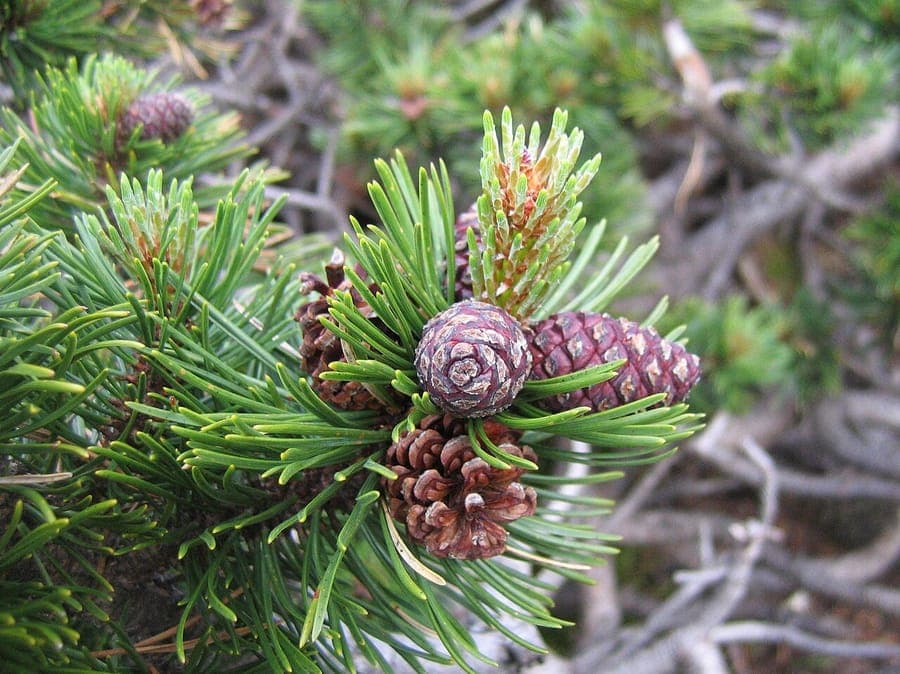
Agnieszka Kwiecień, Nova / CC BY 2.5, via Wikimedia Commons
Dwarf mountain pine: complete guide
Pinus mugo
Want to see Dwarf mountain pine: complete guide in your garden?
1 minute, no credit card
Overview
Pinus mugo, commonly known as dwarf mountain pine, is a rugged, slow-growing conifer native to the mountainous regions of central and southeastern Europe. It thrives in harsh conditions-exposed slopes, rocky soils, and high winds-making it an excellent choice for low-maintenance gardens. Whether you're designing a rock garden, a heath landscape, or a modern minimalist space, this pine brings year-round structure and texture.
Its resilience and compact form make it a favorite among gardeners who value hardy, long-lived plants. With minimal care, it can live for decades, slowly expanding into a dense, sculptural presence. On gardenworld.app, you can design a garden layout that highlights the dwarf mountain pine as a focal point, especially in alpine or xeriscaped designs.
Appearance & bloom cycle
Pinus mugo typically grows 60 cm to 2 m tall, depending on the cultivar, with a spread that can exceed its height in prostrate forms. The growth habit is dense and bushy, often forming a rounded or spreading mound. Branches are sturdy, with a slightly crooked or twisted appearance, especially in older specimens.
Needles are dark green, 4–8 cm long, and grow in pairs. They remain on the plant for several years, providing consistent evergreen coverage. In late spring (May to June), small purple-brown male cones appear, followed by woody seed cones that mature to 3–5 cm long. These cones persist for years, adding visual interest even in winter.
While not showy in bloom, the plant's subtle reproductive cycle supports local pollinators and seed-eating birds, contributing to garden biodiversity.
Ideal location
This pine thrives in full sun-ideally 6 to 8 hours of direct sunlight daily (light level 8/10). In shaded areas, it becomes leggy and loses its compact form. A south- or east-facing slope, rock garden, or elevated bed works best.
Good air circulation is crucial. Avoid planting in damp, stagnant areas surrounded by dense shrubs. The dwarf mountain pine prefers open spaces where wind can move freely, mimicking its natural alpine habitat. On gardenworld.app, you can simulate sun exposure and airflow to find the perfect spot for your Pinus mugo.
Soil requirements
Pinus mugo is adaptable to a wide pH range (5.5–8.0) and tolerates poor, rocky, or sandy soils. What it won't tolerate is waterlogged soil. Excellent drainage is non-negotiable-this pine is highly susceptible to root rot in heavy clay or compacted ground.
When planting, avoid rich compost or manure. Instead, mix in gravel or coarse sand to improve drainage. In heavy soils, consider planting in a raised bed or container to prevent root suffocation.
Free design
Want to see Dwarf mountain pine: complete guide in your garden? Make a free design now.
Watering
Water deeply once a week during the first growing season, especially in dry spells. After establishment (6–8 weeks), the plant becomes highly drought-tolerant. Mature specimens rarely need supplemental watering, except during prolonged droughts (3+ weeks without rain).
Container-grown pines require more attention-check soil moisture weekly in summer. Water when the top 5 cm feels dry. Always allow excess water to drain freely.
Pruning
Pruning is rarely needed. The plant's natural form is attractive and self-sufficient. If shaping is desired, trim the soft, new growth (candles) in late spring or early June. Use clean, sharp shears and avoid cutting into old wood-pines don't regenerate from bare branches.
Over-pruning leads to permanent bald spots. For a denser look, pinch back candle tips by half, encouraging bushier growth.
Maintenance calendar
- January: Check for snow damage, gently shake off heavy snow
- February: Inspect for pests like pine aphids
- March: Ensure soil isn't waterlogged; improve drainage if needed
- April: Apply light mulch (pine bark or gravel)
- May: Light pruning window opens; monitor cone development
- June: Final pruning; avoid later cuts
- July–August: No watering unless extreme drought
- September: Stop fertilizing
- October: Remove fallen debris; inspect for disease
- November: Protect container plants from freeze-thaw cycles
- December: Final winter check for ice or wind damage
Winter hardiness
Pinus mugo is extremely cold-hardy (USDA zones 2–7). It withstands temperatures down to -40°C. In zone 7, it remains evergreen year-round with no protection needed.
In heavy snow, gently remove buildup to prevent branch breakage. Container plants are more vulnerable-elevate pots on blocks, wrap sides in bubble wrap, and place against a sheltered wall.
Companion plants
Pair with other drought-tolerant, sun-loving plants: creeping juniper (Juniperus horizontalis), heather (Calluna vulgaris), sedum, thyme, or blue fescue. Avoid aggressive spreaders like mint or ivy that can overwhelm the pine.
In rock gardens, combine with alpine perennials such as campanula, saxifrage, or dwarf iris. The contrast of fine textures and evergreen form creates visual harmony.
Closing
Pinus mugo is a dependable, low-effort conifer that brings structure and year-round interest to any garden. Its adaptability to poor soils, drought, and cold makes it a top choice for sustainable landscaping. Whether used as a groundcover, specimen, or container plant, it performs with quiet reliability.
You can find dwarf mountain pine at garden centres like B&Q, Wyevale, or local independents. Look for healthy plants with firm, dark green needles and no signs of browning or pests. For design inspiration, visit gardenworld.app to create a custom plan that integrates Pinus mugo into your outdoor space seamlessly.
Want to see Dwarf mountain pine: complete guide in your garden? Make a free design now.
Upload a photo, pick a style, and get a photorealistic design with plant list in under a minute.
No credit card required


Similar plants
Abies delavayi: complete guide
Abies delavayi
Delavayi fir is an elegant, medium-sized coniferous tree from the Pinaceae family with dark green needles. This Asian evergreen is perfect for alpine gardens and large landscapes.
Taiwan fir: complete guide
Abies kawakamii
Discover the magnificent Taiwan fir, a rare evergreen conifer from Taiwan's mountain regions. Learn growth requirements, care tips, and why this beautiful tree is perfect for collectors of unique garden specimens.
Farges fir: complete guide
Abies fargesii
Discover the majestic Farges fir, an impressive conifer from China's mountains with elegant foliage and columnar form. Ideal for large gardens.