
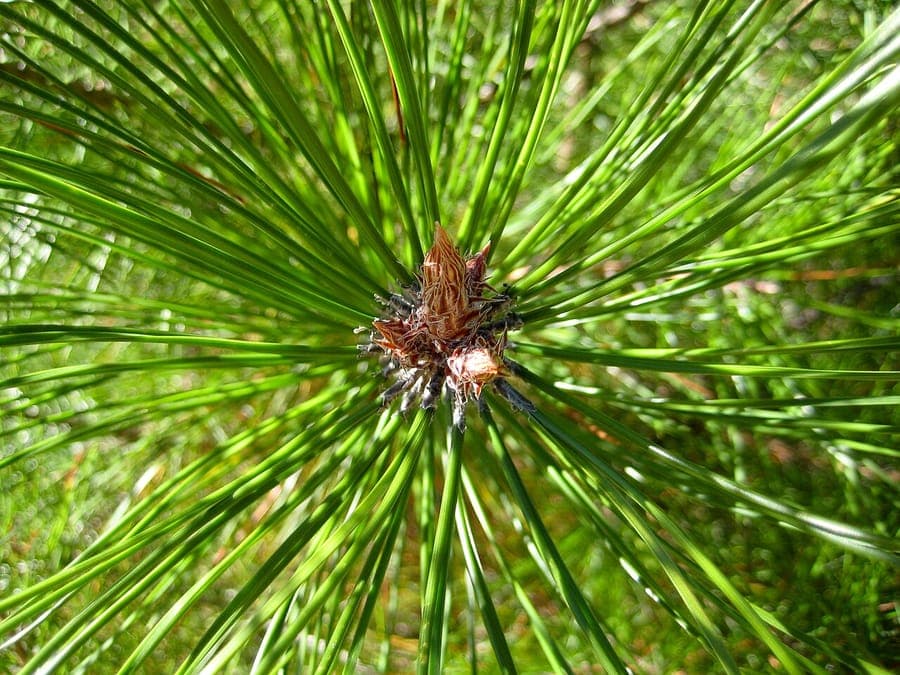
rduta on Flickr / CC BY 2.0, via Wikimedia Commons
Pinus densata: complete guide
Pinus densata
Want to see Pinus densata: complete guide in your garden?
1 minute, no credit card
Overview
Pinus densata, also known as Gaoshan Pine, is an impressive conifer native to the mountainous regions of China. This species grows naturally in southern Qinghai, Tibet, and western Sichuan and Yunnan, in areas where mountain climates and alpine conditions prevail. It is a robust tree that is particularly suitable for Dutch gardens where you want a stately, permanently green silhouette.
The scientific name refers to the dense needle foliage (densata means "dense" in Latin). This is indeed the most striking characteristic of this conifer. Unlike many other pines, Pinus densata has compact and sturdy needles.
Appearance & bloom
The tree develops over time into a sturdy, elegantly conical form. The needles are quite densely packed, which reflects a full and healthy growth pattern. They have a beautiful dark green color that is retained throughout the year. The rough bark is characteristic of the pine family and appears gnarled and ridged as the tree ages.
The pine cones (fruits) develop gradually and give the tree extra texture in autumn and winter. These are not spectacular "flowers" in the usual sense, but they are decorative elements of the tree.
The growth habit is stately, not overly fast, but ultimately imposing. This tree can grow quite substantially over the years and becomes a real focal point in the landscape.
Ideal location
Pinus densata grows best in locations with full sun. This means at least six to eight hours of direct sunlight per day. The tree only reaches its full potential when it receives sufficient light.
Make sure you don't plant it in the shade of other large trees. A location with good air circulation is also beneficial, as this promotes tree health.
And very importantly: Pinus densata prefers space. This is not a tree for cramped planting holes or densely planted gardens. The tree needs air to properly develop its conical form. Ensure adequate distance to houses, other trees, and structures.
Soil
Choosing the right soil type is essential for longevity and health. Pinus densata grows best in well-draining soils. Waterlogging is worse than some dryness. Heavy, clayey soils are not appreciated.
Your garden soil can be somewhat poor. Conifers are not particularly hungry feeders, contrary to what many garden planners think. Work in sand or gravel if your soil is heavy and compact.
The pH should be neutral to slightly acidic. This is not critically important, but very acidic soils can lead to nutrient deficiency. Test your soil if necessary. A pH between 6 and 7 is ideal.
Free design
Want to see Pinus densata: complete guide in your garden? Make a free design now.
Watering
Although established Pinus densata can tolerate moderate drought, young trees need regular water in their first growing season. Plant in spring and water thoroughly two to three times per week, especially when warm and dry.
Avoid waterlogging. Roots can rot in stagnant water. Always ensure proper drainage. During very dry periods in summer, less frequent but deeper watering can help.
Once established (after two to three seasons), mature trees can go long periods without supplementary watering, as they can access moisture from deeper soil layers.
Pruning
Pinus densata needs relatively little pruning if the tree grows well and remains healthy. However, remove dead or diseased wood as soon as you notice it, to prevent disease from spreading further.
If the tree is growing unevenly or starting to lean, you can gently shorten strong shoots to achieve better balance. This should be done in early spring.
If your tree starts growing too densely, you can shorten up to 25% of new shoots in June or July. This helps maintain the form without serious damage.
Maintenance calendar
Spring (March-April): Check for winter damage and dead wood. Remove carefully. Plant new specimens.
Summer (June-July): Monitor for insect pests (pine bark beetles, aphids). Provide extra water in dry periods.
Autumn (September-October): Ensure the tree prepares for winter by reducing nitrogen fertilizer.
Winter (December-February): Check that snow doesn't break branches (gently shake off). Protect young trees from severe frost with burlap.
Winter hardiness
Pinus densata is exceptionally winter hardy. In its natural range (mountain areas of China), the tree grows under extremely cold conditions. In the Netherlands, it can easily survive winters, even in the north.
Young specimens can be gently protected with burlap or evergreen branches around the crown in their first year, especially during extreme frost periods. Mature trees require no protection.
Companion plants
Because Pinus densata is a soloist (occupies much space and causes soil acidity), it works best as a specimen tree in the landscape. In front, however, you can plant some heather, juniper, or other small conifers.
Beech, hornbeam, or ash are beautiful deciduous trees to place nearby (in full sun), as they provide nice contrast with the permanent green color of the pine.
Avoid other dense conifers nearby, as they shade each other and compete.
Closing
Pinus densata is a wonderful choice for those seeking an elegant, permanently green silhouette in the garden. With its dense needle pattern and stately form, this Asian conifer brings joy for years to come. Provide full sun, well-draining soil, and space, and you will enjoy a healthy, impressive tree.
Want to buy this tree? Check the selection at specialized nurseries; they regularly have good quality available.
Visit gardenworld.app for more plant recommendations and inspiration for your garden design.
Want to see Pinus densata: complete guide in your garden? Make a free design now.
Upload a photo, pick a style, and get a photorealistic design with plant list in under a minute.
No credit card required


Similar plants
Abies delavayi: complete guide
Abies delavayi
Delavayi fir is an elegant, medium-sized coniferous tree from the Pinaceae family with dark green needles. This Asian evergreen is perfect for alpine gardens and large landscapes.
Taiwan fir: complete guide
Abies kawakamii
Discover the magnificent Taiwan fir, a rare evergreen conifer from Taiwan's mountain regions. Learn growth requirements, care tips, and why this beautiful tree is perfect for collectors of unique garden specimens.
Farges fir: complete guide
Abies fargesii
Discover the majestic Farges fir, an impressive conifer from China's mountains with elegant foliage and columnar form. Ideal for large gardens.