
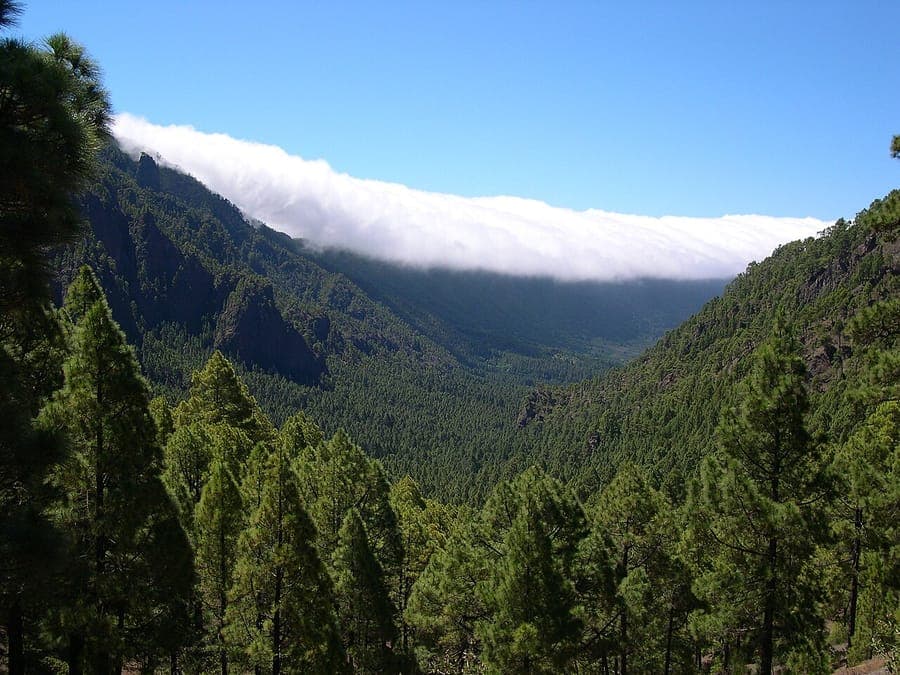
Luc Viatour / CC BY-SA 3.0, via Wikimedia Commons
Canary island pine: complete guide
Pinus canariensis
Want to see Canary island pine: complete guide in your garden?
1 minute, no credit card
Overview
Pinus canariensis, the Canary island pine, is a statuesque evergreen native to the Canary Islands, where it dominates highland forests with its towering form and open, umbrella-shaped crown. In cultivation, it adapts well to garden settings provided the climate is mild and space allows. It typically reaches 15–25 meters in height over decades, with a spread of up to 10 meters, making it ideal for large gardens, parks, or as a standout specimen on open lawns. Its graceful, drooping needles give it a softer appearance than most pines, despite its rugged constitution.
This pine thrives in regions with dry summers and mild winters. On gardenworld.app, you can design a layout that incorporates this tree as a focal point, ensuring enough headroom and spread for its mature form. It's particularly effective in coastal or windswept gardens where few other large evergreens perform as reliably.
Appearance & bloom cycle
The tree features long, slender needles in bundles of three, growing up to 30 cm in length. They hang loosely from the branches, creating a feathery texture in soft, deep green. New growth in spring appears as pale green or yellowish candles, adding seasonal contrast.
Flowers are small and green, appearing in late winter to early spring (February to April). Male flowers release pollen, while female flowers develop into large, ovoid cones up to 20 cm long. These cones mature slowly over two to three years, often remaining closed on the tree for years until opened by heat or dry conditions. They rarely produce viable seed outside their native range unless conditions mimic those of Tenerife.
Ideal location
Full sun is essential - aim for at least 6–8 hours of direct light daily. The tree needs space: plant at least 5 meters from buildings, patios, or underground utilities. Avoid narrow urban plots unless you're committed to long-term care.
In cooler zones, position near a south-facing wall for frost protection. Coastal exposure is tolerated well, but shield young trees from harsh inland winds. Use the sun-mapping tool on gardenworld.app to find the optimal microclimate in your garden.
Soil requirements
Pinus canariensis is adaptable to various soils as long as drainage is excellent. It tolerates sandy, loamy, and even shallow rocky soils. Ideal pH is slightly alkaline, between 7 and 8. Avoid acidic or waterlogged conditions - these lead to root rot and poor establishment.
Do not enrich the planting hole with compost or manure. This pine prefers lean soil; overly fertile conditions encourage weak growth and reduce drought resilience. A handful of coarse sand in heavy soils improves drainage.
Free design
Want to see Canary island pine: complete guide in your garden? Make a free design now.
Watering
Water young trees regularly during the first growing season - about 10 liters twice a week during dry spells. After the first year, reduce frequency; established trees rely entirely on rainfall in most temperate climates.
Once mature, it is highly drought-tolerant and requires no supplemental watering, even in prolonged dry periods. Overwatering is a greater risk than underwatering - it promotes shallow roots and fungal issues.
Pruning
Minimal pruning is required. Remove only dead, broken, or diseased branches in late winter or early spring before new growth begins. Never cut into old wood or trim candle shoots - pines do not regenerate from bare branches.
If clearance is needed, gently lift the crown by removing lower limbs that touch the ground. Use sterilized tools to prevent pathogen spread. Avoid topping or shaping - it ruins the tree's natural elegance.
Maintenance calendar
- January: Inspect for damage; remove broken branches
- February: Check for early cones; monitor for pests
- March: Water young trees if soil is dry
- April: Observe new candle development
- May: No action needed
- June: Ensure good airflow under canopy
- July: No care required
- August: Watch for pine beetles (rare)
- September: Keep area around trunk clear of mulch buildup
- October: Rake fallen needles; compost or use as mulch
- November: No maintenance
- December: Protect young trees with burlap in zone 8a
Winter hardiness
Hardy to USDA zone 8b (-12°C), it survives mild UK and Pacific Northwest winters. In zone 8a, young trees may suffer tip dieback in harsh winters. Mature trees recover well, but protection of the leader in youth is wise.
Prolonged wet cold is more damaging than frost alone. Ensure the root zone stays well-drained. In colder areas, plant near heat-retaining walls. Avoid exposed north-facing slopes.
Companion plants
Pair with plants that share its preference for sun and dry feet: Cistus, Lavandula, Euphorbia, Yucca, and Santolina. These create a cohesive, low-water planting scheme.
Avoid moisture-loving perennials like ferns or hostas. Grass near the trunk competes for water - maintain a 50 cm mulch-free ring to reduce competition and protect the bark.
Closing
Pinus canariensis is a resilient, low-maintenance evergreen that brings architectural drama and year-round interest. With patience and proper placement, it becomes a lifetime tree. Source young specimens from reputable garden centres, and use gardenworld.app to visualize how it fits into your long-term landscape plan. Its grandeur is unmatched in the right setting.
Want to see Canary island pine: complete guide in your garden? Make a free design now.
Upload a photo, pick a style, and get a photorealistic design with plant list in under a minute.
No credit card required


Similar plants
Abies delavayi: complete guide
Abies delavayi
Delavayi fir is an elegant, medium-sized coniferous tree from the Pinaceae family with dark green needles. This Asian evergreen is perfect for alpine gardens and large landscapes.
Taiwan fir: complete guide
Abies kawakamii
Discover the magnificent Taiwan fir, a rare evergreen conifer from Taiwan's mountain regions. Learn growth requirements, care tips, and why this beautiful tree is perfect for collectors of unique garden specimens.
Farges fir: complete guide
Abies fargesii
Discover the majestic Farges fir, an impressive conifer from China's mountains with elegant foliage and columnar form. Ideal for large gardens.