
Zeynel Cebeci / CC BY-SA 4.0, via Wikimedia Commons
Turkish pine: complete guide
Pinus brutia
Want to see Turkish pine: complete guide in your garden?
1 minute, no credit card
Overview
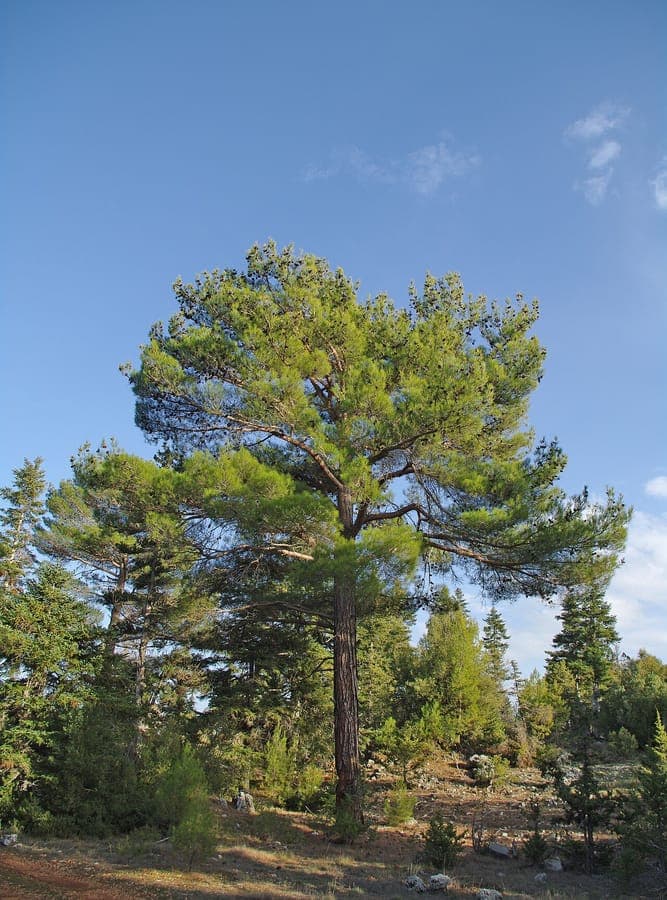
Pinus brutia, commonly known as the Turkish pine, is a tough, sun-loving evergreen tree native to the eastern Mediterranean. It grows slowly but steadily into a large, stately tree, reaching 15–25 meters tall with a spread of 6–10 meters. This makes it unsuitable for small gardens but ideal for spacious yards, parks, or rural landscapes. Once established, it's incredibly resilient, handling heat, wind, and dry spells with ease. On gardenworld.app, you can create a garden layout that fits the scale and shape of the Turkish pine, helping you plan its placement alongside other trees and shrubs.
Appearance & bloom cycle
The Turkish pine has a distinctive look: long, slender needles in pairs, 12–20 cm in length, with a bright green to dark green hue. The bark on mature trees becomes thick and flaky, turning orange-brown with age. In spring (April to May), small purple male flowers appear along the lower branches, while female cones develop higher up. These cones are ovoid, 5–9 cm long, and take two to three years to mature and release seeds. There's no real flowering season in the traditional sense, but the tree's texture and form provide year-round interest. Young trees have a conical shape, which gradually opens into a broad, flat-topped crown.
Ideal location
Choose a spot with full sun - a rating of 8 out of 10 for light exposure, meaning at least 6 hours of direct sunlight daily. The Turkish pine thrives in open, unshaded areas and does best on south- or southwest-facing slopes. Avoid planting near buildings or property lines; give it at least 5 meters of clearance due to its mature size. In exposed areas, young trees may need temporary wind protection using burlap wraps or a shelter belt. On gardenworld.app, you can run a sun exposure simulation to confirm your garden gets enough light for this pine to flourish.
Soil requirements
This pine isn't fussy about soil type as long as it's well-draining. Ideal conditions include sandy or loamy soil with a pH between 7.0 and 7.5 - slightly alkaline. Heavy clay should be avoided or amended with sand and organic matter. When planting, dig a hole 80x80x80 cm and mix in sand and compost with native soil (1:1:2 ratio). Don't use synthetic fertilizers; Pinus brutia prefers a natural nutrient cycle. Compacted urban soils may need additional aeration before planting.
Free design
Want to see Turkish pine: complete guide in your garden? Make a free design now.
Watering
Water deeply once or twice a week during the first growing season, applying 10–15 liters per session. After that, the tree becomes drought-tolerant and rarely needs supplemental water, except during prolonged dry spells (over 4 weeks without rain). Always water at the base, not on the foliage, and allow the soil to dry between waterings. Overwatering is a common mistake and can lead to root rot, especially in cooler climates.
Pruning
Pruning is rarely needed. Only remove dead, damaged, or crossing branches, and do so in early spring before new growth starts. Use clean, sharp tools and cut just above a bud or lateral branch. Never top the tree - this disrupts its natural form and can lead to weak regrowth. Minimal intervention is best; let the tree develop its own character over time.
Maintenance calendar
- January: Inspect for storm or frost damage. Remove broken branches.
- February: Planting still possible if ground isn't frozen.
- March: Final planting window. Check tree stakes on young specimens.
- April: New growth begins. Water if spring is dry.
- May: Male flowers appear. No action required.
- June: Monitor young trees in heatwaves.
- July: No maintenance needed unless under drought stress.
- August: Continue monitoring during extended dry periods.
- September: Cones begin to ripen. Watch for wildlife activity.
- October: Fallen needles can be left as mulch or composted.
- November: Ideal time for planting bare-root stock.
- December: Avoid de-icing salts near the root zone.
Winter hardiness
Hardy in USDA zones 8–10. In zone 8, young trees may need protection from harsh winter winds and frost. Wrap the trunk with burlap for the first winter. Mature trees handle cold well and typically require no special care. Avoid heavy snow buildup on branches - gently shake off snow if needed.
Companion plants
Pair the Turkish pine with drought-tolerant, sun-loving plants like lavender (Lavandula spp.), rockrose (Cistus spp.), thyme (Thymus vulgaris), or yarrow (Achillea millefolium). These thrive in similar conditions and create a Mediterranean-style garden. Avoid moisture-loving plants under the canopy - the dry shade and needle litter make it hard for them to survive. Use gravel or stone pathways to enhance the natural look.
Closing
The Turkish pine is a long-lived, low-maintenance tree that brings structure and year-round greenery to large landscapes. Its resilience and minimal care needs make it a smart choice for sustainable gardening. Young trees are available at most garden centres, especially in spring, with sizes ranging from 100–150 cm. For best results, plan your planting with a clear layout - and on gardenworld.app, you can test different design ideas before you dig the first hole.
Want to see Turkish pine: complete guide in your garden? Make a free design now.
Upload a photo, pick a style, and get a photorealistic design with plant list in under a minute.
No credit card required


Similar plants
Abies delavayi: complete guide
Abies delavayi
Delavayi fir is an elegant, medium-sized coniferous tree from the Pinaceae family with dark green needles. This Asian evergreen is perfect for alpine gardens and large landscapes.
Taiwan fir: complete guide
Abies kawakamii
Discover the magnificent Taiwan fir, a rare evergreen conifer from Taiwan's mountain regions. Learn growth requirements, care tips, and why this beautiful tree is perfect for collectors of unique garden specimens.
Farges fir: complete guide
Abies fargesii
Discover the majestic Farges fir, an impressive conifer from China's mountains with elegant foliage and columnar form. Ideal for large gardens.