
Wikimedia Commons / Public domain, via Wikimedia Commons
Pillwort: complete guide
Pilularia globulifera
Want to see Pillwort: complete guide in your garden?
1 minute, no credit card
Overview
Pilularia globulifera, known as Pillwort, is a fascinating and rare aquatic fern from Europe. This species grows naturally across much of Europe, from Netherlands and Belgium to Switzerland and Spain, and also in parts of Africa. However, the plant is seriously threatened in many areas and disappearing due to habitat loss and destruction of vulnerable wetlands. The characteristic fine, thread-like fronds (6 to 12 centimeters long) make this fern unique and beautiful in aquatic settings. Pillwort represents a very old plant family and exemplifies a very primitive form of fern plants. In many European countries the species is protected by law. The plant is important for wetland ecosystems and becoming increasingly rare.
Appearance and Bloom
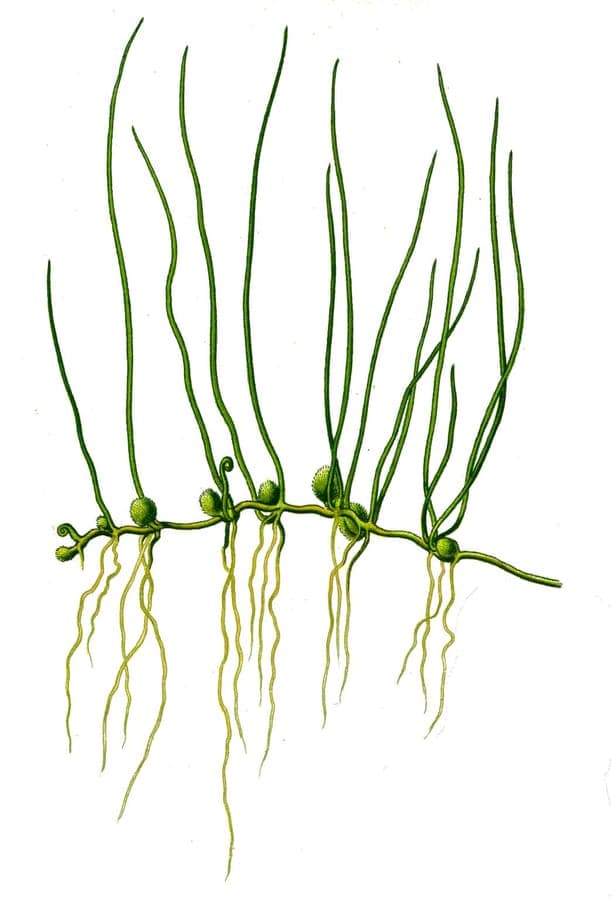
Pilularia globulifera grows as a compact plant with very fine, thread-like fronds giving a delicate, transparent appearance. The plant forms small, spherical sporangia (1 to 2 millimeters in diameter) at the base of fronds where spores are stored. These ball-shaped structures give the plant its common name 'Pillwort'. The plant grows slowly and reaches height of about 5 to 15 centimeters. The fronds are very fine and lack true veins like higher plants. The plant does not form true flowers but reproduces via spores. These spores are extremely small and only visible under a microscope. The plant has a very minimalist and delicate appearance that attracts many collectors.
Ideal Location
Pillwort grows best in shallow water of 2 to 10 centimeters depth, or in wet, muddy soil along water edges. The plant prefers full sun to part shade. A location at the water edge of a pond, either submerged or on sandy/muddy substrate, is ideal. The plant can also grow in wet heaths where constant moisture is present and few other plants can thrive. The plant grows better in undisturbed conditions where strong water movement does not occur. In cultivation, shallow basins work very well, with water always present.
Soil
Pilularia globulifera grows in acidic, nutrient-poor soils. The plant prefers acidic soil with pH around 5 to 5.5. A mixture of sand and humus is ideal. Do not use nutrient-rich soils, as the plant is sensitive to nutrient excess and grows best in poor soils. The plant is adapted to nutrient-poor conditions and will disappear in nutrient-rich environments where other plants take over. Remove leaves and debris from the surrounding area regularly. The water must be pure and free of pollution.
Free design
Want to see Pillwort: complete guide in your garden? Make a free design now.
Watering
The plant needs constant moisture. In ponds it grows underwater, but it can also grow in wet soils that are regularly flooded. In cultivation, constant high water level is essential. The plant does not tolerate drying out, even for short periods. The water level must always be at least several centimeters high. In very dry summers extra water may be added. The water must be pure and oxygen-rich, so water movement is beneficial.
Pruning
Pillwort does not require pruning. However, remove dead fronds and spore-bearing leaflets that have died. This promotes the aesthetic appearance and health of the plant. Removing dead material prevents accumulation of organic debris.
Maintenance Calendar
June through September: growth period of the plant. The plant does not bloom but forms spores during these months. October through May: winter rest period with reduced activity. The plant remains green and does not disappear completely. In aquatic conditions, the plant grows year-round with minimal variation. Check regularly for algae growth that competes for nutrients and light.
Winter Hardiness
Pilularia globulifera is fully winter-hardy in the Netherlands to USDA zone 5. The plant survives frost as long as water does not completely freeze. In frozen ponds, the plant survives if the soil does not freeze below the root zone. The plant is adapted to cold European winters and can tolerate extreme cold. However, the plant cannot tolerate drought.
Companion Plants
Pillwort grows well with other aquatic ferns and moisture-loving plants such as Sphagnum mosses, small sedges, and evergreen heather species. This combination creates characteristic wetland vegetation. The plant is valuable for biodiversity in aquatic ecosystems.
Closing
Pilularia globulifera is a valuable part of protected aquatic habitats and wet heath ecosystems. For those wanting to ornament a wet corner of the garden with moisture-loving native plants, Pillwort is an excellent choice. The plant requires minimal maintenance and nutrition, and provides year-round delicate beauty. Cultivating this plant also helps conserve the species.
Want to see Pillwort: complete guide in your garden? Make a free design now.
Upload a photo, pick a style, and get a photorealistic design with plant list in under a minute.
No credit card required


Similar plants
Acer pycnanthum: complete guide
Acer pycnanthum
Acer pycnanthum, the Japanese swamp maple, is a fast-growing tree with early red flowers and brilliant autumn color, ideal for damp garden settings.
Freeman maple: complete guide
Acer × freemanii
Everything about the Freeman maple (Acer x freemanii): a fast-growing shade tree with spectacular autumn colour for large gardens.
Silver vine: complete guide
Actinidia polygama
Discover silver vine (Actinidia polygama): a hardy climbing plant with silvery foliage, loved by gardeners and cats alike.