
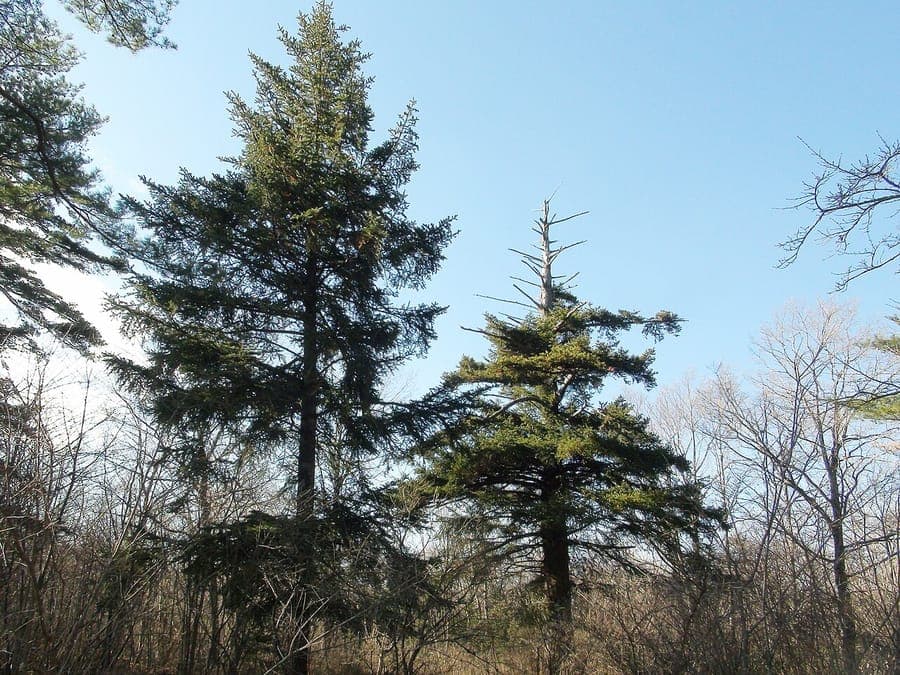
Sakaori (talk) / CC BY-SA 3.0, via Wikimedia Commons
Tigertail spruce: complete guide
Picea torano
Want to see Tigertail spruce: complete guide in your garden?
1 minute, no credit card
Overview
The Tigertail spruce, or Picea torano, is a standout among ornamental conifers for its elegant form and manageable size. Native to Japan, this slow-growing evergreen rarely exceeds 4 meters in height even after decades, making it a top pick for small gardens, courtyards, or as a sculptural accent in formal beds. Unlike many spruces that become unruly with age, Picea torano maintains a tidy, pyramidal shape with minimal intervention.
On gardenworld.app, you can design a garden layout that highlights the Tigertail spruce's vertical lines and evergreen presence, ensuring it complements surrounding hardscaping and plantings. Its common name comes from the slightly upturned tips of its branches, which resemble a tiger's tail - a subtle but striking detail. The tree typically reaches 3–4 meters tall and 1.2–1.5 meters wide over 20 years, with a growth rate of about 15–20 cm per year.
Appearance & bloom cycle
This spruce features soft, light green needles about 1–1.5 cm long, arranged densely along the stems in a spiral pattern. The texture is fine and silky, giving the tree a refined look. In spring, small purplish cones appear at the branch tips, maturing into 3–4 cm long brown seed cones by late summer. While not showy like flowering trees, these cones add seasonal interest and attract birds.
Picea torano is fully evergreen, retaining its foliage year-round with minimal needle drop. The bark on young trees is smooth and gray, developing shallow fissures with age but never peeling in large plates. Its crown stays full to the ground if grown in full sun, making it an excellent screening plant in narrow spaces.
Ideal location
Plant in full sun to light shade. Full sun encourages the densest growth and richest needle color, but in regions with hot summers (USDA zones 7+), afternoon shade helps prevent needle scorch. Avoid planting under large trees where competition for light and water is high, as this leads to thinning lower branches.
Good air circulation is critical - stagnant air promotes fungal diseases like needle cast. In urban gardens or on rooftops, it performs well in large containers, provided they have drainage holes and are placed where wind can move freely.
Soil requirements
The Tigertail spruce prefers well-drained, slightly acidic to neutral soil (pH 5.5–6.8). Heavy clay soils should be amended with sand and compost to improve drainage. Soggy conditions lead to root rot, a common killer of spruces. In pots, use a mix of potting soil and perlite or pumice for better aeration.
On gardenworld.app, upload your soil test results to get personalized planting advice for Picea torano. Raised beds or mounded planting sites are recommended in areas with high water tables or frequent rainfall.
Free design
Want to see Tigertail spruce: complete guide in your garden? Make a free design now.
Watering
Water deeply once a week during the first growing season - about 10 liters per tree. After establishment, the spruce is moderately drought-tolerant but benefits from supplemental watering during dry spells lasting more than three weeks. Avoid overhead watering to reduce fungal risks.
For container-grown specimens, check moisture by inserting a finger 3 cm into the soil. Water when dry at that depth. Use rainwater if possible, as this spruce is sensitive to high calcium levels in tap water.
Pruning
Pruning is rarely needed. The natural conical form is attractive on its own. If shaping is desired, do light trimming in May after the new growth has hardened off. Never cut back into old wood without needles - spruces do not regenerate from bare stems.
Use clean, sharp shears and disinfect between cuts to prevent disease spread. Remove only dead, damaged, or crossing branches. For potted trees, root-prune every 2–3 years by removing about 10% of the root mass during repotting.
Maintenance calendar
- Jan: Check for frost damage; gently shake off heavy snow
- Feb: Apply slow-release conifer fertilizer spikes if soil is workable
- Mar: Inspect for pests like aphids or spider mites
- Apr: Begin regular watering; apply organic granular feed
- May: Light pruning if needed; monitor cone development
- Jun: Supplemental watering during heatwaves
- Jul: Watch for signs of stress from intense sun or drought
- Aug: No pruning; continue monitoring moisture
- Sep: Final feeding with potassium-rich fertilizer to boost winter hardiness
- Oct: Mulch base with bark chips to insulate roots
- Nov: Check for rodent activity near trunk
- Dec: Wrap young trees in burlap in harsh winters
Winter hardiness
Hardy in USDA zones 6–8 (-23°C to -12°C), with some specimens surviving in zone 5B if protected. In colder zones, provide wind protection and mulch heavily. Container plants are more vulnerable - elevate pots on feet and wrap sides with bubble wrap during deep freezes.
Avoid de-icing salts near the root zone, as they cause significant damage.
Companion plants
Pair with shade-tolerant perennials that share similar soil needs: Heuchera, Hakonechloa macra, and dwarf Hostas. Low-growers like Sedum or Ajuga work well as groundcovers without competing roots.
Avoid invasive rooters like bamboo or ground-covering ivy. In formal designs, the Tigertail spruce pairs beautifully with stone pathways, gravel beds, or minimalist water features.
Closing
The Tigertail spruce is a reliable, elegant conifer that thrives with little fuss. Its slow growth, year-round color, and graceful form make it a favorite for modern and traditional gardens alike. Available at garden centres across the UK and US, often sold in 40–60 cm specimens. Plant in well-drained soil, give it space to breathe, and you'll enjoy its quiet beauty for decades.
Want to see Tigertail spruce: complete guide in your garden? Make a free design now.
Upload a photo, pick a style, and get a photorealistic design with plant list in under a minute.
No credit card required


Similar plants
Abies delavayi: complete guide
Abies delavayi
Delavayi fir is an elegant, medium-sized coniferous tree from the Pinaceae family with dark green needles. This Asian evergreen is perfect for alpine gardens and large landscapes.
Taiwan fir: complete guide
Abies kawakamii
Discover the magnificent Taiwan fir, a rare evergreen conifer from Taiwan's mountain regions. Learn growth requirements, care tips, and why this beautiful tree is perfect for collectors of unique garden specimens.
Farges fir: complete guide
Abies fargesii
Discover the majestic Farges fir, an impressive conifer from China's mountains with elegant foliage and columnar form. Ideal for large gardens.