
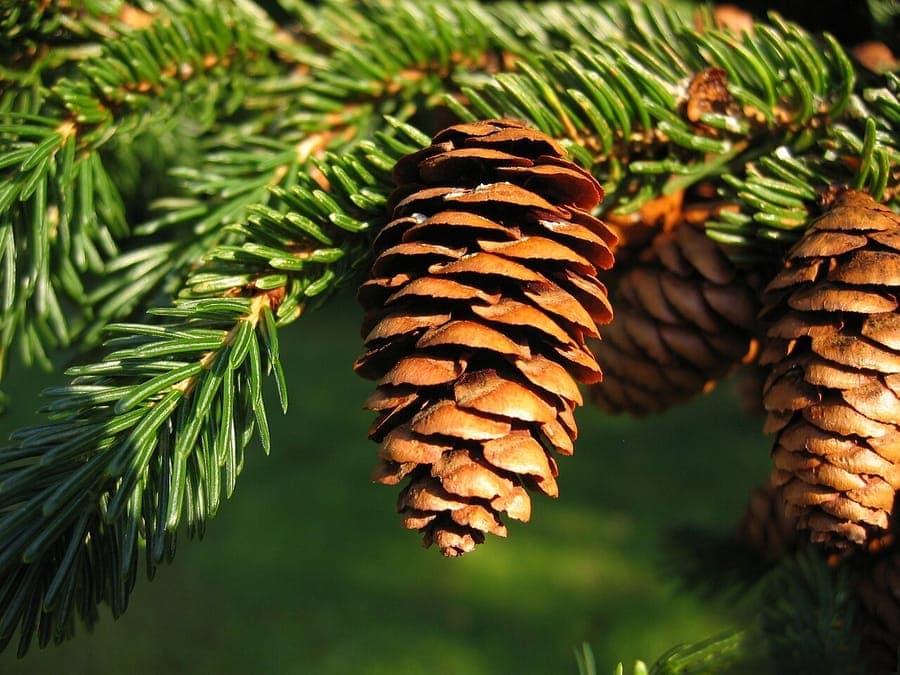
Keith Kanoti, Maine Forest Service, Bugwood.org / CC BY 3.0, via Wikimedia Commons
Red spruce: complete guide
Picea rubens
Want to see Red spruce: complete guide in your garden?
1 minute, no credit card
Overview
The red spruce (Picea rubens) is a majestic evergreen conifer native to eastern North America, found in regions like Maine, New Hampshire, New York, and parts of eastern Canada including Newfoundland and New Brunswick. In the UK and northern Europe, it's gaining popularity for its strong vertical form, dense foliage, and tolerance for cool, moist climates. Mature trees typically reach 15 to 25 meters in height with a spread of 5 to 8 meters, growing at a moderate pace of 20 to 30 cm per year. This makes it ideal for long-term garden planning and landscape architecture. On gardenworld.app, you can design a garden layout that accounts for the red spruce's mature size, root spread, and shade impact.
Appearance & bloom cycle
Young red spruces have a narrow, conical shape that gradually becomes more pyramidal with age. The branches are horizontal and densely packed with 12 to 15 mm long, dark green, four-sided needles that are slightly curved and emit a faint peppery scent when crushed. In mid-spring (April to May), small yellow flowers appear-male flowers are reddish-yellow and clustered, while female flowers are upright and greenish-yellow. After pollination, they develop into cylindrical cones 3 to 5 cm long, which hang down from the branches. These mature to a light brown by autumn and release seeds in late fall. The bark on mature trees turns reddish-brown to grayish-purple, flaking into thin scales-a striking feature in winter gardens.
Ideal location
Red spruce thrives in full sun to partial shade. It performs best with at least 6 hours of direct sunlight daily but tolerates light shade, especially in warmer microclimates. Avoid planting under dense tree canopies or near large buildings that cast heavy shade. Allow a minimum of 4 meters from structures and underground utilities to accommodate root expansion. It's excellent as a specimen tree, windbreak, or part of a mixed conifer border. On gardenworld.app, you can simulate sun exposure and wind patterns to find the perfect planting spot.
Soil requirements
This spruce prefers moist, well-drained, acidic soils with a pH between 4.0 and 5.8. It struggles in alkaline or compacted clay soils. If your soil is heavy, amend it with coarse sand, pine bark, and leaf mold to improve drainage and acidity. Sandy soils benefit from organic matter like composted pine needles or peat to retain moisture. A mulch layer of pine needles helps maintain soil acidity and reduces evaporation.
Free design
Want to see Red spruce: complete guide in your garden? Make a free design now.
Watering
Young trees need consistent moisture for the first 2–3 years. Water deeply once a week during dry spells, applying 20–30 liters per tree. Use rainwater when possible, as tap water high in lime can raise pH and harm roots. Once established, red spruce is fairly drought-tolerant but thrives in consistently moist conditions. Avoid waterlogged soil-prolonged saturation causes root rot.
Pruning
Pruning is rarely needed. Only remove broken, diseased, or crossing branches in late winter or early spring before new growth begins. Do not cut into old wood, as spruces don't regenerate from bare stems. Light shaping is possible in June if maintaining a formal hedge, but this species is best left to grow naturally.
Maintenance calendar
- Jan: Check for snow damage on lower branches
- Feb: Inspect for pests like spruce spider mites
- Mar: Test soil pH; amend if above 5.8
- Apr: Monitor for yellowing needles (sign of stress)
- May: Watch for new shoot development
- Jun: Light trim if used in formal settings
- Jul: Water during prolonged dry periods
- Aug: Continue monitoring moisture levels
- Sep: Leave fallen needles as natural mulch
- Oct: Harvest cones for seed collection if desired
- Nov: Apply organic mulch around base to protect roots
- Dec: Check for winter desiccation in exposed sites
Winter hardiness
Red spruce is extremely cold-hardy (USDA zones 3 to 6), surviving temperatures down to -40°C. It handles snow load well but young trees may suffer from winter burn-browning of needles on the south or west side. Protect with burlap screens in exposed gardens. Mature trees are resilient and low-maintenance in winter.
Companion plants
Pair red spruce with other acid-loving plants such as rhododendrons, heathers, mountain laurel, or ferns like Polystichum acrostichoides. Low-growers like epimedium or ajuga work well beneath its open canopy. Avoid shallow-rooted perennials that compete for moisture. In woodland gardens, it combines beautifully with paper birch or white pine.
Closing
The red spruce is a long-lived, elegant conifer that adds year-round structure and texture to gardens. With proper siting and acidic soil, it becomes a low-maintenance focal point for decades. Available at garden centres across the UK and Ireland, it's a smart choice for cool, moist sites. Plan ahead-its slow growth means it won't overwhelm quickly, but it will eventually dominate. Use gardenworld.app to visualise your red spruce at maturity and plan companion planting accordingly.
Want to see Red spruce: complete guide in your garden? Make a free design now.
Upload a photo, pick a style, and get a photorealistic design with plant list in under a minute.
No credit card required


Similar plants
Abies delavayi: complete guide
Abies delavayi
Delavayi fir is an elegant, medium-sized coniferous tree from the Pinaceae family with dark green needles. This Asian evergreen is perfect for alpine gardens and large landscapes.
Taiwan fir: complete guide
Abies kawakamii
Discover the magnificent Taiwan fir, a rare evergreen conifer from Taiwan's mountain regions. Learn growth requirements, care tips, and why this beautiful tree is perfect for collectors of unique garden specimens.
Farges fir: complete guide
Abies fargesii
Discover the majestic Farges fir, an impressive conifer from China's mountains with elegant foliage and columnar form. Ideal for large gardens.