
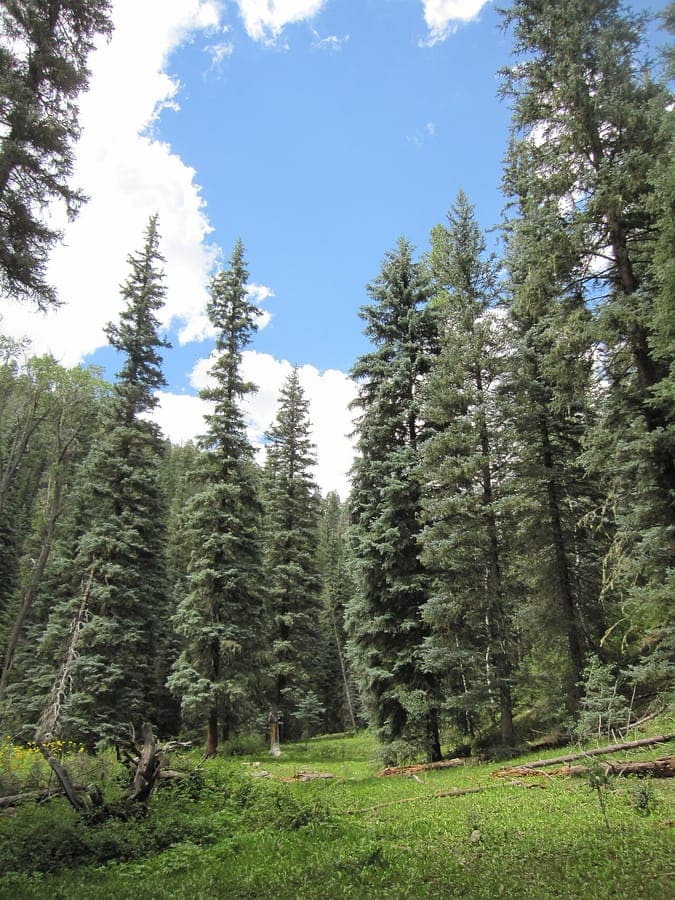
Chris M Morris / CC BY 2.0, via Wikimedia Commons
Colorado blue spruce: complete guide
Picea pungens
Want to see Colorado blue spruce: complete guide in your garden?
1 minute, no credit card
Overview
The Colorado blue spruce (Picea pungens) is a standout evergreen tree that brings year-round structure and color to gardens across temperate zones. Native to the mountains of Colorado, Utah, Wyoming, and surrounding states, this conifer thrives in USDA hardiness zones 2 to 7. It's prized for its silvery-blue needles, symmetrical pyramidal shape, and resilience to cold. Whether as a specimen tree or part of a windbreak, the Colorado blue spruce makes a bold statement. On gardenworld.app, you can design a custom garden plan that incorporates this stately tree, ensuring it has the space and companions it needs to shine.
Appearance & bloom cycle
This slow-growing tree typically reaches 15–20 meters in height with a spread of 4–6 meters over 30–50 years. Its stiff, horizontal branches are densely covered in 2–3 cm long needles that range from steel blue to silvery gray, depending on the cultivar. 'Glauca' and 'Koster' are especially vivid. The bark on young trees is smooth and gray, becoming furrowed and scaly with age. Though it doesn't produce showy flowers, the Colorado blue spruce develops 5–8 cm long cylindrical cones in late spring (May–June). These start purplish and mature to light brown, persisting on the tree for years. The tree's growth flush happens in late spring, when new candles emerge and expand.
Ideal location
Plant your Colorado blue spruce in full sun for the best needle color. While it tolerates partial shade, reduced light leads to sparser foliage and weaker form. Give it plenty of room-this is not a tree to tuck near a house foundation or under power lines. Aim for at least 5 meters clearance from buildings and other trees. It performs well in open lawns, as a focal point, or in group plantings for screening. Avoid crowded spots; poor air circulation invites fungal issues. On gardenworld.app, you can simulate how a mature spruce will fit into your yard, helping you avoid future overcrowding.
Soil requirements
This spruce is adaptable to a wide pH range (5.5–7.8) and grows well in sandy, loamy, or clay soils-as long as drainage is good. It hates wet feet. If your soil is heavy clay, amend it with compost and coarse sand before planting. Avoid compacted or waterlogged sites. A slightly acidic to neutral pH is ideal, but the tree won't struggle in mildly alkaline conditions. Root rot from poor drainage is the most common cause of failure, not cold or pests.
Watering
Young trees need consistent moisture for the first two growing seasons. Water deeply once a week during dry spells, letting the soil dry slightly between sessions. Once established, the Colorado blue spruce is moderately drought-tolerant but benefits from occasional deep watering during prolonged dry periods, especially in summer. Never let the root zone stay soggy. Mulch with 5–8 cm of organic material to retain moisture and suppress weeds, but keep mulch away from the trunk to prevent rot.
Free design
Want to see Colorado blue spruce: complete guide in your garden? Make a free design now.
Pruning
Pruning is rarely needed. If shaping is desired, do it in late spring when new candles are half-extended. Pinch or cut back the soft tips, but never into old wood-spruces don't regrow from bare branches. Avoid heavy pruning; it ruins the natural symmetry and can invite disease. Dwarf cultivars like 'Globosa' can be lightly shaped, but even they respond poorly to hard cuts. For hedges, choose a different species-this spruce doesn't tolerate repeated trimming.
Maintenance calendar
- January: Check for snow load; gently shake off heavy accumulations.
- February: Inspect for signs of rodent damage at the base.
- March: Look for spider mites or spruce aphids; treat early if found.
- April: Apply a balanced slow-release fertilizer if soil is poor.
- May: Prune candles if desired; monitor for new growth.
- June: Watch for needle cast diseases in wet weather.
- July–August: Water during droughts; avoid overhead watering to reduce fungal risk.
- September: Stop fertilizing to prepare for dormancy.
- October: Rake fallen needles; inspect for cankers or pests.
- November: Protect young trunks with tree guards against rabbits and voles.
- December: Avoid piling snow against the trunk with shovels.
Winter hardiness
Hardy down to -40°C (USDA zone 2), the Colorado blue spruce handles cold winters with ease. However, winter burn-browning needles on the south or west side-can occur during sunny, windy days when the roots are frozen and can't supply water. Prevent this by watering well in late fall and using burlap wraps in exposed sites. Windbreaks or strategic placement near buildings can also help.
Companion plants
Pair the spruce with contrasting textures and colors. Broadleaf evergreens like rhododendron or boxwood offer a dark green backdrop. Perennials such as black-eyed Susan (Rudbeckia), coneflower (Echinacea), or ornamental grasses like Miscanthus add seasonal interest. Avoid groundcovers that compete aggressively for moisture, such as periwinkle. Dwarf junipers or creeping yew work better beneath the canopy. For winter appeal, combine with red-twig dogwood or yellow-stemmed willow.
Closing
The Colorado blue spruce is a long-term investment in your garden's structure and beauty. With minimal care, it grows into a majestic specimen that stands tall for decades. Just remember: location is key. Plant it where it has room to grow, in well-drained soil, and out of heavy foot traffic. Avoid overwatering and unnecessary pruning. For gardeners in the UK, US, and Canada, this tree is widely available at garden centres. Use gardenworld.app to visualize your design and ensure your spruce has the perfect setting from day one.
Want to see Colorado blue spruce: complete guide in your garden? Make a free design now.
Upload a photo, pick a style, and get a photorealistic design with plant list in under a minute.
No credit card required


Similar plants
Abies delavayi: complete guide
Abies delavayi
Delavayi fir is an elegant, medium-sized coniferous tree from the Pinaceae family with dark green needles. This Asian evergreen is perfect for alpine gardens and large landscapes.
Taiwan fir: complete guide
Abies kawakamii
Discover the magnificent Taiwan fir, a rare evergreen conifer from Taiwan's mountain regions. Learn growth requirements, care tips, and why this beautiful tree is perfect for collectors of unique garden specimens.
Farges fir: complete guide
Abies fargesii
Discover the majestic Farges fir, an impressive conifer from China's mountains with elegant foliage and columnar form. Ideal for large gardens.