
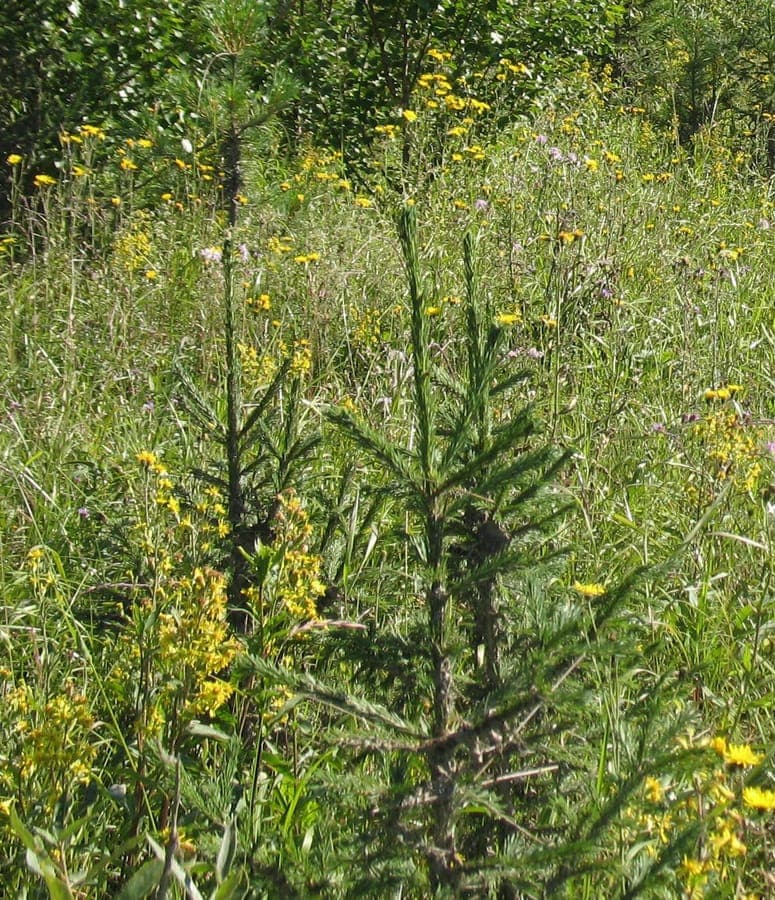
ugraland / CC BY 2.0, via Wikimedia Commons
Siberian spruce: complete guide
Picea obovata
Want to see Siberian spruce: complete guide in your garden?
1 minute, no credit card
Overview
Picea obovata, the Siberian spruce, is a hardy evergreen conifer native to vast stretches of northern Asia, from the Altay Mountains to Magadan and into eastern Finland. It closely resembles the Norway spruce but tends to have shorter, bluer needles and a slightly more compact, upright form. In cultivation, it's a slow-growing tree that reaches 15–20 meters tall and 5–7 meters wide over several decades. It's prized for its resilience, especially in cold climates, and its ability to thrive in challenging soils and exposed sites.
On gardenworld.app, you can design a landscape plan that incorporates Siberian spruce as a windbreak or backdrop in cooler, spacious gardens.
Appearance & bloom cycle
The Siberian spruce has a narrow, conical shape with ascending branches that sweep slightly upward. Needles are 1–2 cm long, stiff, and densely packed, giving the foliage a full, rich appearance. They range from deep green to silvery-blue, depending on the cultivar and growing conditions. The bark is thin and grey-brown, developing shallow fissures with age.
Flowering occurs in May. Male cones are reddish-purple and cluster near the base of new growth, while female cones are pale green and form at the tips of upper branches. Mature cones are 5–9 cm long, cylindrical, and hang downward when ripe. They turn light brown and release seeds in late autumn. Unlike deciduous trees, this spruce doesn't have a bloom in the floral sense, but its reproductive cycle is clearly visible in spring.
Ideal location
Plant in full sun for best density and growth, though it tolerates partial shade. Avoid hot, dry south-facing spots, especially in urban areas with reflected heat. Give it at least 5 meters of clearance from buildings or neighbouring gardens to allow for full crown development. It's ideal as a specimen tree, in shelterbelts, or as a tall, year-round screen.
This spruce handles wind well but benefits from some protection when young. It's often used in reforestation and cold-climate parks due to its tolerance of exposed conditions.
Soil requirements
Prefers moist, well-drained soil rich in organic matter. It grows well in loamy or sandy-loam soils, as long as they don't dry out completely. Tolerates slightly acidic to neutral pH (5.5–7.0). Heavy clay is acceptable if drainage is adequate-consider raised beds or mounding in poorly drained areas.
Avoid shallow, calcareous, or compacted soils. When planting, dig a hole twice as wide as the root ball but no deeper. Backfill with native soil mixed with compost. Plant at the same depth as in the container to prevent root collar rot.
Free design
Want to see Siberian spruce: complete guide in your garden? Make a free design now.
Watering
Water deeply once a week during the first growing season, especially in dry spells. Provide 15–20 litres per tree weekly. After establishment, it's moderately drought-tolerant but performs best with consistent moisture. Mulch with 5–8 cm of wood chips or pine needles to retain moisture and suppress weeds.
Avoid overhead watering to reduce fungal risk. In prolonged dry periods, even mature trees benefit from occasional deep soaking, particularly in sandy soils.
Pruning
Minimal pruning is required. Never cut back into old, needle-free wood-this won't regenerate. If shaping is needed, prune in early summer after the new 'candles' have elongated but before they harden. Use clean, sharp shears and trim only the soft tips.
For hedges or formal screens, annual pruning in June keeps density high. Avoid late-season pruning, as it can stimulate tender growth vulnerable to frost.
Maintenance calendar
- Jan: Check for snow load; gently shake branches
- Feb: Inspect trunk for rodent damage
- Mar: Assess soil compaction around roots
- Apr: Apply slow-release conifer fertiliser if needed
- May: Light pruning; monitor for aphids or scale
- Jun: Deep water if rainfall is below 25mm/week
- Jul: Watch for browning needles-sign of stress
- Aug: No routine care unless drought persists
- Sep: Remove dead wood; refresh mulch
- Oct: Leave fallen needles as natural mulch
- Nov: Secure loose branches before winter storms
- Dec: Monitor for ice damage; protect young trees with burlap in exposed sites
Winter hardiness
Exceptionally cold-hardy, surviving temperatures down to -45°C (USDA zones 2–6). In the UK and northern Europe (zone 7), it thrives without protection. Young trees may need burlap wraps in windy, open areas to prevent desiccation. Snow cover actually insulates the roots and benefits the tree.
Even in winter, the tree loses moisture through its needles, so water during dry, thawing periods when the ground isn't frozen.
Companion plants
Pair with shade-tolerant perennials like hostas, ferns, or hellebores under the canopy. Avoid plants with aggressive root systems. Other conifers such as junipers or yews make excellent structural companions. For visual contrast, use silver-foliage plants like artemisia or lamb's ear near the base.
Group three or five trees for a naturalistic look, staggering heights. Add dwarf conifers at the front for layered depth.
On gardenworld.app, explore design ideas that combine Siberian spruce with understory plants and hardscape elements.
Closing
The Siberian spruce is a dependable, long-lived conifer for cold, northern gardens. It's low-maintenance, wind-resistant, and offers year-round structure. While slow-growing, its resilience makes it worth the wait. Choose it for privacy, noise reduction, or as a stately focal point. Available at garden centres across the UK and Europe, including larger specimens at specialist nurseries. Look for 1.5–2m trees at retailers like garden centres in spring.
Want to see Siberian spruce: complete guide in your garden? Make a free design now.
Upload a photo, pick a style, and get a photorealistic design with plant list in under a minute.
No credit card required


Similar plants
Abies delavayi: complete guide
Abies delavayi
Delavayi fir is an elegant, medium-sized coniferous tree from the Pinaceae family with dark green needles. This Asian evergreen is perfect for alpine gardens and large landscapes.
Taiwan fir: complete guide
Abies kawakamii
Discover the magnificent Taiwan fir, a rare evergreen conifer from Taiwan's mountain regions. Learn growth requirements, care tips, and why this beautiful tree is perfect for collectors of unique garden specimens.
Farges fir: complete guide
Abies fargesii
Discover the majestic Farges fir, an impressive conifer from China's mountains with elegant foliage and columnar form. Ideal for large gardens.