
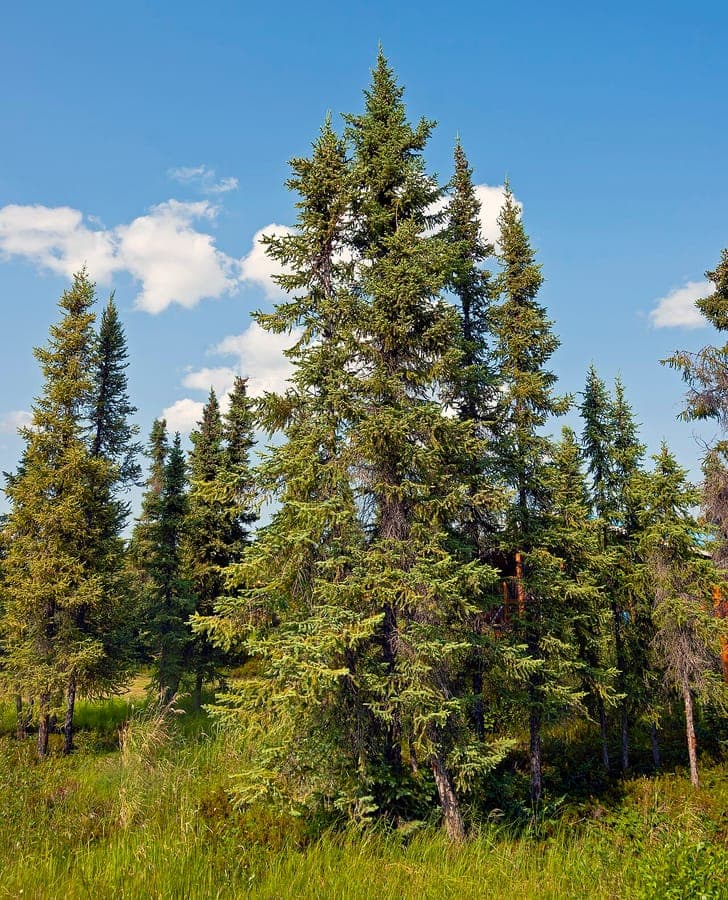
Daniel Case / CC BY-SA 3.0, via Wikimedia Commons
Black spruce: complete guide
Picea mariana
Want to see Black spruce: complete guide in your garden?
1 minute, no credit card
Overview
Black spruce (Picea mariana) is a resilient, slow-growing evergreen native to boreal forests across northern North America, from Alaska to Maine and Labrador to Manitoba. In the UK and US, it's an excellent choice for gardens with acidic, poorly drained soils where few other trees thrive. Mature trees reach 10–15 m in height with a narrow, conical habit, making them ideal for smaller landscapes or as part of a woodland edge. Its adaptability to wet conditions makes it a standout for bog gardens or low-lying areas.
On gardenworld.app, you can design a garden layout that accounts for the black spruce's mature spread and pairs it with compatible moisture-loving plants.
Appearance & bloom cycle
The black spruce has short, stiff needles about 1–1.5 cm long, arranged densely along the stems, giving the tree a full, soft appearance. Needles are dark green to blue-green and remain on the tree for several years. The bark is thin, scaly, and gray-brown, becoming more furrowed with age. Cones are small (2–4 cm), cylindrical, and persistent-often staying on the tree for up to 10 years, which provides winter interest and protects seeds from predators.
In late spring (May–June), the tree produces tiny purple female flowers and yellow pollen cones. Seed dispersal occurs in autumn, though some seeds may be retained in closed cones for years, only released after fire or extreme heat-a natural adaptation known as serotiny.
Ideal location
Black spruce thrives in full sun to partial shade. Full sun encourages the tightest, most compact form, while too much shade leads to sparse growth and elongated branches. Plant in open areas, woodland borders, or along pond edges where moisture levels are high. Ensure at least 3–4 m of spacing from buildings or other trees to allow for mature crown development.
It performs exceptionally well in cold, northern climates and is suitable for USDA zones 2–6. In milder zones, avoid hot, dry sites as the tree is not drought-tolerant once established.
Soil requirements
This spruce prefers acidic soils with a pH between 4.7 and 6.5. It tolerates wet, even waterlogged conditions, making it ideal for peat-rich or clay-heavy soils with poor drainage. Avoid alkaline or chalky soils-they cause chlorosis and poor growth. If your soil is too neutral, amend it with peat moss or pine bark fines to lower pH and improve texture.
A mulch layer of pine needles or wood chips helps retain moisture, suppress weeds, and maintain soil acidity.
Free design
Want to see Black spruce: complete guide in your garden? Make a free design now.
Watering
During the first growing season, water deeply 2–3 times per week, especially during dry spells. Once established (after 12–18 months), black spruce is quite drought-resilient in cool climates but still prefers consistent moisture. In hot summers, supplemental watering may be needed to prevent stress. Never let the root zone dry out completely, particularly in sandy soils.
Pruning
Pruning is rarely needed. The tree's natural conical shape is attractive and requires no shaping. If necessary, prune in late winter or early spring before bud break. Remove only dead, broken, or diseased wood-avoid cutting into old wood as spruces do not regenerate well from bare stems. Use clean, sharp tools to prevent disease transmission.
Maintenance calendar
- January: Inspect for snow damage; remove heavy snow from branches gently.
- February: Dormant period-no action needed.
- March: Check base for rodent damage; apply protective wrap if needed.
- April: Apply slow-release evergreen fertilizer if soil is poor.
- May: Monitor for new growth and pests like spruce spider mites.
- June: Water during dry weeks.
- July: No routine care; monitor for heat stress.
- August: No action.
- September: Top up mulch if degraded.
- October: Clear fallen debris to reduce fungal risk.
- November: Protect young trees with tree guards against rabbits and voles.
- December: Minimal care-ensure soil isn't frozen when watering.
Winter hardiness
Black spruce is extremely cold-hardy, surviving temperatures down to -40°C (USDA zone 2). It handles heavy snow and ice well, with flexible branches that resist breakage. In milder zones (7+), summer heat and drought can stress the tree, so microclimate selection is key. Mulching helps regulate root temperature and retain moisture.
Companion plants
Pair with other acid-loving, moisture-tolerant plants: Labrador tea (Rhododendron groenlandicum), leatherleaf (Chamaedaphne calyculata), bog rosemary (Andromeda polifolia), or winterberry (Ilex verticillata). Low-growing conifers like Chamaecyparis thyoides or dwarf pines add texture. Ferns such as Osmunda regalis thrive in the dappled shade beneath.
Closing
The black spruce is a low-maintenance, cold-hardy tree perfect for wet, acidic gardens. Its narrow form fits modern and naturalistic designs alike. While slow-growing, it offers decades of structure and wildlife value. Young trees are available at garden centres across the US and UK. On gardenworld.app, you can visualize how this spruce fits into your long-term garden plan, ensuring proper spacing and companion planting.
Want to see Black spruce: complete guide in your garden? Make a free design now.
Upload a photo, pick a style, and get a photorealistic design with plant list in under a minute.
No credit card required


Similar plants
Abies delavayi: complete guide
Abies delavayi
Delavayi fir is an elegant, medium-sized coniferous tree from the Pinaceae family with dark green needles. This Asian evergreen is perfect for alpine gardens and large landscapes.
Taiwan fir: complete guide
Abies kawakamii
Discover the magnificent Taiwan fir, a rare evergreen conifer from Taiwan's mountain regions. Learn growth requirements, care tips, and why this beautiful tree is perfect for collectors of unique garden specimens.
Farges fir: complete guide
Abies fargesii
Discover the majestic Farges fir, an impressive conifer from China's mountains with elegant foliage and columnar form. Ideal for large gardens.