
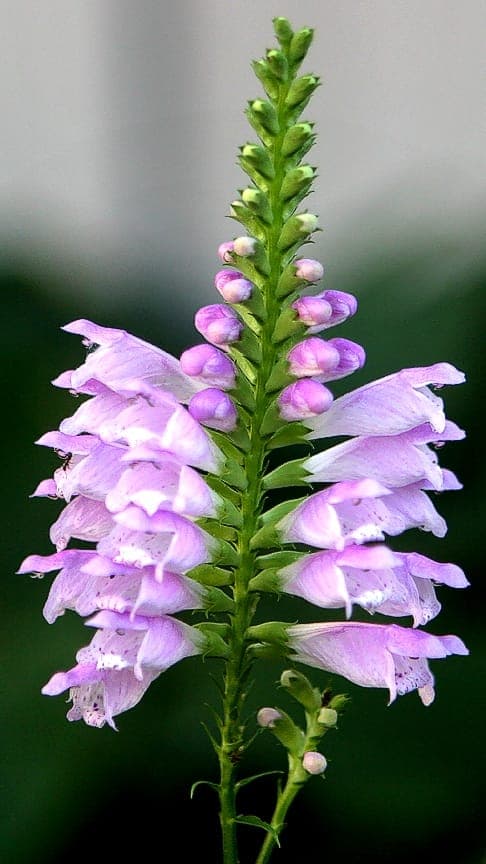
Hardyplants at English Wikipedia / Public domain, via Wikimedia Commons
Obedient plant: complete guide
Physostegia virginiana
Want to see Obedient plant: complete guide in your garden?
1 minute, no credit card
Overview
The Obedient plant (Physostegia virginiana) is an elegant perennial native to North America. This fascinating plant is renowned for its unique flowers that can be repositioned gently along the stems and will stay in place. The plant reaches heights of 60 to 90 centimeters and produces beautiful flower spikes in purple, pink, and white from summer through early autumn.
Belonging to the mint family, this plant creates a natural, romantic garden effect. The flowers attract butterflies and honeybees, bringing life and movement to your garden space.
Appearance and bloom
The Obedient plant grows as an upright, bushy specimen with slender stems lined with lance-shaped leaves. The foliage is bright green and maintains an attractive appearance even when the plant is not flowering.
The flowers are the true showstopper. They form dense spikes at the stem tips. Each flower features a tubular shape with a slightly cleft upper lip. Colors range from deep purple and rosy pink to lilac and pure white. The blooming period extends from July through October, depending on your climate.
The most distinctive feature is that you can gently rotate the flowers left or right along the stem, and they will remain positioned exactly as you moved them - the origin of the common name "obedient plant."
Ideal location
The Obedient plant flourishes in full sunlight locations. Choose a spot receiving at least six to eight hours of direct sun daily. In warmer climates, some afternoon shade may extend the blooming period.
This plant thrives best in zones with temperate conditions. It is hardy to zone 3, meaning it can survive very cold winters. Plant your Obedient plants in autumn borders or early spring beds for optimal growth.
Provide shelter from strong winds, as the tall stems can topple in extreme gusts.
Soil type
The Obedient plant is not particular about soil type, but performs best in moist, well-draining soil. It tolerates both acidic and neutral soil conditions.
Amend the planting area with mature compost or humus-rich earth to improve water retention. This is especially important in drier regions. Maintain a soil pH between 6.0 and 7.0 for optimal growth.
In heavy clay soils, add sand or perlite for improved drainage. Poor drainage leads to root rot.
Watering
During the growing season (May through September), the Obedient plant requires regular watering. Water when the top 2-3 centimeters of soil feel dry.
Provide the plant with a full inch of water (2.5 centimeters) weekly, distributed over two to three watering sessions. In extremely dry weather, this amount may need to increase.
Avoid spraying water on the foliage, as this encourages fungal diseases. Instead, water at the plant base in early morning.
In winter, when the plant dies back, reduce watering substantially.
Free design
Want to see Obedient plant: complete guide in your garden? Make a free design now.
Pruning
Pruning helps keep this plant healthy and fuller. Remove spent flower spikes to encourage new bloom development. This also enhances the overall neatness of the plant.
By late summer, when peak height is reached, you can cut the plant back to approximately one-third its current size. This promotes a more compact form and increased branching.
In late autumn, just before the first frost, remove all dead plant parts. However, leave several centimeters of stem as protection for the underground growth bud.
Maintenance calendar
April: Apply a nitrogen-rich fertilizer to encourage growth. Remove old leaf debris.
May-June: Water regularly and watch for weeds. Install support stakes if the plant grows very tall.
July-August: Remove spent flowers. Water more deeply during dry periods.
September: Begin reducing fertilizer. Prepare the plant for dormancy.
October-November: Stop fertilizing. Remove dead foliage.
December-March: Minimal care required. Plant is dormant. Check winter protection.
Winter hardiness
The Obedient plant is extremely cold-hardy and can survive temperatures down to -35 Celsius. It is safe to plant outdoors in most temperate climate zones.
In extremely cold areas with little snow coverage, extra mulch is recommended to protect the underground growth bud. Add 7-10 centimeters of organic mulch after the first frost.
The colder your climate, the more protection you will need, especially in the first year after planting.
Companion plants
The Obedient plant pairs beautifully with other summer-blooming perennials:
- Lavender for contrasting texture and fragrance
- Pink Flamingo Astilbe for shaded accents
- Yellow Achillea for color contrast
- White Coneflowers for color harmony
- Purple Liatris for vertical elements
Combine with ornamental grasses for movement and texture, such as Festuca or Miscanthus.
Closing thoughts
The Obedient plant is a beautiful, low-maintenance addition to any garden. With its unique flowers that you can gently reposition, it is a plant that guests will definitely notice and enjoy.
This perennial is readily available at garden centers across North America and Europe. We recommend checking your local nursery for the best selection. Start today and enjoy years of abundant blooms.
Visit gardenworld.app/en for more plant advice and garden design tips. See also gardenworld.app/nl for tips in Dutch.
Want to see Obedient plant: complete guide in your garden? Make a free design now.
Upload a photo, pick a style, and get a photorealistic design with plant list in under a minute.
No credit card required


Similar plants
Apple mint (Mentha x villosa): complete guide
Mentha x villosa
Meet apple mint (Mentha x villosa): a fruity-scented kitchen herb with woolly leaves, perfect for tea and mojitos.
Salvia peyronii: complete guide
Salvia peyronii
Discover Salvia peyronii, a rare Lebanese mountain sage. Growing tips, hardiness, and companion planting for a Mediterranean gravel garden.
Bigleaf mint (Mentha x rotundifolia): complete guide
Mentha x rotundifolia
Discover bigleaf mint: cultivation, care tips, and garden uses. Learn how to grow this aromatic herb with soft, hairy leaves.