
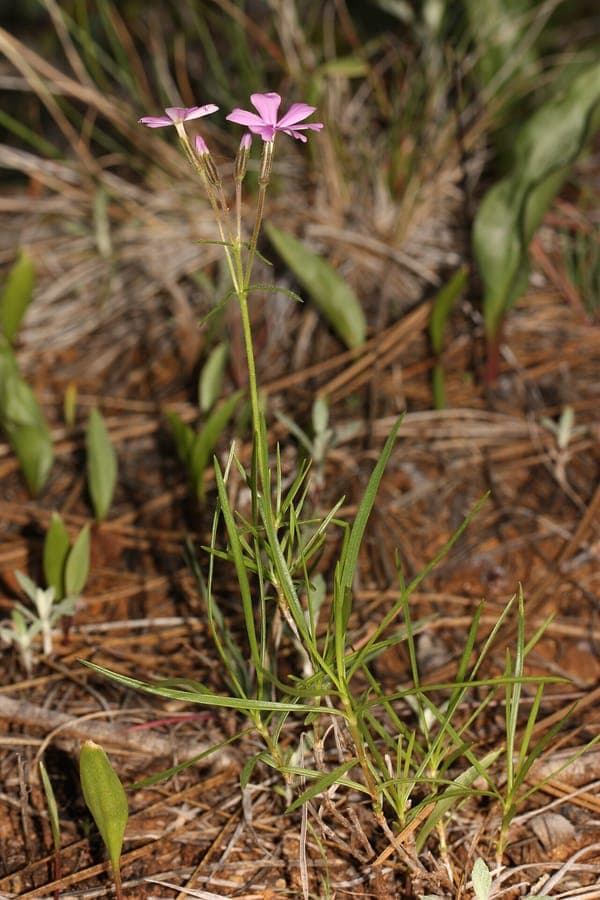
Walter Siegmund (talk) / CC BY-SA 3.0, via Wikimedia Commons
Bush phlox: complete guide
Phlox speciosa
Want to see Bush phlox: complete guide in your garden?
1 minute, no credit card
Overview
Phlox speciosa, commonly known as bush phlox or showy phlox, is a striking North American shrubby plant belonging to the Polemoniaceae family. Native to the northwestern United States from British Columbia to Nevada, this plant is celebrated for its profuse colorful flowers and compact growing habit. In many temperate gardens, bush phlox serves as a valuable addition because it tolerates drought and attracts pollinators.
The plant reaches a height of 12 to 24 inches and forms a dense, wide-spreading shrub. Flowers appear typically in May through June in dense clusters, in shades ranging from pink to deep magenta, sometimes with pale or white centers. This plant is perfect for sunny locations with well-draining soil and minimal supplemental water once established.
Appearance and bloom
Bush phlox grows as a compact, mounding shrub with dense foliage. The stems are sturdy and can withstand moderate wind pressure. The leaves are small, linear to lance-shaped, and dark green, with reddish tinges on undersides under stress conditions.
The flowers are the most striking feature of this plant. They appear in dense clusters at stem tips. Each individual flower has five petals spreading flat in a disc shape, roughly 0.4 to 0.6 inches across. Colors range from fuchsia-pink to deep magenta, often with lighter or white centers. The flowers emit a pleasant fragrance, especially in early morning and late afternoon. The bloom period extends for 6 to 8 weeks, from May through June.
Ideal location
Bush phlox thrives in full sun with at least 6 hours of direct sunlight daily. Plants receiving less sun may become thin and leggy with reduced flowering. The plant tolerates partial shade in very hot climates but flowers less abundantly.
Excellent air circulation is essential to prevent fungal issues. Position this phlox in open, airy locations, not in enclosed corners or against walls where air stagnates. A breezy, exposed position is ideal.
Phlox speciosa grows well in USDA zones 4-8. In zones 8-9, it may overwinter, but it prefers cooler conditions. In very hot regions (zone 9+), it struggles because heat stress combined with insufficient winter chill negatively impacts survival and blooming.
Soil
This phlox performs best in well-draining, sandy to loamy soil. A pH between 6.0 and 7.0 is ideal, though the plant tolerates slightly acidic or alkaline conditions. Fertile soil is preferred, but excessive fertilization promotes lush foliage at the expense of flowers.
Amend soil with compost or other organic matter at planting time. This improves drainage and nutrient cycling without overfeeding the plant. Heavy clay soils must be modified with sand and organic material to prevent waterlogging.
The plant demonstrates excellent drought tolerance once established (typically after the first season). Deep, well-developed root systems reach soil moisture that shallow roots cannot access.
Free design
Want to see Bush phlox: complete guide in your garden? Make a free design now.
Watering
Newly planted phlox speciosa require regular watering throughout the first growing season until roots are well-established. Water when the soil 1-2 inches below the surface feels dry. Avoid waterlogging and standing water at the base.
Once established (after approximately 12 months), this plant has minimal water needs in temperate climates with regular rainfall. During dry summer spells, watering once weekly provides beneficial support.
Avoid overhead watering because it wets foliage and promotes fungal diseases. Use drip irrigation or water carefully at the plant base.
Pruning
Bush phlox requires minimal pruning, but gentle pinching in early spring encourages bushier growth and more flowers. Pinch approximately 0.2 inches from growing tips when plants reach 6 inches tall.
After flowering (late June/July), remove spent flower clusters to encourage rebloom. This sometimes triggers a second, smaller flowering later in the season. Pinch back to the first healthy leaf node below the faded truss.
Remove dead or damaged wood in spring. This plant rarely generates significant dead wood if growing conditions are favorable.
Maintenance calendar
FEBRUARY-MARCH: Inspect for winter damage. Remove dead wood. Apply light compost topping. APRIL: Pinch growing tips for bushier form. MAY-JUNE: Peak flowering period. Remove spent blooms. JULY: Apply potassium-rich fertilizer. Monitor for fungal diseases. AUGUST-SEPTEMBER: Allow plant recovery time after summer stress. OCTOBER-NOVEMBER: Prepare for winter. Avoid heavy pruning after October. DECEMBER-JANUARY: Dormancy period. Minimal maintenance required.
Winter hardiness
Phlox speciosa is winter hardy in USDA zones 4-8. In zone 4, some protective measures can be beneficial. Add a 2-3 inch mulch layer around the base (not against stems) in October, using leaves, straw, or coarse sand. This protects shallow roots from repeated freeze-thaw cycles.
In zone 3 and colder, this plant is marginal and may not survive severe winters. Container cultivation or frame protection is recommended in these regions.
In zone 8, the plant remains semi-evergreen through winters, though growth slows considerably. Reduce water and feeding during winter months.
Companion plants
Bush phlox combines beautifully with other drought-tolerant plants. Lavender, Santolina, and Helichrysum make excellent companions. They share the same preference for dry soil and good light, and their different textures and gray tones contrast nicely against phlox' rose-red blooms.
In rock gardens, it pairs well with Sedum, Sempervivum, and low conifers like Juniperus. Creeping thymes and ornamental grasses such as Festuca glauca provide structure.
For mixed borders, bush phlox combines beautifully with Gaura lindheimeri, Zauschneria californica, and Erysimum. Purple sage and blue Veronica create stunning color combinations.
Closing
Bush phlox is a reliable, drought-tolerant plant that delivers rich flowering for minimal maintenance once established. Whether you are building a xeriscaped garden, rock garden, or mixed border, this plant brings color and fragrance. In the UK and Europe, quality garden centers stock this species. In North America, Intratuin and Gamma are trusted retailers. GardenWorld.app also offers plant recommendations for your garden design. With proper site preparation and placement, you will enjoy years of spectacular blooms from bush phlox.
Want to see Bush phlox: complete guide in your garden? Make a free design now.
Upload a photo, pick a style, and get a photorealistic design with plant list in under a minute.
10,000+ gardens designed already
No credit card required


Similar plants
Phlox alyssifolia: complete guide to Alyssum-leaf Phlox
Phlox alyssifolia
Alyssum-leaf phlox is a compact alpine pink bloomer from North America. Discover care, location and all growing requirements.
Phlox richardsonii: complete guide to Richardson's Phlox
Phlox richardsonii
Richardson's phlox is an arctic bloomer exceptionally robust. Learn cultivation in extreme conditions and complete care guide.
Polemonium foliosissimum: complete guide
Polemonium foliosissimum
Polemonium foliosissimum is a vigorous Rocky Mountain perennial with blue-purple summer flowers that attract pollinators and thrive in borders.