
Bruce Marlin / CC BY 3.0, via Wikimedia Commons
Phellodendron amurense: complete guide
Phellodendron amurense
Want to see Phellodendron amurense: complete guide in your garden?
1 minute, no credit card
Overview
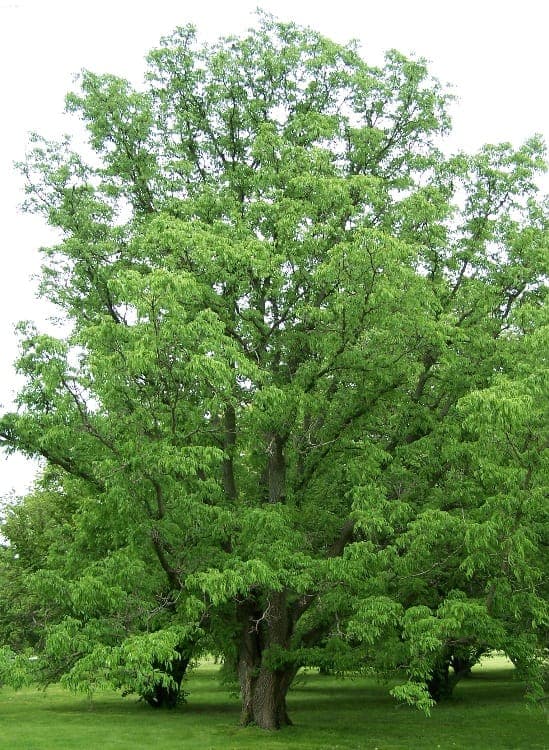
Phellodendron amurense, commonly known as Chinese corktree or Amur corktree, is a large, graceful tree from the Rutaceae family originating from the Russian Far East, north and east China, Korea, and Japan. At maturity, this tree reaches 10 to 15 meters tall and nearly as wide, giving it a very imposing appearance. The most striking feature is the tough, thick, light brown-colored cork bark that forms prominently, creating a very characteristic, almost sculptural appearance.
Phellodendron amurense is fully winter hardy in the Netherlands and Belgium and can live for many decades. It is not a fast grower, but patience is rewarded with a wonderful tree that remains decorative and interesting for years. On gardenworld.app, we use Chinese corktree selectively in larger front yards where space is not an issue, as the tree makes a true architectural statement.
Appearance and Bloom
Phellodendron amurense is a graceful deciduous tree with a broad, rounded crown. The tree grows 10 to 15 meters tall and nearly as wide. Most striking is the cork bark: this grows in thick, light gray-brown, spongy patches that bulge prominently. This cork-like material truly consists of cork cells and gives the tree a very distinctive, unmistakable appearance. In winter, without foliage, this cork bark is the main attraction.
The leaves are large, approximately 25 to 35 centimeters long, and compound with 9 to 13 small leaflets. They are dark green, smooth, and fairly leathery in texture. In autumn, they color yellow to golden brown, providing a beautiful fall display.
Flowers appear in May-June and are small, yellow-green, and not particularly striking, but pleasantly fragrant. After flowering, the tree produces black-purple berries about the size of a pea, which are eaten by birds.
Ideal Location
Phellodendron amurense grows best in warm, sunny to partly shaded locations. The tree tolerates full sun perfectly well but appreciates light afternoon shade in very hot summers. The tree is relatively wind-firm, although young trees appreciate shelter.
Ensure the tree has at least 5 to 6 meters distance from buildings, sewers, and other underground infrastructure, as roots can expand.
Free design
Want to see Phellodendron amurense: complete guide in your garden? Make a free design now.
Soil Type
Phellodendron amurense thrives in diverse soil types: sandy, loamy, or even clayey soil. The tree, however, feels most at home in well-draining, reasonably fertile soils. Very poor, rocky soils should be improved with compost.
The tree is tolerant of slightly acidic to neutral pH (6.0 to 7.5) and generally feels right at home in Dutch/Belgian soils.
Watering
Once established, Phellodendron amurense requires very little water. In normal summers, rainfall alone is completely sufficient. Only very young trees (first 2 years) may benefit from supplemental watering in extremely dry periods.
Ensure well-draining planting soil when planting and mulch around the stem area.
Pruning
Phellodendron amurense requires minimal pruning. In early spring, you can remove dead branches or clean up the crown somewhat. Avoid drastic pruning, as this disturbs the natural form.
If long branches become too long, cut them back to a twig pair, but do this carefully to preserve the tree's architectural form.
Maintenance Calendar
March to April: Check for winter damage; remove dead branches. May to June: Bloom; water only in dry weather. July to October: Growth; water regularly during dry periods. November to March: Leaf fall; clean bark maintenance.
Winter Hardiness
Phellodendron amurense is completely winter hardy to -30 degrees Celsius, meaning it easily withstands Dutch and Belgian winters. Young trees may suffer frost damage in their first winter; protect with burlap wrap in severe winters.
Companion Plants
Phellodendron amurense combines beautifully with:
- Japanese maples (small format, dark foliage)
- Forsythia (yellow flowers, spring)
- Ornamental grasses (structure)
- Rhododendron (flowers, shade)
- Hosta (large foliage, shade)
- Astilbe (pink flowers, shade)
Conclusion
Phellodendron amurense is a magnificent, architecturally interesting tree for larger front yards. The unique cork bark, fall color, and bird value make it a true year-round attraction. For gardenworld.app designs, this tree is ideal for temperate, modern gardens that need something imposing and timeless. Transform your front yard into a gallery-like tree garden on gardenworld.app.
Want to see Phellodendron amurense: complete guide in your garden? Make a free design now.
Upload a photo, pick a style, and get a photorealistic design with plant list in under a minute.
No credit card required


Similar plants
Thamnosma montana: complete guide
Thamnosma montana
Everything about Thamnosma montana, the aromatic turpentine broom from the Mojave Desert. Location, soil, care and companion planting explained.
Narrow-leaved fringed rue: complete guide
Ruta angustifolia
Everything about Ruta angustifolia: location, soil, watering, pruning and winter care for this Mediterranean subshrub.
Mountain rue: complete guide
Ruta montana
A complete guide to Ruta montana: best location, soil, watering, pruning and overwintering of this aromatic Mediterranean subshrub.