Bjoertvedt / CC BY-SA 4.0, via Wikimedia Commons
Rosy Stonecrop: complete guide
Phedimus spurius
Want to see Rosy Stonecrop: complete guide in your garden?
Full design in HD: €7.99
Look after your Rosy Stonecrop with the GardenWorld app
Identify plants with your camera and get a care calendar with reminders for this plant.


Overview
Rosy stonecrop, scientifically known as Phedimus spurius, is a hardy succulent native to the Caucasus mountains and northwestern Iran. This low-growing, fleshy-leafed beauty is prized for its striking red foliage that intensifies dramatically as temperatures drop in autumn and winter. With minimal maintenance requirements and tough, adaptable nature, rosy stonecrop is an excellent choice for gardeners seeking low-care solutions. It thrives in full sun to partial shade and excels in rock gardens, between pavers, containers, and as a ground-covering solution in challenging spots.
Appearance and Bloom
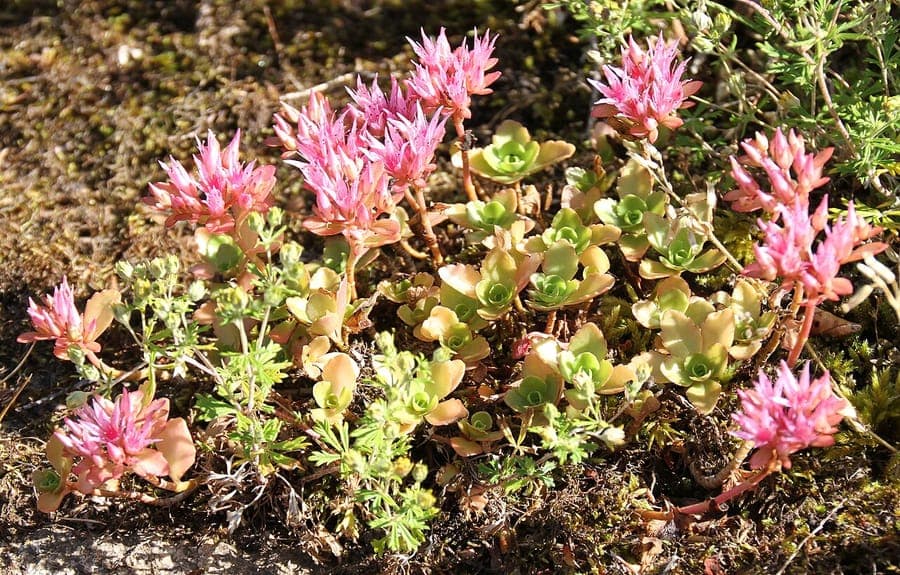
Rosy stonecrop forms dense mats of dark green leaves that transition to brilliant red and burgundy tones during cooler months. In summer, delicate pink to purple star-shaped flowers appear in clusters, attracting bees and butterflies. The fleshy leaves have a natural waxy coating that reduces water loss. As temperatures plummet, the foliage transforms into deeper magenta and chestnut hues, creating a stunning winter display that extends interest throughout the darker months.
Ideal Location
This succulent performs best in full sun - minimum six to eight hours of direct daily sunlight. Without sufficient light, leaves remain green and lose their distinctive red character. While partial shade is tolerated, growth becomes weaker. Ensure good air circulation to prevent fungal issues, especially in humid regions. A south or west-facing position works perfectly for maximum color development.
Soil
Well-draining soil is absolutely essential. Use mineral-rich, sandy substrate with minimal organic matter. A mix of cactus compost, coarse sand, and small gravel works best. In gardens, plant in raised beds or amend soil generously with sand and gravel. Terracotta pots with drainage holes provide excellent growing conditions. Avoid heavy clay soils, which promote root rot and plant decline.
Free preview
Want to see Rosy Stonecrop: complete guide in your garden? Make a free preview of your design.
Watering
Rosy stonecrop is drought-tolerant thanks to its water-storing leaves. Water moderately during the growing season (spring and summer), barely at all in winter. Allow soil to dry completely between waterings. Too much water causes more problems than too little. During dry spells, water once every two weeks, but always check soil moisture first. From October to March, water sparingly - only when completely dry.
Pruning
Minimal pruning is needed given the compact growth habit. In spring, remove dead or damaged leaves to encourage healthy new growth and maintain shape. If the plant becomes overcrowded or leggy, carefully trim some stems. This promotes branching and creates a fuller, bushier specimen with better structure.
Maintenance Calendar
Spring (March-April): inspect plants for winter damage and remove dead material. Plant new specimens. Summer (July-August): monitor water needs closely and address drought promptly. Autumn (September-October): enjoy the vibrant red foliage display. Winter (December-January): minimize watering and verify drainage remains functional.
Winter Hardiness
Rosy stonecrop is highly winter-hardy to approximately -15 degrees Celsius. This hardy nature means it overwinters reliably outdoors throughout most of Netherlands, Belgium, and Germany. Young plants may suffer in extreme frost, so protect them with dry mulch. Mature plants survive severe winters without difficulty. Following frost damage, plants regrow vigorously from healthy roots.
Companion Plants
Rosy stonecrop combines beautifully with other hardy sedums and echeveria. Striking effects emerge when paired with gray-foliaged plants like silver sage. In rock gardens, it shines between dark stones where color contrasts create visual impact. It thrives alongside ornamental grasses and dwarf shrubs.
Closing Thoughts
Rosy stonecrop is an underrated garden treasure for contemporary landscapes. With stunning red winter colors, minimal maintenance, and proven hardiness, it offers visual interest year-round. Whether you're a beginning gardener or experienced horticulturist, this succulent thrives everywhere. Order your rosy stonecrop from Intratuin or Gamma today and start your sustainable garden project. Discover more inspiring tips on gardenworld.app.
Frequently asked questions about Rosy Stonecrop
Is Rosy Stonecrop winter hardy?
Rosy stonecrop is highly winter-hardy to approximately -15 degrees Celsius. This hardy nature means it overwinters reliably outdoors throughout most of Netherlands, Belgium, and Germany.
When and how do you prune Rosy Stonecrop?
Minimal pruning is needed given the compact growth habit. In spring, remove dead or damaged leaves to encourage healthy new growth and maintain shape.
How much water does Rosy Stonecrop need?
Rosy stonecrop is drought-tolerant thanks to its water-storing leaves. Water moderately during the growing season (spring and summer), barely at all in winter.
Where does Rosy Stonecrop grow best?
This succulent performs best in full sun - minimum six to eight hours of direct daily sunlight. Without sufficient light, leaves remain green and lose their distinctive red character.
What soil does Rosy Stonecrop need?
Well-draining soil is absolutely essential. Use mineral-rich, sandy substrate with minimal organic matter.

See it in your garden
See Rosy Stonecrop in your garden
One photo of your garden and a few questions. You see the result in about a minute.
Try it with a photoIdentify this plant in your own garden. Identify a plant
Similar plants
Aeonium tabuliforme: growing the saucer plant
Aeonium tabuliforme
Aeonium tabuliforme, the saucer plant, forms a flat, hairy rosette like a green plate. How to grow this Tenerife succulent, tilt it, water it and overwinter it.
String of buttons (Crassula perforata): care guide
Crassula perforata
How to grow string of buttons, Crassula perforata: light, watering, compost, cuttings and overwintering for this succulent with leaf pairs stacked like beads on a stem.
Glaucous echeveria (Echeveria secunda): complete guide
Echeveria secunda
Echeveria secunda forms mats of blue-grey rosettes with red leaf tips and is one of the toughest echeverias. Light, watering, potting mix, propagation and pet safety.
