
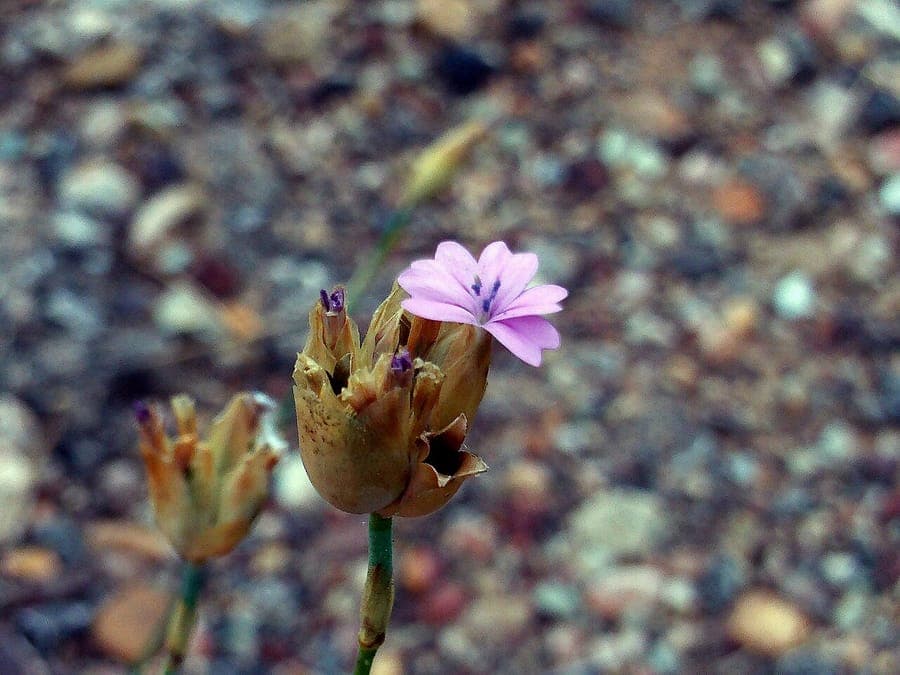
Javier martin / Public domain, via Wikimedia Commons
Petrorhagia nanteuilii: complete guide
Petrorhagia nanteuilii
Want to see Petrorhagia nanteuilii: complete guide in your garden?
1 minute, no credit card
Overview
Petrorhagia nanteuilii, commonly known as Proliferous pink or Nanteuil's pink, is a delightful alpine plant from the Caryophyllaceae family (carnation family). The plant originates from the Mediterranean region - from Portugal to Italy and North Africa. The name 'nanteuilii' honors botanist Nanteuil.
Despite its delicate appearance, Petrorhagia nanteuilii is a robust, resilient plant that performs excellently in European rock gardens. It combines refined, delicate flowers with minimal maintenance requirements. For those who love small, decorative alpine flowers, this is an absolute must.
Appearance & bloom
Proliferous pink grows as a dense, compact cushion of fine, grey-green foliage. The plant reaches only 15-30 cm in height and spread, making it perfect for rock gardens and borders. The leaves have a silky texture that catches light beautifully.
The flowers are the true attraction. They grow as tiny, semi-double rosette-like clusters in bright pink to purple, depending on growing conditions. What is most remarkable is the plant's incredibly prolific flowering from May to August, with virtually continuous bloom coverage.
The flowers attract butterflies and other pollinators and gradually set seed, encouraging natural regeneration.
Ideal location
Petrorhagia nanteuilii thrives in full sun. Position it where it receives at least 6-8 hours of direct sunlight daily. A south or west-facing rock wall or sloping rock garden is ideal. In shade, the plant becomes weak and flowers poorly.
The plant is excellent for rock gardens, alpine troughs, and wall plantings. It also grows well in containers on sunny terraces or balconies. When used as groundcover along paths or borders, it adds graceful texture.
Wind exposure is no problem; the plant tolerates wind well.
Soil
Petrorhagia nanteuilii requires exceptionally well-draining, poor soil. This is non-negotiable. In rock gardens, use a mix of horticultural sand, gravel, and minimal potting soil (3 parts sand or gravel to 1 part potting compost). In containers, use cactus potting mix or alpine soil blend.
The plant accepts poor to very poor sandy soil. Excess fertility leads to weakness and reduced flowering. Lime and neutral pH are preferred (pH 6.5-7.5).
Drainage is crucial - root rot from stagnation is the primary cause of death.
Free design
Want to see Petrorhagia nanteuilii: complete guide in your garden? Make a free design now.
Watering
Petrorhagia nanteuilii loves dryness. Water very sparingly, only when soil feels completely dry. During the growing season (May-August), slightly more water may be beneficial, but don't overdo it. In winter (November-March), almost no water.
Avoid wetting foliage and flowers - always water at the base. Ensure drainage works perfectly. The plant recovers quickly from drought but not from excess water.
In containers, check daily whether soil is dry before watering.
Pruning
Pruning is minimal. Remove only dead flowers and diseased leaves. This stimulates additional flowering. After blooming (September), you may lightly trim the plant for compact growth, but this is optional.
Leave seed heads if you want to collect seed or allow natural regeneration.
Maintenance calendar
March-April: Check for pests and diseases; prune if needed; ensure optimal drainage. May-June: Flowering begins; water very sparingly; no feeding needed. July-August: Full bloom; continue water sparingly; remove dead flowers. September-October: Flowering ends; minimal watering; collect seed heads. November-February: Almost no watering; keep dry; protect from wet feet.
Winter hardiness
Petrorhagia nanteuilii is winter hardy in temperate climates. It performs well outdoors in all regions. The plant tolerates frost well, provided soil doesn't become waterlogged. This is the primary threat in wet winters.
In very wet climates, placing the plant in a rock garden or raised bed with extra drainage helps. Mulch is not needed.
Companion plants
Petrorhagia nanteuilii pairs beautifully with other alpine plants such as Sedum, Sempervivum, and Dianthus. In rock gardens, it creates lovely displays beside grey-leaved plants. It also combines well with lavender in Mediterranean designs.
The small pink flowers contrast beautifully with yellow-flowering alpines like Alyssum.
Conclusion
Petrorhagia nanteuilii is a small but formidable plant offering perfect advantages for rock garden enthusiasts. With its prolific flowering, minimal water requirements, and elegant appearance, it deserves a prominent place in alpine collections.
Source seedlings from specialized alpine plant nurseries or online suppliers. Consult gardenworld.app for garden inspiration!
Want to discover more plant guides? Visit gardenworld.app for dozens of garden design articles.
Want to see Petrorhagia nanteuilii: complete guide in your garden? Make a free design now.
Upload a photo, pick a style, and get a photorealistic design with plant list in under a minute.
No credit card required


Similar plants
Dianthus karami: complete guide
Dianthus karami
Dianthus karami is a rare Lebanese mountain pink with fringed pink blooms on limestone cliffs, ideal for rock gardens and troughs.
Sicilian pink: complete guide
Dianthus siculus
Discover Dianthus siculus, an elegant purple bloomer from Sicily. Cultivation, June-September flowering and garden combinations.
Alpine mouse-ear chickweed: complete guide
Cerastium pedunculatum
Full growing guide for Cerastium pedunculatum: ideal location, soil, watering, winter hardiness, and companion plants for rock gardens.