
Mike Dickison / CC BY 4.0, via Wikimedia Commons
Queen's Wreath: complete guide
Petrea volubilis
Want to see Queen's Wreath: complete guide in your garden?
1 minute, no credit card
Overview
Petrea volubilis, commonly known as Queen's Wreath or Purple-wreath, is a breathtaking climbing plant from the Verbenaceae family. Native to Mexico and Central and South America, this vigorous vine produces stunning purple and white flowers throughout warm seasons. The graceful, weeping growth habit and continuous blooming make it a top choice for gardeners seeking tropical or subtropical appeal.
Appearance and Bloom
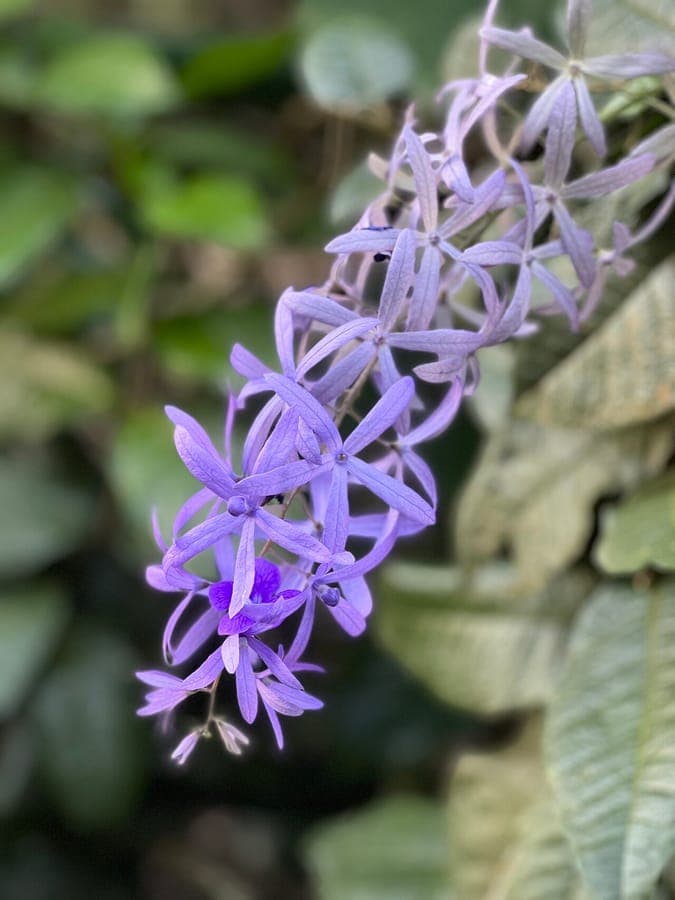
Queen's Wreath features long, slender stems that climb or cascade elegantly. The lance-shaped leaves are medium green with a fine texture, providing attractive foliage even when not blooming. Flowers are the true stars - appearing in pendant clusters of delicate blooms. Each flower showcases striking purple or blue petals with contrasting white sepals, creating an ethereal, papery appearance. Blooming season extends from late spring through fall in warm climates.
Ideal Location
Place Queen's Wreath where it receives 6 or more hours of direct sunlight daily. In extremely hot regions, afternoon shade helps prevent flower fade. The plant needs sturdy support - a fence, pergola, or trellis works perfectly. Good air circulation is essential to prevent fungal issues. This plant thrives in USDA zones 10-12 but can grow in containers elsewhere.
Soil
Petrea volubilis requires well-draining soil enriched with organic matter. A mixture of garden soil, compost, and sand creates ideal conditions. Soil pH should range from 6.0 to 7.0. Poor drainage leads to root rot, a common cause of plant failure. For container growing, use a premium potting mix amended with perlite or orchid bark.
Free design
Want to see Queen's Wreath: complete guide in your garden? Make a free design now.
Watering
Water deeply and regularly during the growing season, keeping soil consistently moist but never soggy. In hot weather, daily watering may be necessary. During cooler months, reduce frequency significantly. Check soil moisture 2 inches deep - if dry, water thoroughly. Consistent moisture promotes prolific flowering. Mulching around the base helps retain moisture and regulate temperature.
Pruning
Regular pruning maintains shape and encourages bushier growth. After bloom cycles, trim back stems by about one-third to promote branching. Remove dead, diseased, or crowded wood anytime. Young plants benefit from more aggressive pruning to establish strong framework. Avoid heavy pruning during blooming periods to maximize flower display.
Maintenance Calendar
Spring: Apply slow-release fertilizer. Check for pests and spider mites. Summer: Water daily, fertilize every two weeks. Deadhead spent flowers. Fall: Reduce feeding as growth slows. Prepare for dormancy in cooler zones. Winter: Minimal watering. Move containers indoors in frost-prone areas.
Winter Hardiness
Queen's Wreath is frost-tender and only hardy in zones 10-12. In colder climates, grow in containers that can be moved indoors. Temperatures below 10 degrees Celsius cause severe damage or death. Protect outdoor plants with frost cloth if freezing weather threatens.
Companion Plants
Pair Queen's Wreath with other heat-loving plants like Bougainvillea, Mandevilla, or Clematis for stunning color combinations. Low-growing perennials or groundcovers at the base provide textural interest. Avoid overly dense surrounding plantings that shade the vine or restrict air flow.
Closing
Queen's Wreath transforms any garden space into a tropical paradise. With proper care and ideal conditions, this stunning vine rewards you with years of stunning purple blooms. Visit gardenworld.app for detailed guidance on tropical plant design. Discover on gardenworld.app how to create your perfect garden oasis.
Want to see Queen's Wreath: complete guide in your garden? Make a free design now.
Upload a photo, pick a style, and get a photorealistic design with plant list in under a minute.
No credit card required


Similar plants
Bigbract verbena: complete guide
Verbena bracteata
Full guide to Verbena bracteata, the creeping North American vervain. Growth habit, care, soil needs, and use as ground cover in drought-tolerant gardens.
Purpletop vervain: complete guide
Verbena incompta
Verbena incompta, a South American charmer. Discover long blooming period and care for sunny borders.
Verbena canescens: complete guide
Verbena canescens
Discover the elegant American gray vervain with purple flowers and exceptional drought tolerance. Perfect shrub for sunny, dry borders.