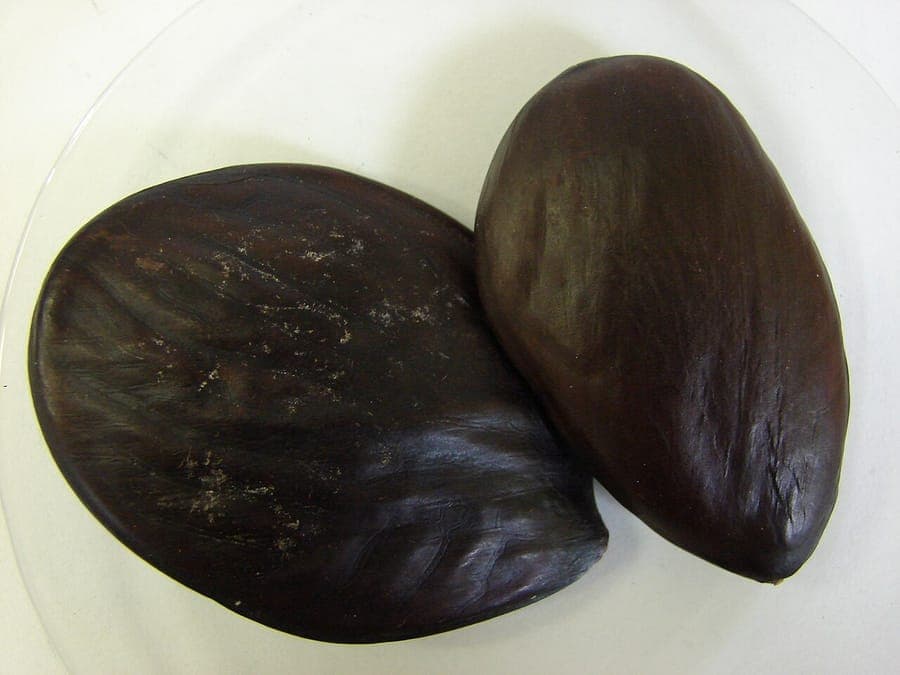
Maša Sinreih in Valentina Vivod / CC BY-SA 3.0, via Wikimedia Commons
Pentaclethra macrophylla: complete guide
Pentaclethra macrophylla
Want to see Pentaclethra macrophylla: complete guide in your garden?
Full design in HD: €7.99
Look after your Pentaclethra macrophylla with the GardenWorld app
Identify plants with your camera and get a care calendar with reminders for this plant.


Overview
Pentaclethra macrophylla, known as Atta-bean, Oilbean tree or African oil bean, is an impressive tropical tree from West Africa. This tree from the Fabaceae (legume family) grows naturally in West and Central Africa, from Senegal to Angola.
The tree is particularly known for its large oil-rich seeds that are used in traditional African cuisine and cosmetics. The seeds contain valuable oils and proteins. For gardeners, this tree is interesting because of its impressive appearance and useful properties.
Appearance and bloom
Pentaclethra macrophylla is a large tree that can reach up to 100 feet (30 meters) in its natural habitat. The tree has large, compound leaves made up of many small leaflets. The leaves can be up to 3 feet (1 meter) long and give the tree a regal appearance.
The flowers are small and inconspicuous, but appear in rich clusters. The fruit is a long pod with large, oil-rich seeds. The seeds are oval and reddish to brown in color.
Ideal location
Pentaclethra macrophylla thrives best in full sunlight. The tree needs at least 6 hours of direct sunlight per day. In natural habitat, the tree often grows in partial shade under other trees, but in nursery conditions full sun is ideal.
The tree needs plenty of space for its crown growth. Provide a location where it can grow unobstructed. Wind can damage the large leaves, so shelter is desirable.
Soil
Pentaclethra macrophylla grows best in rich, well-draining soil. The tree prefers nutrient-rich soil with plenty of organic matter. Heavy clay soils should be improved with sand and compost.
The tree tolerates acidic to neutral soils (pH 5.5-7.0). In very poor soils, the tree grows more slowly and produces less yield.
Watering
Water Pentaclethra macrophylla regularly during the growing season. The tree prefers moist soil, but not waterlogged. In tropical regions with heavy rainfall, the tree grows under natural conditions.
During dry periods, supplementary water must be given. Young trees need more moisture control than mature trees. Mulching around the tree helps retain moisture.
Free preview
Want to see Pentaclethra macrophylla: complete guide in your garden? Make a free preview of your design.
Pruning
Pruning is needed for young trees to promote good tree shape. Remove competing stems and weak branches. Once mature, the tree rarely needs further pruning.
Remove dead and diseased branches immediately. This helps prevent diseases.
Maintenance calendar
Spring: Examine tree structure. Prune competing stems. Start feeding as growth period begins.
Summer: Regular watering. Feed as needed. Monitor for diseases.
Autumn: Adjust watering to rainfall. Reduce feeding.
Winter: Minimal watering in dry regions. No feeding during dormancy.
Winter hardiness
Pentaclethra macrophylla is not frost-hardy and cannot tolerate frost. The tree grows only in tropical and subtropical climates. Temperatures below 41 F (5 C) damage the tree.
In temperate climates, the tree can only be grown in a greenhouse or conservatory.
Special characteristics
The seeds of Pentaclethra macrophylla are extremely nutritious and are widely used in West Africa. The oil is suitable for food and cosmetics. The seeds also contain valuable proteins.
The tree also plays an important ecological role in West African ecosystems. Many animals rely on the seed for food.
Plant combinations
Pentaclethra macrophylla can be grown as a single tree because of its impressive growth. In tropical gardens, it can be grown together with other fruit trees and useful trees.
The large leaves provide shade under other trees, so place other shade-tolerant plants underneath.
Closing thoughts
Pentaclethra macrophylla is an impressive and useful tree for tropical and subtropical gardens. With its large leaves and nutritious seeds, it is a valuable addition to permaculture systems and farm gardens.
Want more information about tropical fruit trees and useful plants? Visit gardenworld.app for more guides and ideas.
Frequently asked questions about Pentaclethra macrophylla
Is Pentaclethra macrophylla winter hardy?
Pentaclethra macrophylla is not frost-hardy and cannot tolerate frost. The tree grows only in tropical and subtropical climates.
When and how do you prune Pentaclethra macrophylla?
Pruning is needed for young trees to promote good tree shape. Remove competing stems and weak branches.
How much water does Pentaclethra macrophylla need?
Water Pentaclethra macrophylla regularly during the growing season. The tree prefers moist soil, but not waterlogged.
Where does Pentaclethra macrophylla grow best?
Pentaclethra macrophylla thrives best in full sunlight. The tree needs at least 6 hours of direct sunlight per day.
What soil does Pentaclethra macrophylla need?
Pentaclethra macrophylla grows best in rich, well-draining soil. The tree prefers nutrient-rich soil with plenty of organic matter.

See it in your garden
See Pentaclethra macrophylla in your garden
One photo of your garden and a few questions. You see the result in about a minute.
Try it with a photoIdentify this plant in your own garden. Identify a plant
Similar plants
Pineapple broom (Argyrocytisus battandieri): complete guide
Argyrocytisus battandieri
Everything about pineapple broom (Argyrocytisus battandieri), the Moroccan wall shrub with silver leaves and pineapple-scented flowers: site, pruning and hardiness.
Blue false indigo: complete guide
Baptisia australis
Everything about blue false indigo (Baptisia australis): position, soil, watering, cutting back, hardiness and toxicity. A long-lived prairie perennial with indigo flowers.
Warminster broom (Cytisus × praecox): complete guide
Cytisus × praecox
Everything about Warminster broom (Cytisus × praecox): position, poor soil, pruning after flowering, hardiness and what you need to know about its toxicity.
