
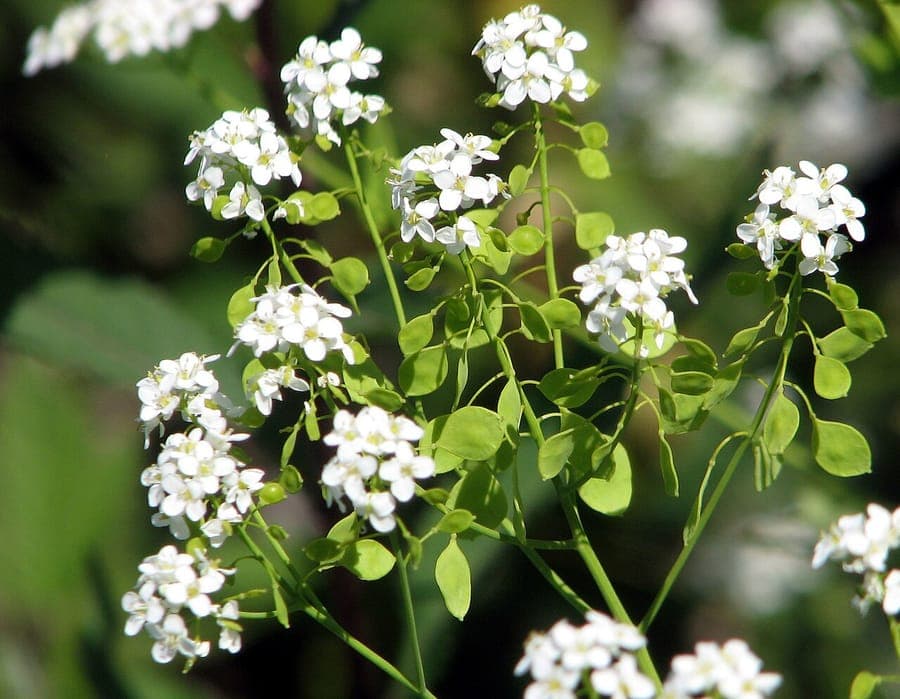
$Mathe94$ / CC BY-SA 3.0, via Wikimedia Commons
Garlic Cress: complete guide
Peltaria alliacea
Want to see Garlic Cress: complete guide in your garden?
1 minute, no credit card
Garlic Cress (Peltaria alliacea) is a European perennial from the Brassicaceae family, renowned for its fragrant white flowers and distinctive garlic scent. This alpine plant grows naturally in eastern European mountain regions from Austria through Romania. It forms low, compact plants with fragrant white blooms in spring.
Though relatively unknown in northern gardens, Peltaria alliacea offers excellent value for alpine rock gardens, scree beds, and alpine meadow compositions. The plant provides botanical interest and proves cold-hardy in temperate climates.
Appearance and bloom
Garlic Cress forms low, compact rosettes reaching approximately 10 to 25 centimeters tall. Leaves are opposite along distinct petioles, displaying bright green tones. Leaf surfaces are slightly rough-textured. In spring, dense flower clusters of small white blooms emerge above foliage on stiff stems.
The flowering period runs from April through May in most climates. Each flower consists of four small petals, typical of the Brassicaceae family. Blooms smell pleasantly - not strongly of garlic, but rather mild and clean.
Ideal location
Choose sites with full sun to partial shade. At least four to six hours of sunlight is ideal, though full shade limits flowering. The plant grows excellently on warm, well-drained slopes and in raised beds. In mountainous regions with cool climates, it feels especially at home.
Alpine gardens, gravel beds, and rocky settings are perfect. The plant suits terrace gardening and thrives in containers.
Soil
Well-draining, sandy to gravelly soil is essential. Heavy clay soils without amendment will likely cause poor growth and rotting. Add gravel, sand, and alpine potting mix to amended sites. Neutral to slightly alkaline pH (6.5 to 7.5) is preferred.
The plant accepts poor, nutrient-lean soils well - fertilizing is usually unnecessary. Mountain soils with stone fragments are ideal. Mulch around the plant with fine gravel to avoid moisture-retention problems.
Watering
Water moderately, especially once established. The plant thrives in modest moisture but tolerates dry periods well. Water more during initial growth after transplanting or germination. Once established, water only during very dry conditions.
In container cultivation, let soil dry almost completely between waterings. Excess moisture causes root rot and decline. During winter, provide minimal watering.
Free design
Want to see Garlic Cress: complete guide in your garden? Make a free design now.
Pruning
Minimal pruning is needed. Remove only spent flowers after blooming for neater appearance. This encourages possible later flowering. Dead foliage can be removed in autumn.
Never use heavy pruning. Allow natural growth form. Occasional removal of sprawling shoots maintains compact form in containers.
Maintenance calendar
January to February: Plant resting; no action needed. Check drainage and dryness. March to April: Growth begins; flowering follows quickly. Ensure moderate moisture. May to June: Peak flowering April through May. Remove spent blooms. July to September: Plant grows less; no further flowering. Minimal watering. October to December: Winter preparation; no fertilizing. Keep dry.
Winter hardiness
Garlic Cress is very cold-hardy (-10 to -20 degrees Celsius) and suitable for northern regions. The plant grows best in cooler climate zones. Snow and frost periods cause no harm; the plant dies back to root level and regrows each spring.
In mild winters, some foliage may persist. No special protection is needed except during extremely wet winters - good drainage helps considerably.
Companion planting
Pair Garlic Cress with other alpine bloomers like Delosperma, Dianthus, and small Campanula species. Gray-leaved Artemisia and Senecio form beautiful contrast partners. Dwarf conifers and alpine grasses complement well.
Low-growing Sedum and other alpine succulents make good group companions. For naturalistic effect, plant in groups of three to five specimens together.
Closing remarks
Garlic Cress is a jewel for those appreciating alpine and mountain gardens. It offers cold-hardiness, minimal maintenance requirements, and botanical interest. Though harder to find in commerce, it deserves attention from alpine flora enthusiasts.
Gardenworld recommends: Source Peltaria through specialized alpine plant nurseries or online retailers. Seed-raised plants produce better results than container transplants. For inspiration on alpine gardens and rocky borders, visit gardenworld.app and discover pre-designed plantings with alpine flora. Plant your own cool-climate paradise today and enjoy spring blooms and garlic fragrance!
Want to see Garlic Cress: complete guide in your garden? Make a free design now.
Upload a photo, pick a style, and get a photorealistic design with plant list in under a minute.
No credit card required


Similar plants
Brassica cretica: complete guide
Brassica cretica
Brassica cretica, the Cretan cabbage, grows wild on Aegean cliffs. Discover how to grow this drought-tolerant, yellow-flowered Mediterranean perennial.
Corsican cabbage: complete guide
Brassica insularis
Corsican cabbage is a rare Mediterranean rock cabbage with white flowers and blue-green leaves. Location, soil and winter protection.
Prostrate cabbage: complete guide
Brassica procumbens
Prostrate cabbage is a creeping North African cliff plant with yellow flowers. Discover location, soil type and winter protection.