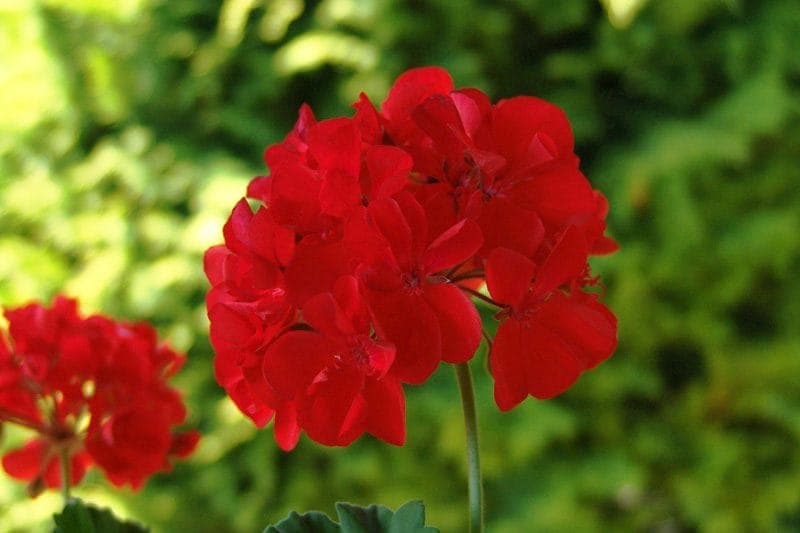
Wikimedia Commons / CC BY-SA 3.0, via Wikimedia Commons
Zonal geranium (Pelargonium × hortorum): complete guide
Pelargonium × hortorum
Want to see Zonal geranium (Pelargonium × hortorum): complete guide in your garden?
Full design in HD: €7.99
Look after your Zonal geranium with the GardenWorld app
Identify plants with your camera and get a care calendar with reminders for this plant.


Overview
The zonal geranium (Pelargonium × hortorum) is the best-known balcony plant in western Europe. From Belgian window boxes to Swiss chalets and Spanish courtyards, its red, pink and white flower heads define summer. Almost everyone calls it a geranium, although botanically that is not quite right. True geraniums (Geranium) are hardy perennials such as the cranesbills; the bedding geranium belongs to Pelargonium, a genus from southern Africa.
Pelargonium × hortorum is not a wild species but a hybrid group, mainly between Pelargonium zonale and Pelargonium inquinans, bred in Europe since the eighteenth century. That explains the × in the name and the vast choice of cultivars: single and double, compact and vigorous, with plain or variegated leaves. Many have a dark, horseshoe-shaped band on the leaf, which gives the group its common name.
Plants grow 30 to 60 cm tall and are not hardy in our climate. Even so, there is no need to replace them every spring: overwinter them indoors or take cuttings in late summer, and you can keep the same plants for years. Want to see how geraniums fit your containers and borders? On gardenworld.app you can have a garden design made that includes your patio and balcony as well.
Appearance and bloom cycle
The leaves are round to kidney-shaped, 5 to 10 cm across, softly hairy and slightly wavy at the edge. Crushed, they release a spicy scent. Many cultivars show a bronze or dark green zone across the leaf, while variegated types carry white, cream or even reddish markings. The stems are succulent and become woody at the base with age.
The flowers sit in rounded heads on long stalks held above the foliage. Each head carries ten to fifty individual flowers of 2 to 3 cm. Colours range from white and salmon through every shade of pink to scarlet and magenta; there are no true yellows or blues. The photo shows a classic red cultivar with semi-double flowers.
Flowering starts in May and, with good care, continues until the first night frost in October or November. Kept on a bright windowsill indoors, plants will often produce the odd flower head in winter too.
A word of caution for pet owners: pelargoniums contain essential oils such as geraniol and linalool and are considered toxic to cats and dogs. Eating them can cause vomiting, lethargy and skin irritation. They pose little risk to people, though the sap may irritate sensitive skin.
Ideal location
Geraniums love the sun. A spot with at least six hours of direct sunlight a day gives the most flowers, so a south-facing balcony or a sunny windowsill is ideal. They will grow in partial shade, but produce longer stems and fewer blooms.
Some shelter from rain is a bonus. After long wet spells the flowers discolour and grey mould can set in, especially on double cultivars. A position under eaves or a deep window ledge helps. Thanks to their sturdy habit, zonal geraniums cope with wind quite well.
Only put them outside once the risk of frost has passed, usually from mid-May. A cold night below 5 °C checks growth and frost is fatal. Give plants a sheltered spot for the first few days so they can adjust to strong sunlight.
Soil requirements
In pots and window boxes, use a good-quality compost for patio plants, ideally with some perlite or clay granules for structure. A slightly acidic to neutral pH, around 6 to 6.5, suits them. Drainage matters most: make sure there is a drainage hole and, if you like, a layer of clay pebbles at the bottom.
In the open ground, geraniums grow well in any garden soil that does not stay wet. On heavy clay, work some compost and grit into the top layer.
Geraniums are hungry plants. From late May to late August, feed weekly or fortnightly with a liquid fertiliser for flowering plants that is high in potash. Too much nitrogen produces lots of leaves and few flowers. Start feeding once the plant has been in its new container for a couple of weeks.
Free preview
Want to see Zonal geranium (Pelargonium × hortorum): complete guide in your garden? Make a free preview of your design.
Watering
With their succulent stems, zonal geraniums cope better with a brief dry spell than with too much water. Water when the top few centimetres of compost feel dry, and water thoroughly until it runs from the drainage hole. Never leave water standing in the saucer: wet roots lead to stem and root rot.
On a hot summer day a full window box may need water daily, whereas a pot in cool weather can last a week. Check with your finger rather than following a fixed schedule. Water in the morning and at the base, not over the leaves and flowers; wet foliage encourages rust and grey mould.
Pruning
The key summer task is removing faded flower heads. Snap or cut the whole flower stalk off where it joins the stem. The plant then puts its energy into new buds rather than seed.
Young plants become bushier if you pinch out the tips in spring, which encourages side shoots and therefore more flowers. Also remove yellow or damaged leaves so that fungal diseases get no foothold.
When you bring plants in for winter, cut them back by a half to two thirds. In February or March, prune again: shorten thin, pale shoots to a few buds above the base so the plant regrows compactly.
Cuttings are easy. In August or September, take tip cuttings 8 to 10 cm long, strip the lower leaves and insert them into a mix of compost and sharp sand. Do not cover them with plastic, as they rot easily. They root in three to four weeks.
Maintenance calendar
February-March: Wake overwintered plants, cut them back and repot into fresh compost. Give them more light, a little more warmth and more water.
April: Pinch out the tips of young plants. Put pots outside on warm days to harden them off.
Mid-May: Once frost is no longer a risk, plants can go outside for good. Start weekly feeding.
June-August: Peak flowering. Deadhead, water as needed and watch for aphids, whitefly and red spider mite.
August-September: Take cuttings from your best plants.
October: Bring plants indoors before the first frost and cut them back.
November-January: Overwinter in a bright, cool place with very little water.
The planting calendar on gardenworld.app lists month by month what to do with your container plants, so you never miss the moment to bring them in.
Winter hardiness
Pelargonium × hortorum is not hardy. A light frost damages the leaves and temperatures below about -2 °C kill the plant. There are two ways to overwinter it.
The best method is a bright, cool spot between 5 and 10 °C, such as an unheated conservatory, a cool spare room or a landing with a window. Water only occasionally, just enough to stop the stems shrivelling, and do not feed.
If you have no bright space, a dark, dry and cool cellar or garage at 5 to 8 °C also works. Cut the plant back hard and remove most of the leaves. It then goes dormant and shoots again in spring, although it takes a little longer to get going.
Check overwintering plants regularly for grey mould. In southern Europe, the geranium bronze butterfly (Cacyreus marshalli) is also a pest; its caterpillars bore into the stems. It occasionally turns up further north on imported plants, so if you spot holes in buds or hollow stems, cut out the affected parts.
Companion plants
Geraniums are the backbone of many window boxes. For a classic display, combine them with trailing plants. The ivy-leaved geranium (Pelargonium peltatum) adds a cascade of flowers, while blue lobelia (Lobelia erinus) and white sweet alyssum (Lobularia maritima) fill the front and edges beautifully.
For a calmer colour scheme, silver foliage such as Helichrysum petiolare adds a cool accent among red flowers. If you want bold colour, choose ornamental sweet potato (Ipomoea batatas) with lime-green or purple leaves. In borders, geraniums pair well with verbena, salvia and ornamental grasses.
Final thoughts
The zonal geranium remains Europe's favourite balcony plant for good reason. It flowers for months, forgives a missed watering and is content with sun, regular feeding and deadheading. If you take the trouble to overwinter it indoors or root a few cuttings, you can keep the same plants for many years.
This autumn, move your best cultivars to a cool, bright spot and take a handful of cuttings in late summer. Next year your balcony will be full of colour again, with plants you raised yourself.
Frequently asked questions about Zonal geranium
Is Zonal geranium winter hardy?
Pelargonium × hortorum is not hardy. A light frost damages the leaves and temperatures below about -2 °C kill the plant.
When and how do you prune Zonal geranium?
The key summer task is removing faded flower heads. Snap or cut the whole flower stalk off where it joins the stem.
How much water does Zonal geranium need?
With their succulent stems, zonal geraniums cope better with a brief dry spell than with too much water. Water when the top few centimetres of compost feel dry, and water thoroughly until it runs from the drainage hole.
Where does Zonal geranium grow best?
Geraniums love the sun. A spot with at least six hours of direct sunlight a day gives the most flowers, so a south-facing balcony or a sunny windowsill is ideal.
What soil does Zonal geranium need?
In pots and window boxes, use a good-quality compost for patio plants, ideally with some perlite or clay granules for structure. A slightly acidic to neutral pH, around 6 to 6.5, suits them.

See it in your garden
See Zonal geranium in your garden
One photo of your garden and a few questions. You see the result in about a minute.
Try it with a photoIdentify this plant in your own garden. Identify a plant
Similar plants
Ivyleaf geranium: complete guide
Pelargonium peltatum
Discover ivyleaf geranium, a practical hanging plant with purple and pink flowers. Learn about cultivation, pruning and winter storage in this guide.
Lobelia erinus: complete guide
Lobelia erinus L.
Lobelia erinus is popular trailing plant with blue or red flowers, perfect for hanging baskets and containers. Flowers continuously all summer long.
Sweet alyssum: complete guide
Lobularia maritima
Sweet alyssum (Lobularia maritima) is an elegant trailing plant with fragrant blooms. Complete growing and care information here.
