
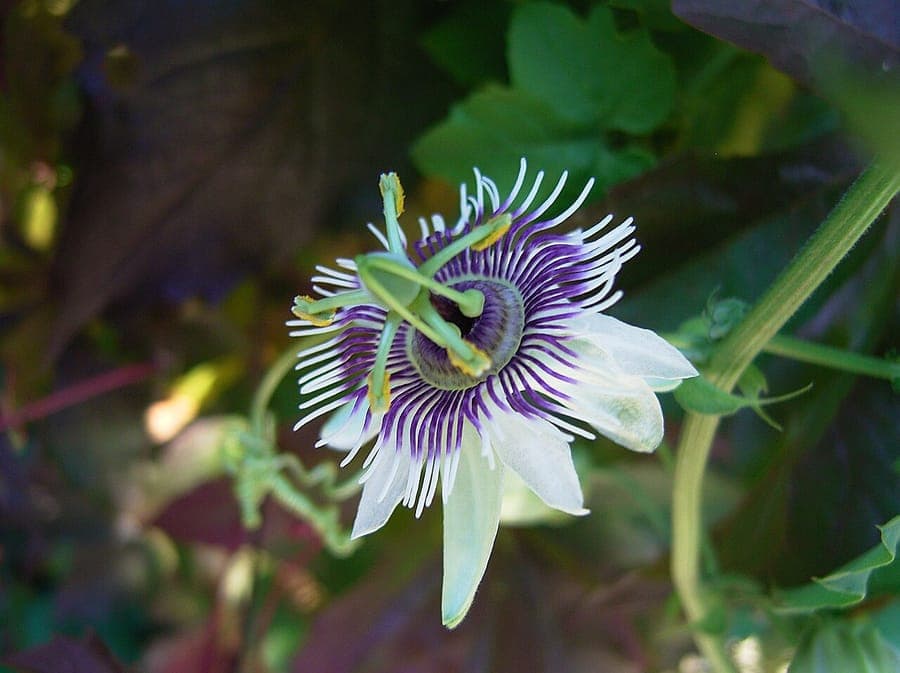
Density / CC BY-SA 2.5, via Wikimedia Commons
Woodland passionflower: complete guide
Passiflora morifolia
Want to see Woodland passionflower: complete guide in your garden?
1 minute, no credit card
Overview
The Woodland passionflower (Passiflora morifolia) is an enchanting climbing vine from the Passifloraceae family, native to Mexico and South America. This exotic scrambler is celebrated for its stunning, intricately detailed flowers featuring characteristic crown filaments and prominent stamens. Growing naturally in forested areas where it clings to trees and shrubs, this passionflower species becomes a true garden gem for tropical enthusiasts who combine exotic appeal with achievable care requirements.
Appearance and Bloom
The flowers of Passiflora morifolia are the plant's crowning glory. They reach 5 to 8 cm in diameter and display the classic passionflower structure with five sepals, five petals, and a striking corona of slender, colored filaments. Blooms typically appear June through August in shades of white, pink, and purple, depending on the specific cultivar. Heart-shaped leaves reach 8 to 12 cm long with moderately ribbed texture. The plant climbs actively via spiral tendrils that grip supporting structures firmly as it grows.
Ideal Location
Passiflora morifolia thrives in warm, sunny positions receiving at least six hours of direct sunlight daily. In areas with intense summer heat (USDA zones 10-11), light afternoon shade prevents leaf scorch. Provide sturdy climbing support such as pergolas, trellises, or espaliers, as the plant grows vigorously and can reach 4 to 5 meters in favorable conditions. Wind protection helps minimize leaf damage during strong gusts.
Soil
This climbing vine prefers well-draining, organically rich soil with pH between 6.0 and 7.0. A mixture of garden soil, perlite, and compost (ratio 2:1:1) works excellently. Good drainage is critical as waterlogged conditions cause root rot. Keep soil from becoming overly compacted by gentle cultivation that avoids damaging shallow roots.
Watering
During the growing season (spring and summer), Passiflora morifolia needs regular watering with soil remaining moist yet not waterlogged. Test soil 2 cm below surface with your finger; water only when dry. In hot periods, daily leaf misting helps compensate for evaporation. In autumn and winter, allow soil to become slightly drier, though never completely dry.
Free design
Want to see Woodland passionflower: complete guide in your garden? Make a free design now.
Pruning
Pruning is important for managing growth and stimulating more flowering branches. After winter dormancy (March to April), remove old, damaged, or weak stems. Pinch back shoot tips 15 to 20 cm from ground to encourage bushy growth. Never remove more than one-third of the plant at once. Removed flowers can be applied to other shrubs.
Maintenance Calendar
Spring (March-May): Begin biweekly feeding with balanced fertilizer. Check for new growth and pests. Summer (June-August): Peak flowering season; continue feeding and monitor watering needs. Autumn (September-October): Gradually reduce feeding; watch for leaf drop. Winter (November-February): Stop feeding; minimize watering; plant may enter dormancy.
Winter Hardiness
Passiflora morifolia lacks cold tolerance and flourishes only outdoors in USDA zones 9b to 11. In temperate climates (zones 5-8), grow the plant in a large container and overwinter it in a protected greenhouse or conservatory where temperatures never drop below 5 degrees Celsius. For outdoor growing in zone 9a, apply frost protection such as wrapping the base and applying protective mulch during winter months.
Companion Plants
Surround Passiflora morifolia with low-growing groundcovers such as Ajuga reptans or Vinca minor. Shade-providing plants (like Acer platanoides) indirectly support the climber and create layered planting. In container combinations, lower non-climbing flowering plants (such as Impatiens) add elegance without competition.
Closing Thoughts
The Woodland passionflower undeniably brings tropical atmosphere and botanical drama to any garden. While this exotic climber demands special care to thrive in temperate regions, its stunning blooms reward every effort many times over. Visit local garden centres to source seeds or young plants; consult gardenworld.app for personalized advice. Let this enchanting vine transform your garden experience into something truly magical.
Want to see Woodland passionflower: complete guide in your garden? Make a free design now.
Upload a photo, pick a style, and get a photorealistic design with plant list in under a minute.
No credit card required


Similar plants
Passiflora antioquiensis: complete guide
Passiflora antioquiensis
Passiflora antioquiensis is a Colombian banana passionflower with hanging pink blooms. Discover trellising, soil and winter care.
Purple passionflower: complete guide to growing Passiflora incarnata
Passiflora incarnata
Full growing guide for Passiflora incarnata, the hardy purple passionflower for zones 5-9. Planting, pruning, winter care and companion plants included.
Passiflora tenuiloba: complete guide
Passiflora tenuiloba
Birdwing passionflower blooms exotically and grows rapidly. Learn how to cultivate this passion flower in your garden as a vine or container plant.