
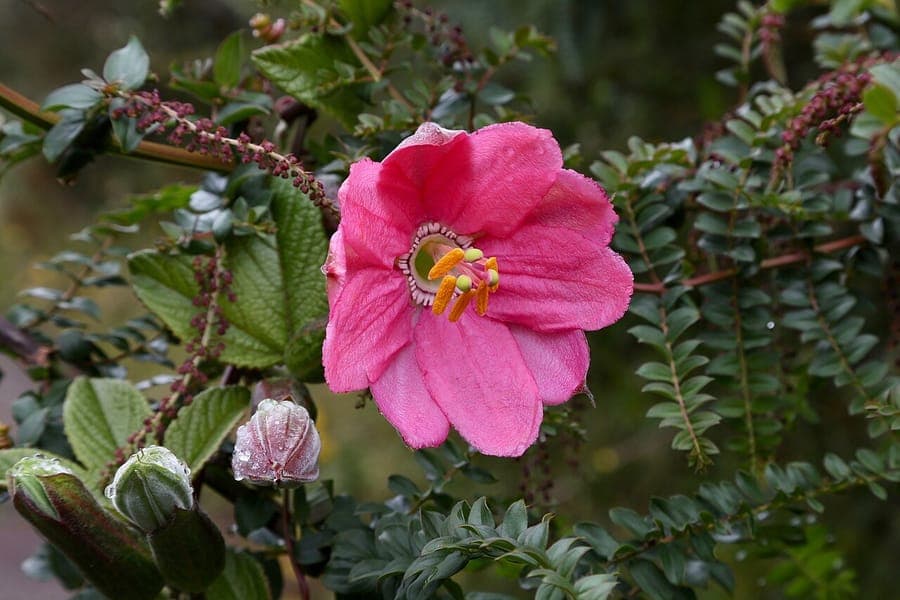
Alexey Yakovlev / CC BY-SA 4.0, via Wikimedia Commons
Passiflora mixta: complete guide
Passiflora mixta
Want to see Passiflora mixta: complete guide in your garden?
1 minute, no credit card
Overview
Passiflora mixta, commonly called passion flower or passionflower, is a spectacular climbing vine from South America. Native to regions spanning Bolivia, Colombia, Ecuador, Peru, and Venezuela, this rambling plant belongs to the Passifloraceae family and is celebrated for its dramatic flowers.
The plant grows as a perennial, woody climber that can reach considerable heights along trellises, walls, or trees. In its natural habitat, passiflora mixta can grow several meters high. For garden enthusiasts, this plant offers a unique combination of exotic beauty and practical utility in the front garden.
The blooming period extends through summer, with countless insect visitors attracted to the striking flowers.
Appearance and Bloom
Passiflora mixta distinguishes itself through impressive flowers, the plant's crowning feature. The blooms measure approximately 4-5 centimeters in diameter and consist of three main components: the sepals, petals, and a characteristic corona of hairy filaments.
Flower colors range from white to pink or lavender, with deep purple or red spots and streaks. The corona comprises long, delicate filaments creating an intricate character to the entire flower. The stamina and pistil are equally striking, giving the passion flower its very distinctive form.
The leaves are lance-shaped, approximately 5-10 centimeters long, with a distinctive underside striping. They are dark green and glossy, providing beautiful contrast with the flowers.
After pollination, the flowers produce fruits - passion fruits themselves. These measure approximately 5-8 centimeters long, are oval and fuzzy, changing from green to reddish-brown when ripe.
Ideal Location
Passiflora mixta thrives in warm, sunny climates with at least 6-8 hours of direct sunlight daily. The plant appreciates shelter from strong winds, which can damage delicate flowers.
A south-facing wall or position against a heat-absorbing structure is ideal. In temperate climates, you can overwinter the plant in a greenhouse or conservatory.
The plant requires support for climbing stems. Provide trellises, netting, or other supporting structures for upward growth.
Soil
Passiflora mixta grows best in nutrient-rich, well-draining soil. A mix of garden loam with organic material such as compost or leaf mold is ideal. The plant prefers soil with pH between 6-7 (neutral to slightly acidic).
Organic material is important for water and nutrient retention. Mix approximately 30% compost into your normal soil before planting.
Good drainage prevents waterlogging, which can cause root fungal diseases. Add sand or gravel to heavy clay soils to improve drainage.
Free design
Want to see Passiflora mixta: complete guide in your garden? Make a free design now.
Watering
Passiflora mixta has consistent watering requirements. Water regularly during the growing season (spring through autumn), keeping soil consistently moist but never waterlogged.
During summer, the plant may have increased water requirements, especially after blooming. Add water when the top 2-3 centimeters of soil feel dry.
In winter, when growth slows, reduce watering frequency. The plant enters dormancy and requires less water.
Occasionally mist with water to combat aphids and keep the plant's air humidity higher, which most passion flowers appreciate.
Pruning
Pruning helps passiflora mixta maintain a more compact form and encourages more flowering. Perform pruning in early spring before new growth begins.
Remove dead or damaged branches completely back to ground level. This stimulates new, healthy growth.
Shaping can also occur after blooming in autumn to reshape the plant.
Tip: Pruning can cause temporary flowering loss, so schedule this between blooming periods.
Maintenance Calendar
Spring (March-May): New growth begins. Start regular watering. Perform pruning as needed. Feed monthly.
Summer (June-August): Peak bloom period. Water daily during dry spells. Monitor for pest insects. Support heavy flowering branches.
Autumn (September-October): Blooming begins declining. Water slightly less. Perform light pruning. Prepare plant for winter.
Winter (November-February): Plant rests. Minimal water. No feeding. Protect against frost in cold climates.
Winter Hardiness
Passiflora mixta lacks cold resistance. In climates where temperatures drop below 5 degrees Celsius, the plant requires protection. The plant can survive to -2 degrees, but thrives above 10 degrees Celsius.
In cold regions, options include:
- Growing in a pot you can bring indoors in winter
- Protect with fleece covers in mild climates
- Grow as an annual, replanting yearly
Companion Plants
Passiflora mixta combines well with other warmth-loving plants:
- Clematis species - other ornamental climbers
- Bougainvillea - colorful complementary blooms
- Mandevilla - exotic flowers, similar requirements
- Solanum jasminoides - white star-shaped flowers
Combination with low-growing groundcovers creates layers in your front garden.
Closing
Passiflora mixta brings exotic beauty and interesting fruits to the temperate front garden. The spectacular flowers, climbing habits, and summer blooming make this a distinctive choice for garden design.
Whether seeking tropical aesthetics or a fascinating fruit producer, passion flower deserves consideration. Start with a warm, sunny location and supporting structure, then enjoy years of fascinating growth. Visit gardenworld.app for additional plant data and cultivar recommendations.
Want to see Passiflora mixta: complete guide in your garden? Make a free design now.
Upload a photo, pick a style, and get a photorealistic design with plant list in under a minute.
No credit card required


Similar plants
Passiflora antioquiensis: complete guide
Passiflora antioquiensis
Passiflora antioquiensis is a Colombian banana passionflower with hanging pink blooms. Discover trellising, soil and winter care.
Purple passionflower: complete guide to growing Passiflora incarnata
Passiflora incarnata
Full growing guide for Passiflora incarnata, the hardy purple passionflower for zones 5-9. Planting, pruning, winter care and companion plants included.
Passiflora tenuiloba: complete guide
Passiflora tenuiloba
Birdwing passionflower blooms exotically and grows rapidly. Learn how to cultivate this passion flower in your garden as a vine or container plant.