
John Rosford / CC BY 4.0, via Wikimedia Commons
Mossy passionflower: complete guide
Passiflora foetida
Want to see Mossy passionflower: complete guide in your garden?
1 minute, no credit card
Overview
Passiflora foetida, commonly known as mossy passionflower, is a vigorous vine native to tropical regions of South America, including Brazil, Bolivia, and the Caribbean. Though its species name 'foetida' hints at a faintly unpleasant odour when leaves or stems are crushed, this plant is far from off-putting in the garden. With its delicate, moss-like bracts, edible fruit, and rapid climbing habit, it's a captivating addition to any outdoor space craving a touch of the exotic.
In temperate climates like the UK and northern Europe, it's best grown as a seasonal container plant or in a greenhouse. It won't survive harsh winters outdoors, but with proper care, it rewards gardeners with months of bloom and fruit. You can plan its ideal spot using gardenworld.app, where you can visualise how this vine fits into your pergola or trellis design.
Appearance & bloom cycle
This passionflower grows as a fast-climbing vine, reaching up to 3 metres in a single season when supported. Its leaves are deeply three-lobed, bright green above, and slightly silvery beneath, giving the foliage a shimmering effect in sunlight. The stems trail and twine using delicate tendrils, easily attaching to wire, wood, or mesh supports.
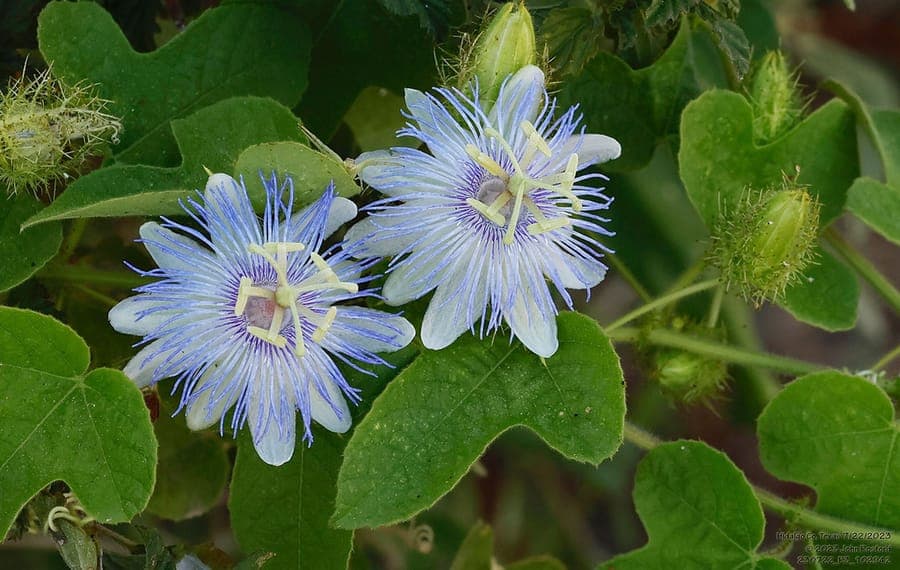
The flowers are small, typically 3–4 cm across, with a complex structure typical of Passiflora: a central corona of fine filaments in purple and white, surrounded by creamy-yellow petals. What makes P. foetida unique is the dense fringe of hairy, glandular bracts that encase the bloom, giving it a 'mossy' look - hence the common name. These bracts are sticky and can trap small insects, possibly to protect developing flowers or fruits.
Flowering begins in early summer and continues through autumn, often until October. After pollination, small green berries form, about 2–3 cm long, turning bright orange when ripe. These fruits are edible, with a sweet-tart, tropical flavour similar to guava. They're encased in the same sticky bracts, so wash them well before eating.
Ideal location
Mossy passionflower thrives in full sun. Aim for at least 6 hours of direct sunlight daily. A south- or west-facing wall, fence, or pergola is ideal. If growing in a pot, place it on a sunny patio or balcony. Ensure the plant has sturdy support - it can scramble quickly.
In cooler regions, a sheltered microclimate makes a big difference. Avoid cold winds and frost pockets. If you're short on garden space, consider a large container (minimum 40 cm diameter) with a coir-covered trellis. You can check sun exposure and wind patterns in your garden using gardenworld.app to find the best spot.
Soil requirements
Use a well-draining, nutrient-rich potting mix. A blend of two parts loam-based compost (like John Innes No. 2), one part perlite, and one part composted bark works well. In garden beds, amend heavy soils with grit and organic matter to improve drainage.
The ideal pH is slightly acidic to neutral (6.0–7.0). Avoid waterlogged conditions - root rot is a common issue if the soil stays too wet. If planting in the ground, raised beds help prevent this. For containers, always use pots with drainage holes and add a layer of gravel at the base.
Free design
Want to see Mossy passionflower: complete guide in your garden? Make a free design now.
Watering
During the growing season (May to October), water regularly. Let the top 2–3 cm of soil dry out between waterings. In hot weather, container plants may need daily watering. Use rainwater when possible, as the plant is sensitive to lime.
In winter, when the plant is dormant, reduce watering significantly. Once every 10–14 days is usually enough, depending on storage temperature. Never let the root ball dry out completely, but avoid soggy soil.
Pruning
Prune in early spring before new growth begins. Cut back all stems to 30–50 cm above soil level to encourage bushy, vigorous growth. Remove any dead or weak stems.
During summer, pinch back the tips of young shoots to promote branching and more flowering sites. Left unchecked, this vine can become leggy and sparse at the base. Regular light pruning keeps it compact and productive.
Maintenance calendar
- January: Dormant. Keep dry and cool. Check for pests.
- February: Minimal watering. Prepare tools for pruning.
- March: Prune hard. Begin light feeding with balanced liquid fertiliser.
- April: Move outdoors after frost risk (usually after mid-May). Start regular feeding.
- May: Water as needed. Watch for aphids and red spider mites.
- June–September: Peak growth. Feed every two weeks. Support new growth.
- October: Reduce water. Bring indoors before night temps drop below 10°C.
- November–December: Overwinter in a cool, bright place (8–12°C). Water sparingly.
Winter hardiness
Passiflora foetida is not frost-hardy. It's suitable for USDA zones 9–11. In zones 7–8, it may survive with heavy mulching and protection, but in the UK and similar climates, it's best treated as a tender perennial. Overwinter in a greenhouse, conservatory, or bright indoor space. Keep temperatures between 8–12°C. Avoid heating vents - dry air increases pest risk.
Companion plants
Pair mossy passionflower with other sun-loving climbers like Mandevilla, Solanum rantonnetii, or Thunbergia alata. At the base, plant drought-tolerant perennials such as Lavandula, Salvia, or Echinacea for colour contrast. Avoid aggressive spreaders that might compete for space.
Note: The leaves and stems contain low levels of cyanogenic glycosides - mildly toxic if ingested in large amounts. Keep away from pets and small children.
Closing
Passiflora foetida isn't the easiest passionflower to grow, but its exotic appeal and edible fruit make the effort worthwhile. With full sun, good drainage, and winter protection, it thrives as a standout climber. Find it at garden centres like Sainsbury's, B&Q, or local independents during summer. With thoughtful placement and care, this vine brings a taste of the tropics to your garden. For layout ideas, try gardenworld.app to design a container or trellis setup that maximises its potential.
Want to see Mossy passionflower: complete guide in your garden? Make a free design now.
Upload a photo, pick a style, and get a photorealistic design with plant list in under a minute.
No credit card required


Similar plants
Passiflora antioquiensis: complete guide
Passiflora antioquiensis
Passiflora antioquiensis is a Colombian banana passionflower with hanging pink blooms. Discover trellising, soil and winter care.
Purple passionflower: complete guide to growing Passiflora incarnata
Passiflora incarnata
Full growing guide for Passiflora incarnata, the hardy purple passionflower for zones 5-9. Planting, pruning, winter care and companion plants included.
Passiflora tenuiloba: complete guide
Passiflora tenuiloba
Birdwing passionflower blooms exotically and grows rapidly. Learn how to cultivate this passion flower in your garden as a vine or container plant.