
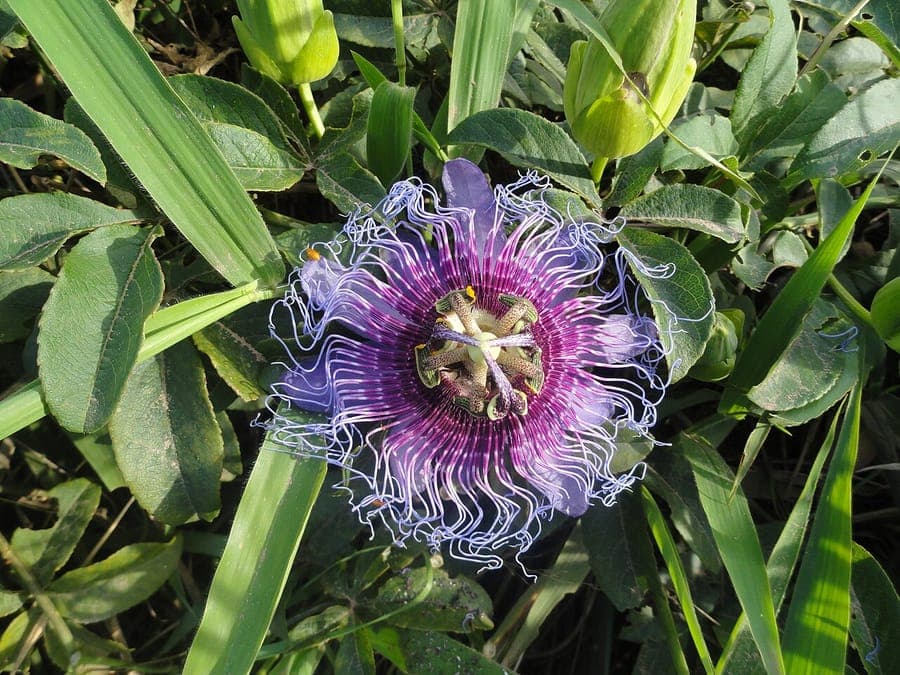
Lauro Sirgado / CC BY-SA 3.0, via Wikimedia Commons
Crato passionvine: complete guide
Passiflora cincinnata
Want to see Crato passionvine: complete guide in your garden?
1 minute, no credit card
Overview
Passiflora cincinnata, known as Crato passionvine, Maracuja-do-mato, or Bombolla, is a fascinating climbing plant native to South America. This species grows naturally in Brazil, Paraguay, Colombia, and Venezuela across diverse climate zones from subtropical to tropical. The plant is renowned for its spectacular flowers with characteristic corona filaments and its aromatic, edible fruits. The vine climbs via tendrils and can cover large surfaces with dense green foliage and beautiful blooms. In South America, this plant is of great cultural value and is traditionally cultivated for nutrition and medicinal purposes. The flowers are extremely striking with their complex structure and bright colors, which attract pollinators effectively. The plant can grow very rapidly under favorable conditions, reaching several meters height per season.
Appearance and Bloom
The Crato passionvine is a vigorous climber with three-lobed leaves creating beautiful visual effect throughout the season. The leaves are approximately 8 to 12 centimeters long with distinct veination patterns. The flowers are the highlight: they feature distinctive form with radial corona filaments in purple, white, and complex color patterns creating a spinning visual effect. These flowers are approximately 5 to 7 centimeters in diameter and appear over multiple months of the year. The flowers have a fragrance that attracts insects. After blooming, oval to round fruits form with yellow-gray coloration, about 4 to 5 centimeters in diameter. The fruits are smooth and have characteristic shape. The fruit skin is not very thick but quite firm. Inside are numerous seeds surrounded by gelatinous fruit pulp that is extremely flavorful. The ripening cycle takes approximately two to three months after flowering. The plant produces continuously new flowers and fruits throughout the growing season.
Ideal Location
This passionvine thrives best in sunny location receiving minimum 6 hours direct sunlight daily for optimal flowering and fruit production. The plant tolerates several hours of shade, especially in very hot climates where afternoon shade can be beneficial. Position the climber where it can grow against sturdy structure (trellis, pergola, garden wall) and where it can cling effectively. In the Netherlands, the plant grows better in the greenhouse or sheltered indoor garden, though some protected gardens on south sides might work for younger plants. The plant grows better with some protection against strong wind. In warm summers it can grow against a south-facing wall outdoors and still overwinter in a cold greenhouse or heated room.
Free design
Want to see Crato passionvine: complete guide in your garden? Make a free design now.
Soil
Passiflora cincinnata prefers nutrient-rich, well-draining soil with pH between 6 and 7. Mix growing medium with compost or leaf mold for better water retention and nutrient richness. Ensure drainage is good to prevent root rot, despite the plant's high water needs. Soil must not become compacted. A mixture of standard potting soil with 30 percent additional compost works well. The root zone must be deep enough for vigorous plant growth.
Watering
During the growing season, this climber requires regular watering, especially during dry periods and hot summer days. Soil should remain moist but not waterlogged. Provide daily misting under very hot conditions to promote moisture absorption via leaves and prevent spider mites. In winter, water supply can be reduced somewhat, though the plant must not dry completely. Regular soil moisture testing helps prevent overwatering. Use room-temperature or rainwater when possible.
Pruning
Prune the plant in early spring before the growing season begins to stimulate bushy growth. Remove dead or weak shoots and shape the plant to desired form. Regular pruning encourages new growth and more flowers by directing energy away from long vines. Light pruning can be applied during growing season to prevent overgrowth. Remove all dead wood immediately.
Maintenance Calendar
May through September: active growth, regular feeding every two weeks, vigorous growth and abundant flowering. October through April: rest period with reduced water and no feeding. In the greenhouse, the rest period may be shorter and the plant resume activity faster. Blooming occurs in summer and fall with peak period August through October. Check regularly for pests such as caterpillars, spider mites, and scale insects.
Winter Hardiness
The Crato passionvine is not winter-hardy in the Netherlands. The plant cannot overwinter outdoors and requires minimum temperatures of 10 to 15 degrees Celsius. Frost causes severe damage or death. In warm regions (USDA zones 9-11), the plant can overwinter outdoors in some years with protection.
Companion Plants
Passiflora cincinnata combines well with other climbing plants or flowering shrubs needing support. The plant attracts butterflies, bees, and other pollinators. Various butterfly species use passionvine leaves as food for caterpillars.
Closing
The Crato passionvine is a spectacular choice for those wanting to enjoy exotic flowers and tropical fruits. With proper care, support, and suitable winter quarters, this climber provides years of beauty and nourishment in Dutch gardens and greenhouses.
Want to see Crato passionvine: complete guide in your garden? Make a free design now.
Upload a photo, pick a style, and get a photorealistic design with plant list in under a minute.
10,000+ gardens designed already
No credit card required


Similar plants
Passiflora antioquiensis: complete guide
Passiflora antioquiensis
Passiflora antioquiensis is a Colombian banana passionflower with hanging pink blooms. Discover trellising, soil and winter care.
Purple passionflower: complete guide to growing Passiflora incarnata
Passiflora incarnata
Full growing guide for Passiflora incarnata, the hardy purple passionflower for zones 5-9. Planting, pruning, winter care and companion plants included.
Passiflora tenuiloba: complete guide
Passiflora tenuiloba
Birdwing passionflower blooms exotically and grows rapidly. Learn how to cultivate this passion flower in your garden as a vine or container plant.