
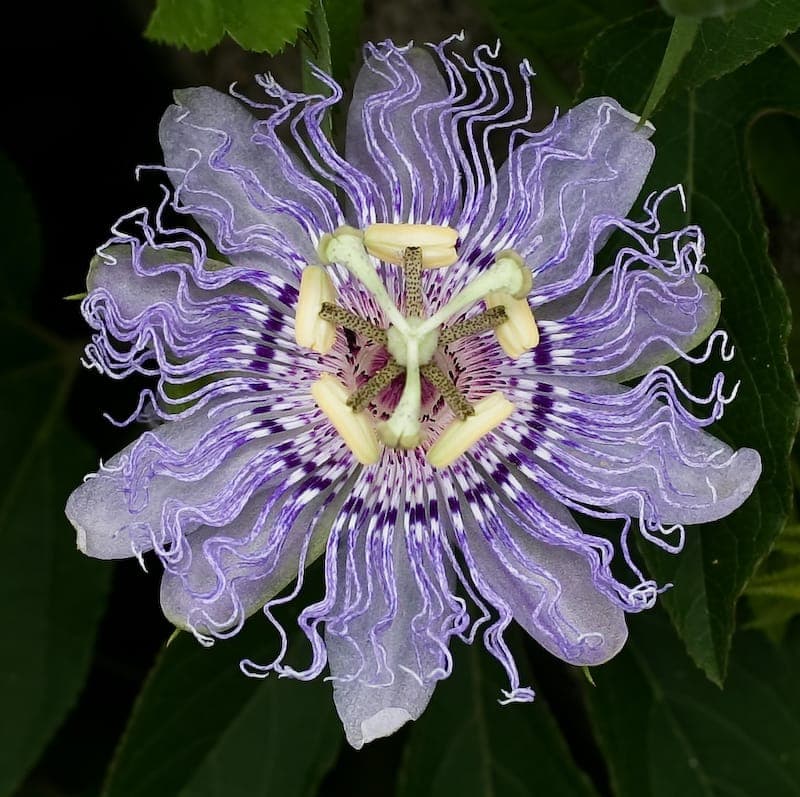
{{{Photo by: Oliv9928586149er P. Quillia}}} / CC BY 3.0, via Wikimedia Commons
Passiflora ciliata: complete guide
Passiflora ciliata
Want to see Passiflora ciliata: complete guide in your garden?
1 minute, no credit card
Overview
Passiflora ciliata, commonly known as fringed passionflower or ciliate passionflower, is a fascinating tropical climbing plant from the Passifloraceae family. This plant is native to Mexico through Colombia and is renowned for its extraordinarily beautiful flowers with characteristic fringed corona. The plant reaches considerable distances in warm climates and can be used as screening for a shed or garden house in moderate zones.
Passiflora ciliata develops into a vigorous climber reaching 3-4 meters high with climbing tendrils. The flowering period spans July through October with large, spectacular blooms in white with purple bases. The plant also bears green passion fruits that are decorative, though not always edible.
Appearance & Bloom
The flowers of Passiflora ciliata are truly spectacular and unique. They reach diameters of 5-8 centimeters and feature a characteristic structure with two coronas. The outer corona consists of white to light pink petals with purple or red base. The inner corona is remarkably distinctive with long, thin fringed filaments in purple, white and red.
The foliage is equally impressive. The leaves are deeply lobed to trifoliate, giving the plant an elegant appearance. Following bloom, the plant bears green to yellow-green passion fruits of 2-3 centimeters diameter.
Ideal Location
Passiflora ciliata requires warm, sunny locations with at least 6-8 hours of direct sunlight daily. The plant prefers shelter from strong winds and grows best against a south or west-facing wall. In temperate climates with cool winters, protection is essential.
Plant against sturdy support such as garden house, pergola or wall lattice. The plant will wind around this support with its powerful tendrils. Avoid overly shaded locations, which lead to poor flowering.
Soil
Passiflora ciliata thrives in well-draining, nutrient-rich soil. The ideal is a mixture of garden soil, compost and sand for optimal drainage. A pH of 6.0-7.0 is acceptable. The plant has high nutrient demands and prefers nutrient-rich, fertile soils.
When planting, incorporate abundant aged compost and organic material. This improves drainage and nutritional value. During the growing season, add regular organic feeding to stimulate growth.
Watering
Passiflora ciliata requires regular and full watering, especially during growth and flowering periods. Water deeply and regularly so soil remains moderately moist. In very hot, dry periods, daily watering may be necessary. The plant cannot tolerate drought and wilts quickly without water.
Ensure soil does not become waterlogged. The plant prefers moderately moist soil. In winter, as the plant grows more slowly, water can be reduced somewhat, but waterlogged soil must be avoided.
Free design
Want to see Passiflora ciliata: complete guide in your garden? Make a free design now.
Pruning
Passiflora ciliata requires regular pruning to maintain shape and size. In spring, before growth starts, perform vigorous pruning, remove dead branches and cut the plant to desired size. This stimulates new side shoots and more flowering.
During the growing season, additional pruning can maintain shape. Remove spent flowers after blooming. In autumn, after flowering ends, light pruning can follow.
Maintenance Calendar
March-April: Perform vigorous pruning. Remove dead branches. Begin regular watering. Add compost.
May-June: Plant begins growth. Ensure regular watering and feeding. Monitor for pests and diseases.
July-August: Flowering period. Provide full watering and regular feeding. Deadhead spent flowers.
September-October: Flowering ends. Reduce watering somewhat. Perform light pruning. Harvest passion fruits if desired.
November-December: Plant enters dormancy. Reduce water significantly. Protect against frost in cold regions.
January-February: Winter dormancy. Minimal watering. Perform pruning for new season.
Winter Hardiness
Passiflora ciliata is not winter hardy in temperate to cold climates. The plant tolerates only a few degrees of frost. In regions with winters below 5 degrees Celsius, the plant must overwinter in a cool, bright greenhouse or winter garden.
In permanent open ground, protection is essential in temperate zones. Covering with reed or straw can help. In very cold regions, the plant grows exclusively in pots that overwinter in unheated greenhouses.
Companion Plants
Passiflora ciliata combines well with other tropical climbing plants. Plant together with Clematis or other vines for deeper texture. Underplant with tropical or subtropical plants that share the same heat requirements.
In containers on warm, sheltered terraces, the plant grows beautifully. Combination with silvery foliage plants provides nice contrast.
Conclusion
Passiflora ciliata is an absolute must for gardeners wanting exotic warm-loving plants. With warm location, nutrient-rich soil, regular watering and pruning, this plant grows and blooms spectacularly. The flowers are truly outstanding and will astound everyone. Plant is difficult to find commercially but available through specialized enthusiasts. Visit gardenworld.app for inspiration with tropical and exotic plants.
Want to see Passiflora ciliata: complete guide in your garden? Make a free design now.
Upload a photo, pick a style, and get a photorealistic design with plant list in under a minute.
No credit card required


Similar plants
Passiflora antioquiensis: complete guide
Passiflora antioquiensis
Passiflora antioquiensis is a Colombian banana passionflower with hanging pink blooms. Discover trellising, soil and winter care.
Purple passionflower: complete guide to growing Passiflora incarnata
Passiflora incarnata
Full growing guide for Passiflora incarnata, the hardy purple passionflower for zones 5-9. Planting, pruning, winter care and companion plants included.
Passiflora tenuiloba: complete guide
Passiflora tenuiloba
Birdwing passionflower blooms exotically and grows rapidly. Learn how to cultivate this passion flower in your garden as a vine or container plant.