
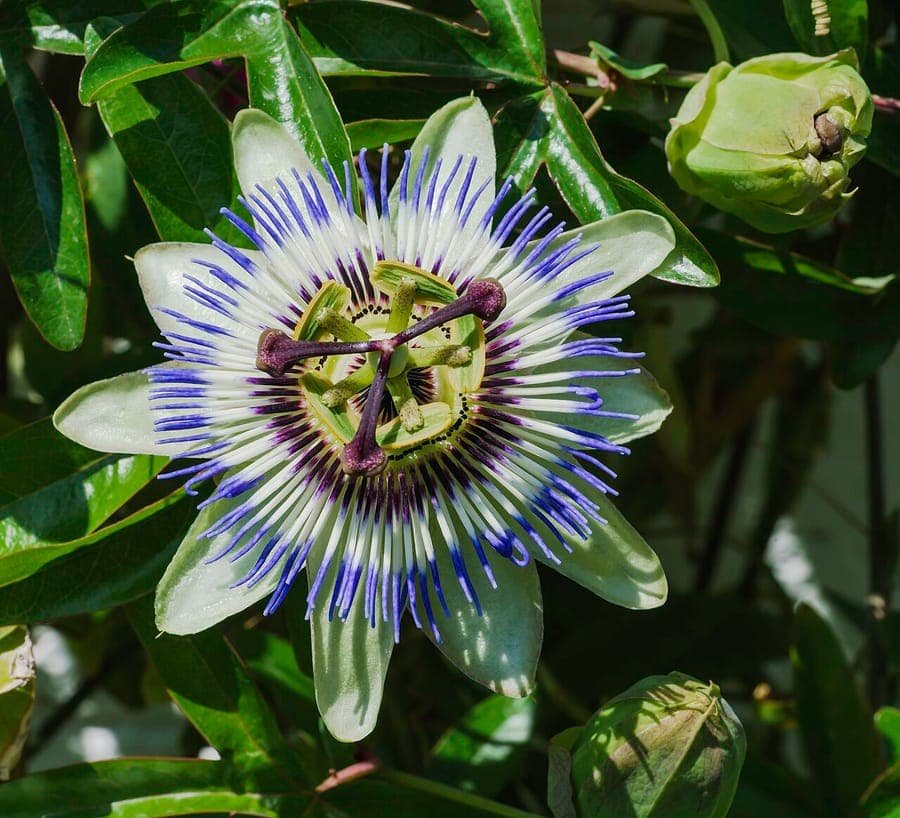
Franz van Duns / CC BY-SA 4.0, via Wikimedia Commons
Brazilian passionflower: complete guide
Passiflora caerulea
Want to see Brazilian passionflower: complete guide in your garden?
1 minute, no credit card
Overview
Passiflora caerulea, commonly known as Brazilian passionflower, is a fast-growing, ornamental vine native to South America - specifically Argentina, Bolivia, and southern Brazil. It's one of the hardier passionflower species, making it a favourite among gardeners in temperate zones who want a touch of the tropics without the fuss. Belonging to the Passifloraceae family, it thrives outdoors in USDA hardiness zones 8 to 11, though it often survives in zone 7b with some winter protection.
This vine can reach up to 6 meters in a single growing season under optimal conditions. It climbs using tendrils, so it needs a support structure like a trellis, pergola, or wire frame. In mild winters, it remains semi-evergreen, holding onto most of its foliage. In colder regions, it may die back to the ground but usually regrows from the roots in spring.
On gardenworld.app, you can design a garden layout that integrates Passiflora caerulea seamlessly into vertical spaces, creating shade and visual drama.
Appearance & bloom cycle
The flowers are the star of the show - intricate, exotic, and up to 10 cm wide. Each bloom features a striking corona of fine filaments in shades of blue, white, and purple, surrounding a central hub of stamens and stigma. The effect is almost otherworldly, and they appear from July through September, sometimes lasting into October in warm autumns.
Leaves are deeply lobed, typically with three points, and dark green on top with a lighter underside. New growth often emerges with a reddish tinge, adding seasonal interest. After flowering, small oval fruits (3–4 cm long) may form. These turn yellow-brown when ripe but are not edible and slightly toxic if ingested.
Ideal location
Full sun to light shade is best. Aim for at least 5–6 hours of direct sunlight daily to maximize flowering. A south- or southeast-facing wall or structure works perfectly. In hot southern regions, afternoon shade can prevent leaf scorch during heatwaves.
Ensure there's a sturdy support system. The tendrils need something to wrap around - a mesh, wooden lattice, or wire grid is ideal. Avoid solid walls unless you install a trellis first.
Soil requirements
Passiflora caerulea isn't fussy about soil type but prefers well-drained, humus-rich ground. Heavy clay can be improved with compost or grit to enhance drainage. The ideal pH range is 6.0 to 7.5 - slightly acidic to neutral.
For container growing, use a good-quality potting mix with added perlite or coarse sand. Choose a pot at least 40 cm in diameter to allow root development. Repot every 2–3 years in spring.
Free design
Want to see Brazilian passionflower: complete guide in your garden? Make a free design now.
Watering
Keep the soil consistently moist during the growing season (May to September), especially in full sun or containers. Check the top 2–3 cm of soil - if dry, it's time to water. Avoid waterlogging, which can lead to root rot.
In winter, reduce watering, particularly for in-ground plants. Container-grown specimens should stay just barely moist, never soggy.
Pruning
Prune in late winter or early spring (March in the UK) to encourage new growth, which is where the flowers form. Cut back old stems to 2–3 buds and remove any dead, weak, or tangled growth. Use sharp, clean secateurs to prevent disease spread.
Avoid heavy pruning in autumn - this can remove flowering wood and reduce blooms the following year. If you're unsure when to prune, gardenworld.app offers seasonal gardening calendars tailored to your region.
Maintenance calendar
- January: Check for frost damage. Keep containers slightly moist.
- February: Prepare tools for pruning. Inspect supports.
- March: Prune hard. Apply slow-release organic fertiliser.
- April: Growth resumes. Begin feeding every 4 weeks with balanced liquid fertiliser.
- May: Water regularly. Watch for slugs on new shoots.
- June: Guide new growth onto supports.
- July–September: Peak bloom. Water deeply during dry spells.
- October: Reduce watering. Clear fallen leaves.
- November–December: Protect container plants with fleece or move to a sheltered spot.
Winter hardiness
Passiflora caerulea tolerates temperatures down to -10°C (USDA zone 8). In colder zones (7b and below), the top growth may die back, but the plant often survives underground and re-sprouts in spring.
For potted plants, wrap the container in bubble wrap or move it against a south-facing wall. Mulch around the base of in-ground plants with compost or leaf mould for root insulation.
Companion plants
Pair with other climbers like Clematis 'Jackmanii' or Honeysuckle (Lonicera periclymenum). At the base, try shade-tolerant perennials such as Hosta, Ferns, or Alchemilla mollis. For a tropical effect, combine with Phormium, Canna, or Fatsia.
Avoid invasive or overly vigorous climbers like ivy, which can smother the passionflower.
Closing
The Brazilian passionflower brings drama, speed, and exotic beauty to any garden. With minimal care - sun, support, and an annual trim - it rewards with stunning summer blooms. While the fruit isn't edible, the visual payoff is more than worth it.
Available at garden centres across the UK and US, especially in spring. Look for healthy green stems and firm leaves when purchasing.
Want to see Brazilian passionflower: complete guide in your garden? Make a free design now.
Upload a photo, pick a style, and get a photorealistic design with plant list in under a minute.
No credit card required


Similar plants
Passiflora antioquiensis: complete guide
Passiflora antioquiensis
Passiflora antioquiensis is a Colombian banana passionflower with hanging pink blooms. Discover trellising, soil and winter care.
Purple passionflower: complete guide to growing Passiflora incarnata
Passiflora incarnata
Full growing guide for Passiflora incarnata, the hardy purple passionflower for zones 5-9. Planting, pruning, winter care and companion plants included.
Passiflora tenuiloba: complete guide
Passiflora tenuiloba
Birdwing passionflower blooms exotically and grows rapidly. Learn how to cultivate this passion flower in your garden as a vine or container plant.