
Johann Jaritz / CC BY-SA 4.0, via Wikimedia Commons
Boston-ivy: complete guide
Parthenocissus tricuspidata
Want to see Boston-ivy: complete guide in your garden?
1 minute, no credit card
Overview
Boston-ivy (Parthenocissus tricuspidata) is a vigorous, deciduous climber native to eastern Asia, including Japan, China, and Korea. It's widely grown in temperate gardens for its ability to cover walls, fences, and trellises with dense foliage. Unlike true ivy (Hedera), it belongs to the grape family, Vitaceae, and climbs using adhesive disks at the tips of its tendrils-no support wires needed on rough surfaces. It can reach up to 20 meters in height under ideal conditions, forming a lush green veil in summer and a fiery display in fall.
While not invasive in most of the UK or northern Europe, it can become aggressive in milder climates. Always consider placement carefully-keep it away from guttering, windows, and delicate siding. It's not toxic, and the small purple berries that occasionally form aren't harmful to birds or humans, though they're rarely eaten.
On gardenworld.app, you can plan a vertical garden layout that works with Boston-ivy's natural climbing habit, ensuring structural safety and visual balance.
Appearance & bloom cycle
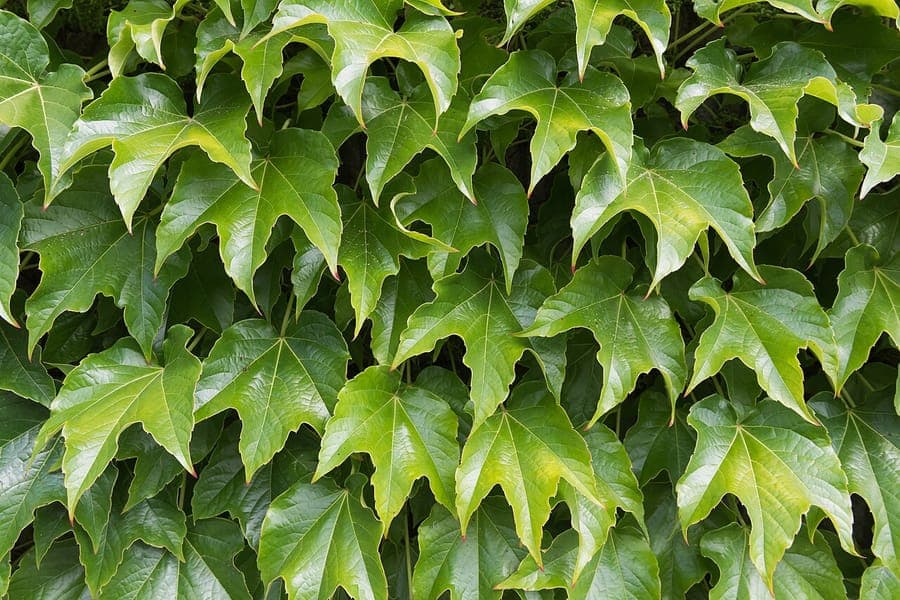
Boston-ivy has three-lobed leaves that range from 5 to 15 cm in length. Young leaves emerge bright green and glossy, maturing to a deep green by midsummer. The real spectacle begins in autumn: starting in late September, leaves turn brilliant shades of crimson, scarlet, and burgundy, lasting well into November in mild years.
Flowering occurs from July to August. The flowers are small, greenish, and inconspicuous, but attract bees and other pollinators. Fruits are rare in cultivation and appear as dark purple, 6 mm berries in clusters. These persist briefly into winter but are not a major ornamental feature.
Ideal location
Boston-ivy thrives in a light level of 7 out of 10-meaning partial shade to full sun. For the best autumn color, aim for at least 4 hours of direct sunlight daily. It adapts well to north-facing walls, though color intensity will be reduced. On south or west walls, ensure soil moisture is maintained during dry summers to prevent scorching.
It attaches naturally to brick, stone, and rough wood using adhesive pads. Avoid planting near smooth surfaces like glass or metal panels. If growing on a smooth wall, install a trellis or wire system to support vertical growth.
Soil requirements
This plant is not fussy about soil type as long as drainage is good. It prefers a slightly acidic to neutral pH (5.0–6.5). Loamy, humus-rich soil is ideal, but it tolerates clay and sandy soils too. Avoid overly rich soils-excess nutrients promote leafy growth at the expense of autumn color.
Free design
Want to see Boston-ivy: complete guide in your garden? Make a free design now.
Watering
During the first growing season, water deeply once or twice a week, especially during dry spells. Once established (after 12–18 months), Boston-ivy is quite drought-tolerant. However, prolonged dry periods can lead to premature leaf drop or reduced fall color. Water deeply every 2–3 weeks during extended droughts.
Pruning
Pruning is essential to keep Boston-ivy under control. The best time is late winter or early spring (February to March), before new growth starts. Cut back stems that are encroaching on gutters, windows, or roofs. Use sharp loppers or shears for thicker vines. For a formal look, trim annually to maintain shape. Avoid pruning in autumn, as this can stimulate new growth vulnerable to frost damage.
Maintenance calendar
- Jan: Inspect for damaged stems and structural issues
- Feb: Begin pruning dead or overgrown shoots
- Mar: Complete pruning; check for new growth
- Apr: Monitor attachment to wall surface
- May: Observe leaf development and health
- Jun: No major tasks; watch for pests
- Jul: Check for signs of powdery mildew or aphids
- Aug: Light inspection for spreading
- Sep: Autumn colors begin to appear
- Oct: Enjoy peak fall color; leaves start dropping
- Nov: Clear fallen leaves from gutters
- Dec: Final check for winter stability
Winter hardiness
Boston-ivy is hardy in USDA zones 4–8 (-34°C to -12°C). It's fully deciduous in colder zones, dropping all leaves by late fall. In milder regions, it may hold some foliage into winter, offering extra screening. It reliably regrows each spring from old wood.
Companion plants
Pair Boston-ivy with late-flowering perennials like Aster novae-angliae or ornamental grasses such as Miscanthus sinensis. Avoid planting large shrubs directly beneath it to reduce root competition. Use low-growing groundcovers like Vinca minor or Pachysandra terminalis to hide the bare base.
On gardenworld.app, experiment with layering Boston-ivy with clematis or climbing roses for a multi-season effect.
Closing
Boston-ivy is a bold, beautiful climber that demands little but delivers big visual impact. With proper placement and annual pruning, it can transform bland walls into living art. Its autumn fire is unmatched among climbers. Available at most garden centres in 3-litre pots, often under its botanical name. Just be mindful of its strength-plant it where it can climb freely without damaging structures.
Want to see Boston-ivy: complete guide in your garden? Make a free design now.
Upload a photo, pick a style, and get a photorealistic design with plant list in under a minute.
No credit card required


Similar plants
Catbird grape: complete guide
Vitis palmata
Discover the Catbird grape (Vitis palmata), a hardy wild grapevine that draws songbirds. Learn about location, pruning, and year-round care.
Monkshoodvine: complete guide
Ampelopsis aconitifolia
Discover Monkshoodvine. Learn how to care for this plant in your garden.
Vitis girdiana: complete guide to this resilient desert wild grape
Vitis girdiana
Discover Vitis girdiana, the Desert Wild Grape: a resilient native vine from California and Mexico. Perfect for dry, warm gardens and pergola screening.