
Cyndy Sims Parr / CC BY-SA 2.0, via Wikimedia Commons
Parmentiera cereifera: complete guide
Parmentiera cereifera
Want to see Parmentiera cereifera: complete guide in your garden?
1 minute, no credit card
Overview
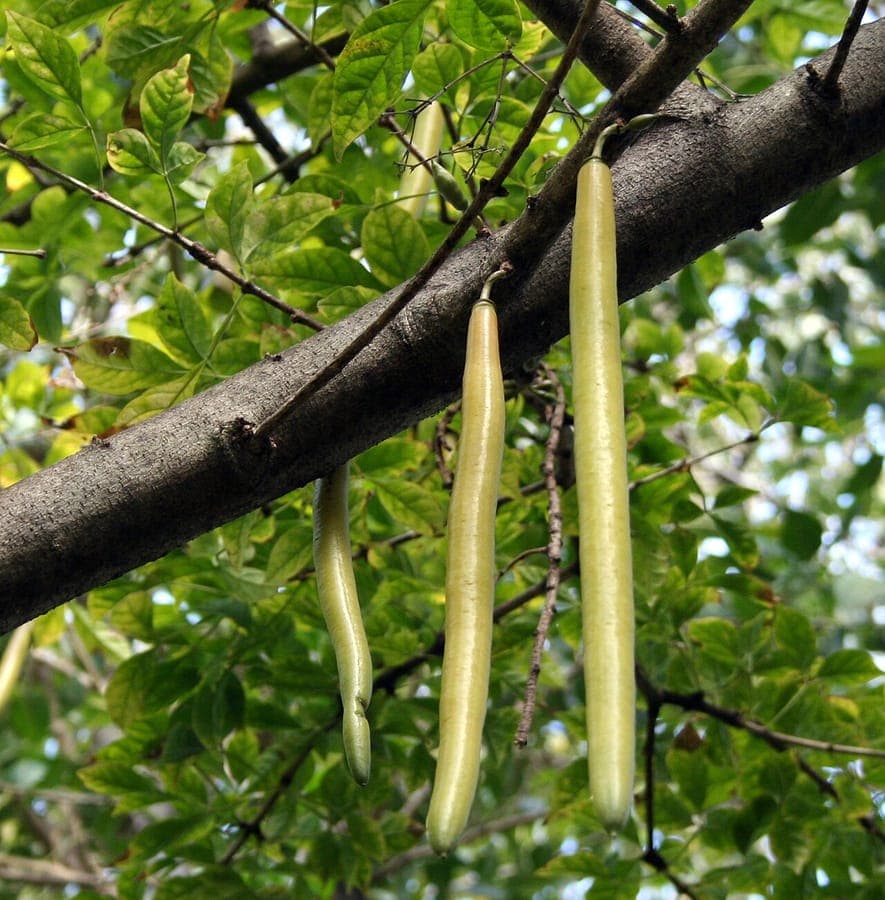
The candletree (Parmentiera cereifera), also known as the candle tree or wax tree, is an extraordinary tropical tree native to Panama. The plant is renowned for its highly unusual fruit production: long, slender, candle-like fruits that can reach 40-60 centimeters in length.
This fascinating tree belongs to the Bignoniaceae family (trumpet vine family). In its natural habitat, the candletree grows in the rainforest regions of Panama, where it is a rare and highly sought-after species among plant enthusiasts.
The candletree is gaining increasing attention from plant collectors and gardeners seeking unique and surprising plants to cultivate in their greenhouse or garden.
Appearance and Bloom
Parmentiera cereifera is a medium-sized tree that can reach 5-8 meters tall in its natural environment, but typically remains much smaller in cultivation. The tree has a compact crown and spreading branches.
The flowers are white to cream-colored, sweetly-scented trumpet-like blooms that are striking in their simplicity. They appear along branches and the main stem, which is botanically very interesting.
The fruit production, however, is the true highlight: long, slender, smooth candle-like fruits that are decidedly eye-catching. These fruits are green when young and become yellow or orange when ripe. They truly resemble giant candles, hence the popular common name.
Ideal Location
The candletree grows best in full sun in a warm, protected location. In temperate climates, the plant is better kept in a greenhouse or conservatory.
The plant thrives at temperatures between 18-26°C (indoor climate control is important). Avoid locations with strong, dry winds that could damage the plant.
Good light is essential for flowering and fruit setting. Place the plant where it receives at least 6-8 hours of daylight, ideally with some direct sun.
Soil
The candletree performs best in loose, well-draining potting soil, similar to what you would use for tropical plants. A mix of cactus-orchid soil with some peat-based additives works well.
Add some perlite or sand to improve drainage. This is crucial because waterlogging easily leads to root rot, especially in cooler months.
The plant is not particularly fussy about pH, but prefers slightly less acidic soils (pH 6-7).
Free design
Want to see Parmentiera cereifera: complete guide in your garden? Make a free design now.
Watering
During the growing season (spring and summer), water the candletree regularly, but let the soil dry slightly between waterings. Excessive moisture is a major problem.
In autumn and winter, watering frequency should be significantly reduced. The plant clearly prefers drier conditions during this period.
In very warm periods, daily watering may be necessary, depending on local conditions and pot size.
Pruning
Pruning is generally unnecessary for the candletree, but you can carefully remove dead or damaged branches.
To encourage a more compact form, you can prune lightly after flowering, but avoid aggressive pruning as this may reduce fruiting.
Regularly remove dead leaves to prevent disease.
Maintenance Calendar
Spring (March-May): Repot if needed, increase feeding, raise temperature to 22-26°C. Summer (June-August): Water regularly, feed every two weeks, provide plenty of light. Fall (September-October): Reduce feeding, decrease watering frequency, lower temperature to 18-22°C. Winter (November-February): Minimal feeding and watering, tolerate cooler temperatures (but not below 10°C).
Winter Hardiness
The candletree is not winter-hardy in temperate climates. The plant is sensitive to frost. In areas outside tropical and subtropical zones, the plant must be well protected in winter, ideally indoors in a greenhouse.
Minimum temperatures should not fall below 10-12°C. In very warm climates, the plant can remain outdoors if protected from frost and strong winds.
Companion Plants
In a greenhouse setting, other tropical plants grow well alongside the candletree:
- Anthurium
- Alocasia
- Ficus varieties
- Plumeria
- Rondozia
Choose similar humidity-loving and warm-preferring tropical plants.
Final Words
The candletree is certainly a curious and fascinating accent for collectors of unusual plants. With the right warmth, light, and care, this tropical oddity can become a beautiful and intriguing specimen in your greenhouse.
Find seedlings or young plants at specialized tropical nurseries. Visit gardenworld.app for more guides on tropical plants and greenhouse cultivation.
Want to learn more about growing tropical exotics? Visit gardenworld.app for detailed plant guides and greenhouse tips.
Want to see Parmentiera cereifera: complete guide in your garden? Make a free design now.
Upload a photo, pick a style, and get a photorealistic design with plant list in under a minute.
No credit card required


Similar plants
Tabebuia pallida: complete guide
Tabebuia pallida
Full growing guide for Tabebuia pallida: location, soil, watering, pruning, hardiness and companion plants for this tropical trumpet tree.
Northern catalpa: complete guide
Catalpa speciosa
Everything about northern catalpa (Catalpa speciosa): bold white flowers, fast growth, and how to grow this striking tree in your garden.
Desert willow: complete guide to Chilopsis linearis
Chilopsis linearis
Complete growing guide for desert willow (Chilopsis linearis): sun, soil, flowering, pruning, and winter care for this spectacular flowering small tree.