
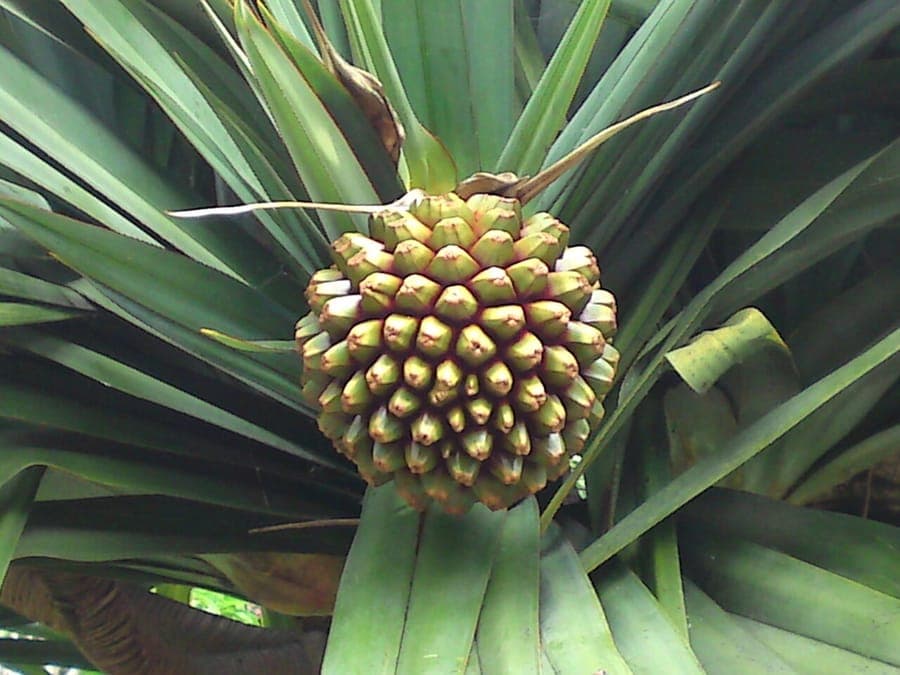
Jayen466 / Public domain, via Wikimedia Commons
Pandanus utilis: complete guide
Pandanus utilis
Want to see Pandanus utilis: complete guide in your garden?
1 minute, no credit card
Overview
Pandanus utilis, also known as Screw Pine or Vacoa, is a striking tree from the Pandanaceae family. Originally from the Mascarene Islands (Mauritius, Reunion, and Rodrigues), this plant is now widespread in tropical and subtropical regions worldwide.
The plant is renowned for its dramatic appearance with long, narrow, sharp leaves arranged in a spiral around the trunk. This gives it a unique, sculptural form that is interesting both in containers and in the ground. The tree can reach imposing proportions, making it perfect for those wanting an aged, impactful appearance.
Appearance and bloom
The Screw Pine grows as a small tree or large shrub, typically reaching 3-5 meters tall in cultivation, though it can grow much larger in its natural habitat. The leaves are the most striking feature: elongated (60-90 cm), linear, grey-green to yellowish-green, often with red margin markings.
The leaves have sharp, spiky edges and form a dense rosette atop the trunk. Many cultivars display yellow or red variegation, adding extra visual interest. Older specimens can develop aerial roots - long prop roots that function as supporting pillars.
The flowers are not very conspicuous. Male flowers appear in yellowish-white spikes, while female flowers are more discreet. After pollination, characteristic fruit clusters form.
Ideal location
The Screw Pine thrives in full sun to lightly shaded locations. Provide at least 3-4 hours of direct sunlight daily. In very hot climates, some afternoon shade can be beneficial.
Indoors, the plant accepts a well-lit location, though it grows larger and healthier in outdoor sunlight. Placement near a large, south-facing window is ideal.
Temperature: This plant is quite warm-loving. Ideal range is 18-30 degrees Celsius. Although mature specimens can tolerate some frost, young plants are more sensitive and should be protected from temperatures below 5 degrees.
Soil
The Screw Pine is not particularly critical about soil type, but prefers well-draining soil. A mixture of universal potting soil with sand and coconut fiber (2:1:1) works excellently. This helps water drain well, which is important as waterlogged roots cause rotting.
A pH between 5.5 and 7.5 is acceptable. In containers, regularly refreshing the soil is helpful as the plant quickly depletes nutrients.
Free design
Want to see Pandanus utilis: complete guide in your garden? Make a free design now.
Watering
Water moderately and regularly. The plant prefers evenly moist soil, but not waterlogged. Allow the top few centimeters to dry between waterings.
During the growth period (spring-summer), the plant may need more frequent watering. During dormancy (autumn-winter), watering can be reduced. Check soil moisture before watering.
Ensure pots have good drainage holes. Stagnant water and moisture-related diseases are the main causes of failure with this plant.
Pruning
Pruning is minimal. The natural form of the Screw Pine is already attractive. However, remove dead or yellowed leaves at the base to maintain a neat appearance.
If the plant becomes too large, you can carefully remove lower leaves, although this may take time to heal. Avoid pruning the central crown, as this can damage growth.
Maintenance calendar
January-February: Minimal feeding, careful with water. March-April: Begin more frequent watering, start monthly feeding. May-September: Peak growth. Water regularly, feed every two weeks. Inspect for insects. October-November: Gradually reduce water, less frequent feeding. December: Minimal feeding and watering.
Winter hardiness
The Screw Pine is tropical and not hardy in cold climates. In Northern Europe, this plant must stay indoors or in a heated greenhouse during winter.
From June to September it can be outdoors in a sheltered position. For storage, a minimum of 12-15 degrees Celsius is recommended.
Companion plants
The Screw Pine combines well with other exotic plants to create a jungle feel:
- Strelitzia (Bird of Paradise) - similar sun requirements
- Yucca - similarly elegant, sculptural appearance
- Cycas revoluta (Sago Palm) - compatible in structure
- Large potted plants with contrasting leaf forms
Closing
Pandanus utilis is an impressive plant that brings structure and sculptural beauty to any garden or interior. With reasonable care and attention to well-drained soil, this plant grows for years or even decades. Its dramatic appearance and easy care make it a prime choice for those wanting to add something exuberant and exotic.
Look for healthy specimens at specialized nurseries or garden centers. Discover more plant guides and garden inspiration on gardenworld.app!
Want to see Pandanus utilis: complete guide in your garden? Make a free design now.
Upload a photo, pick a style, and get a photorealistic design with plant list in under a minute.
No credit card required


Similar plants
Acer pycnanthum: complete guide
Acer pycnanthum
Acer pycnanthum, the Japanese swamp maple, is a fast-growing tree with early red flowers and brilliant autumn color, ideal for damp garden settings.
Freeman maple: complete guide
Acer × freemanii
Everything about the Freeman maple (Acer x freemanii): a fast-growing shade tree with spectacular autumn colour for large gardens.
Silver vine: complete guide
Actinidia polygama
Discover silver vine (Actinidia polygama): a hardy climbing plant with silvery foliage, loved by gardeners and cats alike.