
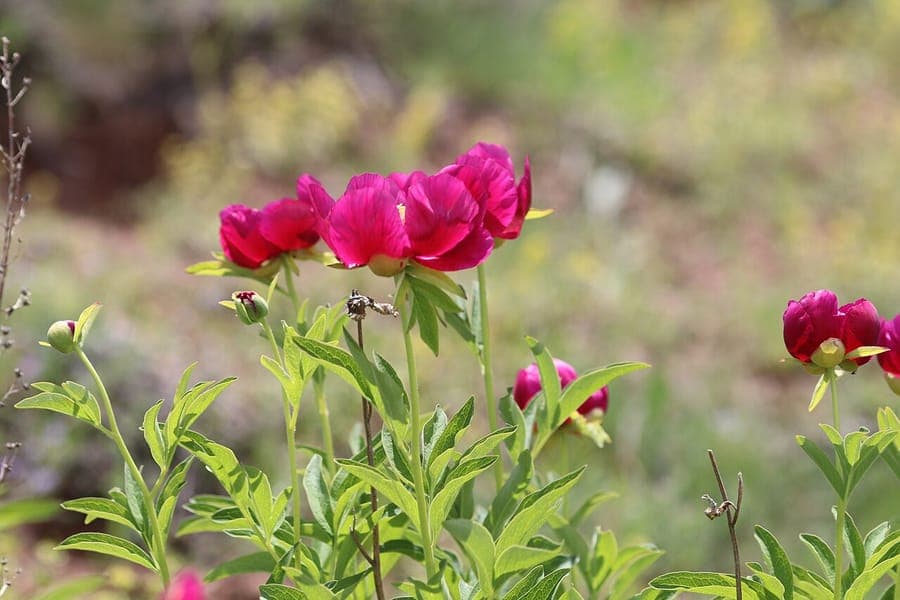
Erdem Cırık / CC BY-SA 4.0, via Wikimedia Commons
Coral peony: complete guide
Paeonia mascula
Want to see Coral peony: complete guide in your garden?
1 minute, no credit card
Overview
Paeonia mascula, commonly known as the Coral peony, is a rugged, long-lived perennial that brings bold texture and deep color to the midsummer garden. Native to rocky slopes and open woodlands across southern Europe and western Asia, this peony thrives where others might struggle – in poor soils, under hot sun, and with minimal fuss. Unlike the fluffy double cultivars often seen in cottage gardens, Paeonia mascula has a wilder, more primitive charm. Its stout stems carry large, single to semi-double flowers in a rich, wine-purple hue, standing proudly above deeply cut, glossy green foliage.
In the UK and northern Europe, this species is still underused, but it's gaining popularity among gardeners who value resilience and natural beauty. It's a plant that doesn't need staking, rarely succumbs to disease, and blooms reliably year after year. If you're designing a border with structural interest and long seasonal appeal, Paeonia mascula deserves a spot. On gardenworld.app, you can visualise how this peony fits into your garden layout, including spacing, companion plants, and sun exposure.
Appearance & bloom cycle
This peony grows to a height of 60–80 cm, with a spread of 50–60 cm. The foliage emerges in spring as deep burgundy, maturing to a glossy, dark green by early summer. Each leaf is deeply lobed, almost fern-like, giving the plant an airy yet substantial presence.
Flowering occurs from late May to late June, depending on climate. The blooms are 12–15 cm wide, with broad petals surrounding a prominent cluster of golden-yellow stamens. The flower colour ranges from deep purple to maroon, sometimes with a coppery sheen in bright sunlight. While not as intensely fragrant as some herbaceous peonies, the scent is subtle and slightly musky, especially in the morning.
Unlike many peonies, Paeonia mascula holds its flowers upright without support. The sturdy stems rarely flop, even after rain, making it a low-maintenance choice for mixed borders.
Ideal location
Choose a spot with at least 6 hours of direct sunlight daily – a south- or west-facing border works best. While it tolerates light shade, flowering will be reduced, and stems may stretch. Good air circulation is essential to prevent powdery mildew, so avoid overcrowding or planting near dense shrubs.
This peony is ideal for cottage gardens, gravel beds, or the middle of a sunny perennial border. It also grows well in large containers (minimum 40 cm depth and width) if you're short on ground space. A terracotta pot with good drainage works well. Just make sure to keep it in a sunny spot and avoid soggy soil. Check your garden's microclimate on gardenworld.app to see if your site matches the plant's sun and airflow needs.
Free design
Want to see Coral peony: complete guide in your garden? Make a free design now.
Soil requirements
Paeonia mascula prefers neutral to slightly alkaline soil with a pH of 7.0–7.5. It's surprisingly adaptable to poor soils but needs excellent drainage. Avoid heavy clay unless it's been amended with sand, grit, and well-rotted compost. A raised bed or slope can help if your garden tends to stay wet.
When planting, dig in a generous amount of compost or leaf mould to improve soil structure. Plant the crown no deeper than 2–3 cm below the surface – too deep, and it may fail to bloom. Space plants 60 cm apart to allow for airflow and mature spread.
Watering
Water regularly during the first growing season, especially in dry springs. Once established, this peony is quite drought-tolerant, though it appreciates occasional deep watering during prolonged dry spells in summer. Always water at the base to keep foliage dry and reduce the risk of fungal diseases.
Mulch lightly in spring with compost or well-rotted manure to retain moisture and suppress weeds, but keep the mulch away from the crown to prevent rot.
Pruning
Pruning is minimal. After flowering, leave the foliage intact to photosynthesise and strengthen the roots for next year. Cut back all stems to 5 cm above ground level in late autumn or early winter, after the leaves have died down. This helps prevent overwintering pests and diseases.
Never cut back in spring – the new shoots emerge very close to the ground and can be easily damaged.
Maintenance calendar
- January: Dormant. Check for crown damage.
- February: Apply a thin layer of compost around the base.
- March: Inspect for slugs and aphids. Loosen soil gently.
- April: Begin regular watering if dry. Watch for emerging shoots.
- May: Flowering begins. No staking needed.
- June: Peak bloom. Deadhead spent flowers.
- July: Reduce watering. Monitor for mildew.
- August: No feeding. Let foliage stand.
- September: No action.
- October: Prepare for dormancy.
- November: Cut foliage to 5 cm.
- December: Dormant period.
Winter hardiness
Paeonia mascula is hardy in USDA zones 5–8, surviving temperatures down to -20°C. It handles cold winters well, with the rootstock remaining protected underground. No winter protection is usually needed, though in areas with very cold, wet winters, a light mulch of straw or leaves can help prevent frost heave.
Companion plants
This peony pairs beautifully with Alliums, Nepeta, Salvia, and Echinacea. Its dark foliage contrasts well with silver-leaved plants like Artemisia or Stachys. Avoid invasive spreaders like mint or ground elder, which can choke out slow-growing peonies.
Closing
Paeonia mascula is a tough, reliable perennial that brings bold color and architectural form to the garden with minimal effort. It's ideal for gardeners who want beauty without constant maintenance. Plant it in a sunny, well-drained spot, give it space to grow, and it will reward you for decades. You can find healthy specimens at garden centres across the UK, especially those specializing in perennials. For design inspiration and layout planning, visit gardenworld.app to create a custom garden plan that includes this striking peony.
Want to see Coral peony: complete guide in your garden? Make a free design now.
Upload a photo, pick a style, and get a photorealistic design with plant list in under a minute.
No credit card required


Similar plants
Tree peony (Paeonia x suffruticosa): complete guide
Paeonia x suffruticosa
Discover tree peonies: cultivation, care essentials, and garden placement. Magnificent flowers and long-lived shrub plants.
Paeonia californica: complete guide
Paeonia californica
Discover California peony, a spectacular flowering plant with deep red blooms. Complete growing guide with design tips and care instructions.
Paeonia cambessedesii: complete guide
Paeonia cambessedesii
Discover the rare Balearic peony, an exclusive and botanically unique plant. Growing guide with care tips for this Mediterranean treasure.