
Ziegler175 / CC BY-SA 3.0, via Wikimedia Commons
Paeonia coriacea: complete guide
Paeonia coriacea
Want to see Paeonia coriacea: complete guide in your garden?
1 minute, no credit card
Overview
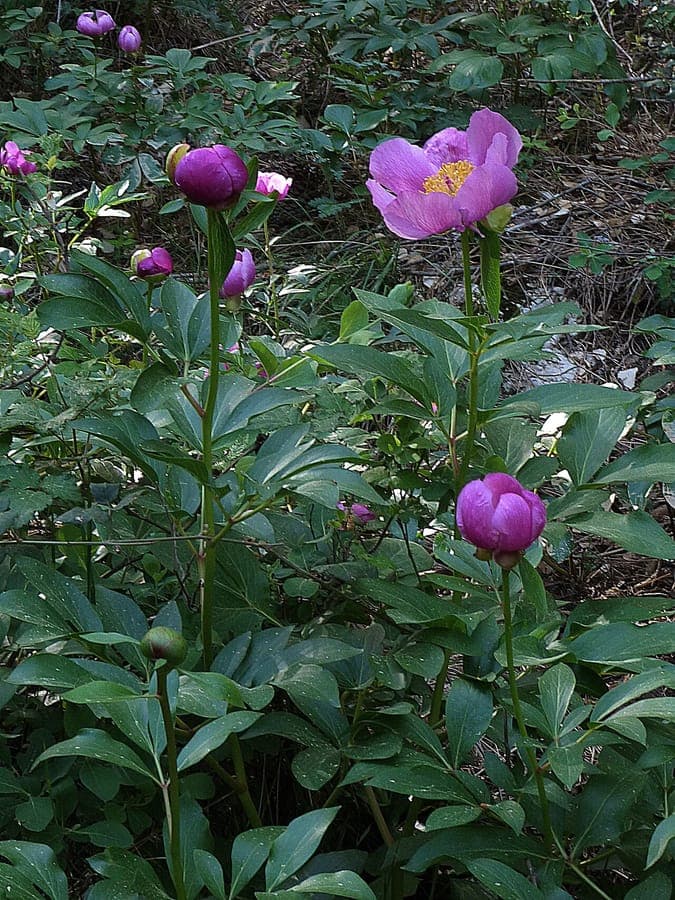
Paeonia coriacea, known as Leathery peony, is a remarkable wild peony from the Paeoniaceae family. This plant originates from the Mediterranean and grows naturally in dry mountain areas of Southeast Europe. The plant is named for its characteristic leathery (coriaceous) leaves that are glossy and very firm.
This peony is much hardier and easier to grow than many cultivated peony varieties. It blooms less profusely than hybrid cultivars, but nevertheless produces beautiful red flowers. For gardeners interested in ecological, dry or Mediterranean-style gardens, this is an excellent choice.
Appearance and blooming
Paeonia coriacea grows as a sturdy, woody plant reaching 60-90 centimeters in height. The leaves are very distinctive: dark green, glossy and firm with a clear leathery texture. They are doubly compound and remain attractive throughout the growing season.
Flowers appear in May to June in red colors with yellow stamens in the center. The flowers are simple in form (usually single-layered) and about 6-8 centimeters in diameter. Each plant typically produces 3-5 flowers per season.
After blooming, characteristic fruit pods form that ripen in autumn. These pods contain glossy black seeds.
Ideal location
Paeonia coriacea thrives in full sun to part-shade locations. Minimum 4-6 hours of direct sunlight daily is ideal. The plant tolerates windy conditions well and warm microclimates.
Choose a location in dry borders, against warm walls or in largely sunny gardens. The plant grows excellently in Mediterranean garden styles or in rock gardens where drainage is excellent.
Avoid very shady spots or places under large trees. Wet, low spots are unsuitable for this plant.
Soil
Paeonia coriacea is very undemanding with soil type as long as drainage is good. The plant flourishes in poor, sandy or chalky soils and actually grows better in less fertile garden soils. Extremely fertile soils can lead to excessive foliage growth and less blooming.
A pH between 6.5 and 8.0 is acceptable. Heavy clay soils can be improved by adding sand, gravel and organic matter. The plant absolutely cannot tolerate stagnant water.
Watering
Paeonia coriacea has limited water requirements once established. After the first growing year where occasional water is desirable, the plant usually grows completely independently. Water only in exceptionally dry periods.
First year: regular water during dry periods helps root establishment. Once established (after 1-2 years), minimal water. The plant is very drought-tolerant and tolerates dry summers excellently.
Winter rain provides sufficient water. Supplemental summer watering is very rarely needed.
Free design
Want to see Paeonia coriacea: complete guide in your garden? Make a free design now.
Maintenance and pruning
Paeonia coriacea requires minimal maintenance. Remove faded flowers after blooming, but this is optional. Dead foliage and stems can be removed in fall when the plant dies back.
Pruning is not necessary. The plant grows in a natural form. In very warm years, light pruning of long branches can improve the shape, but this is not essential.
Winter hardiness
Paeonia coriacea is very winter-hardy to about -15 degrees Celsius. In most of Europe including the Netherlands, Belgium and northern France, the plant will overwinter without problems.
Despite its Mediterranean origin, the plant can survive very cold winters. No special protection is needed in standard West European winters.
Companion plants
Paeonia coriacea forms beautiful combinations with other drought-tolerant, Mediterranean plants. Combine with lavender, rosemary, santolina, teucrium and other drought-loving herbs.
In rock gardens, it pairs well with sedums, sempervivums and other succulents. The red flowers contrast nicely with silver or gray foliage of other plants.
Botanical background
The plant belongs to the genus Paeonia, a very ancient group of plants with roots going back millions of years. The species coriacea is traditionally grown in Mediterranean countries.
Different populations may show variations in leaf size and flower color, which is completely normal.
Propagation
Paeonia coriacea can be bred from seed, although germination rates can be low. Seeds must undergo stratification (cold storage in winter) before they germinate.
Easier is plant propagation by dividing rhizomes in fall or early spring. However, this is delicate work because peonies root deeply and dislike being disturbed.
Most gardeners purchase young plants from nurseries and plant them in their gardens.
Toxicity
Paeonia coriacea is not toxic to humans. However, the bark and seeds have mildly toxic properties and should not be eaten. For pets, plant parts can cause stomach upset, so keep pets away.
Conclusion
Paeonia coriacea is a jewel for gardeners interested in dry, Mediterranean-style gardens and in rugged peonies. Its hardiness, drought tolerance and striking red flowers make it a valuable addition to modern gardens. For designing dry borders full of Mediterranean flora, visit gardenworld.app for expert advice. Gardenworld.app helps you create beautiful, sustainable gardens full of natural charm.
Want to see Paeonia coriacea: complete guide in your garden? Make a free design now.
Upload a photo, pick a style, and get a photorealistic design with plant list in under a minute.
No credit card required


Similar plants
Tree peony (Paeonia x suffruticosa): complete guide
Paeonia x suffruticosa
Discover tree peonies: cultivation, care essentials, and garden placement. Magnificent flowers and long-lived shrub plants.
Paeonia californica: complete guide
Paeonia californica
Discover California peony, a spectacular flowering plant with deep red blooms. Complete growing guide with design tips and care instructions.
Paeonia cambessedesii: complete guide
Paeonia cambessedesii
Discover the rare Balearic peony, an exclusive and botanically unique plant. Growing guide with care tips for this Mediterranean treasure.